Finalized Aileron Deflection and Canopy Sealing

I tried the modified tool and it works pretty well.  I’m going to do a little more adjustment on it so that it doesn’t hit the steel bracket and clears the universal rivet heads.

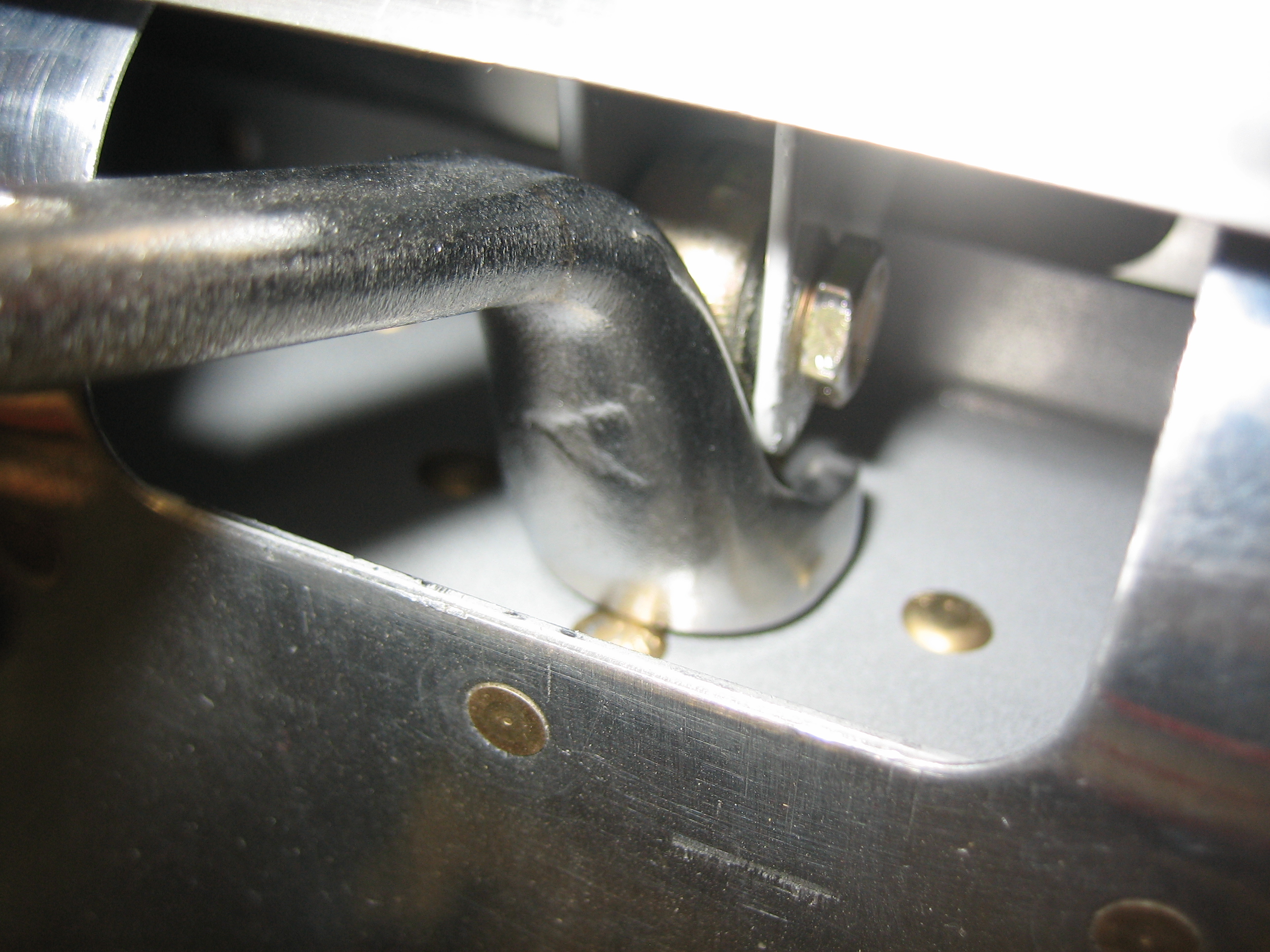
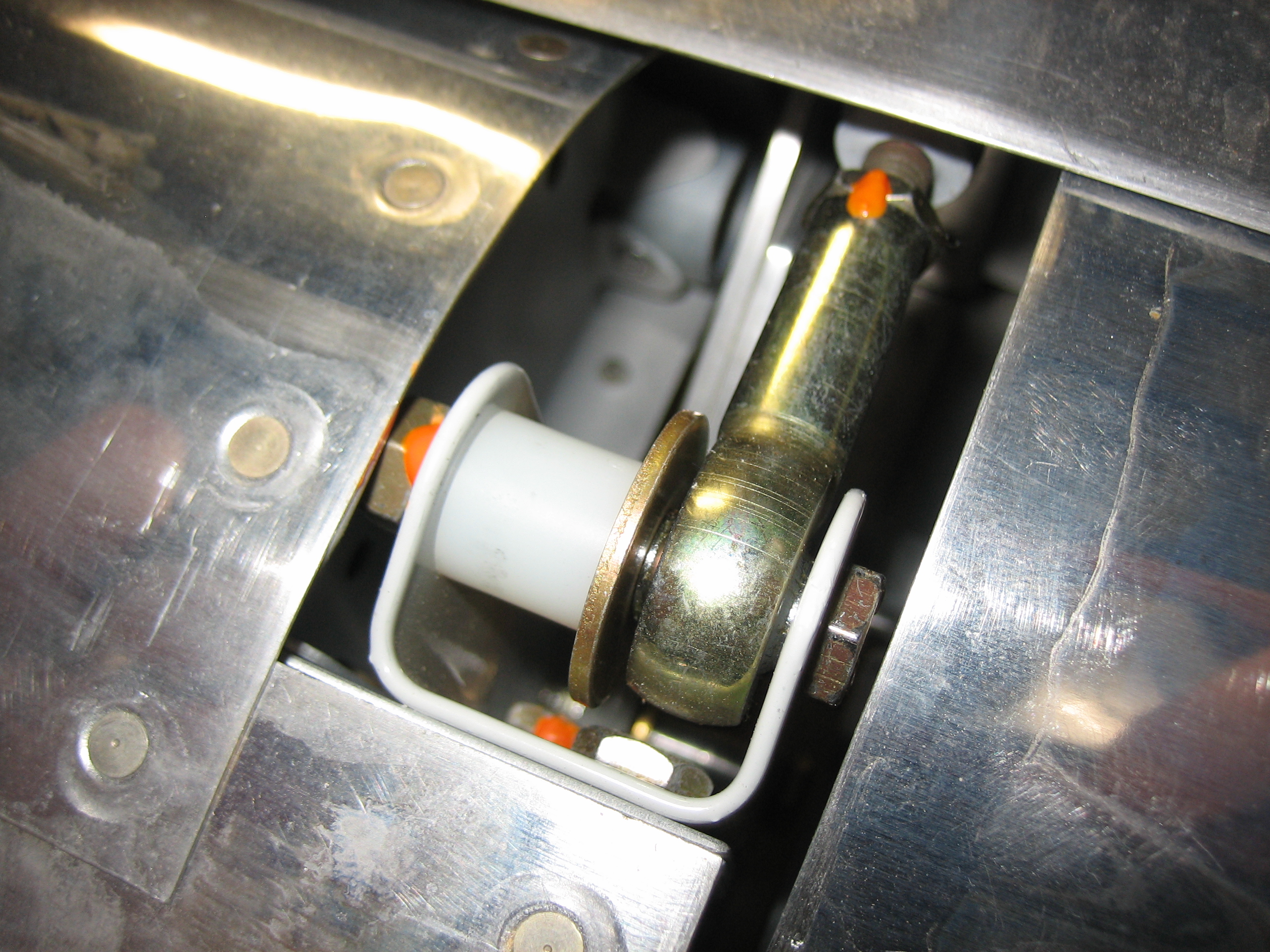
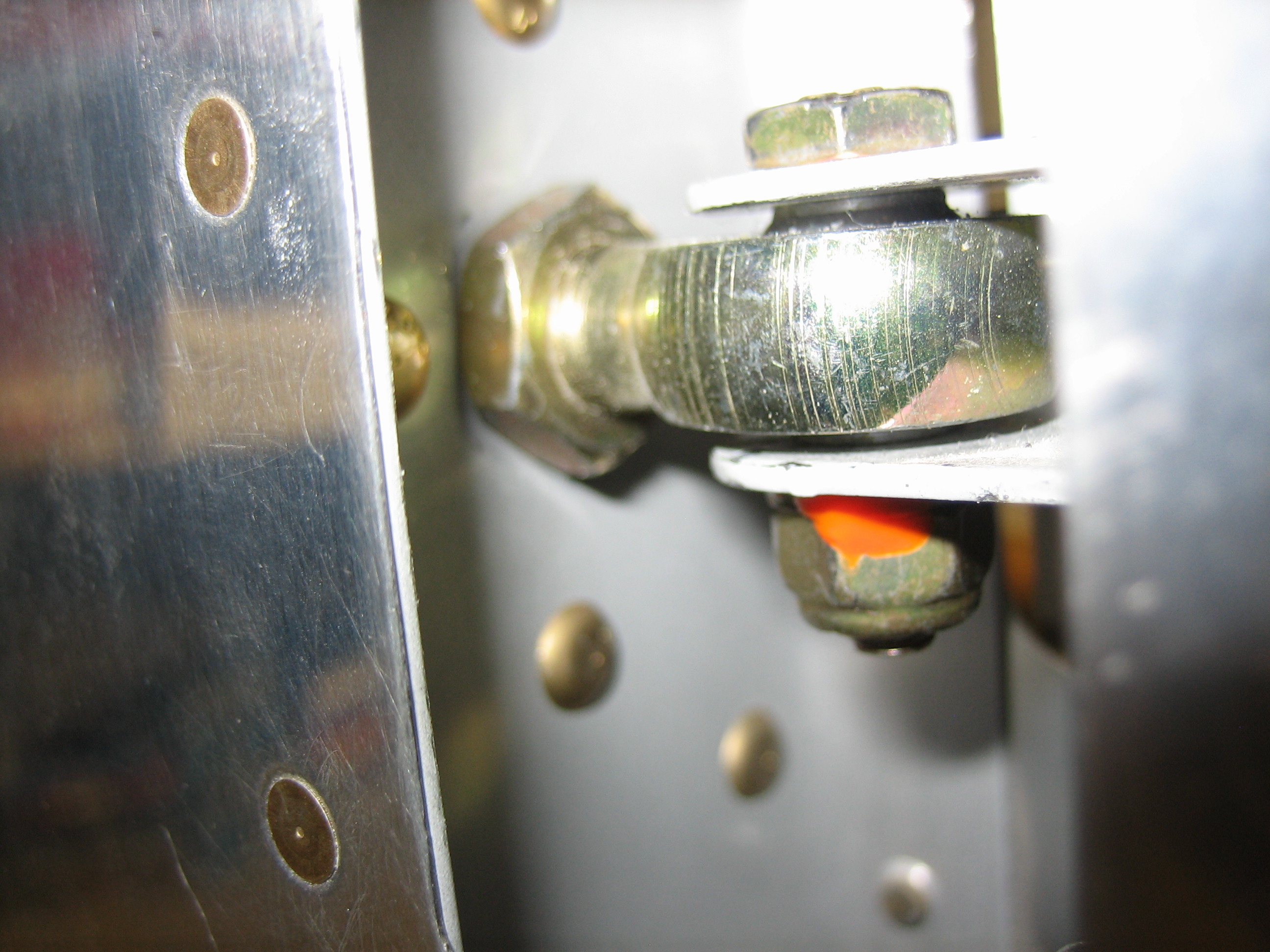
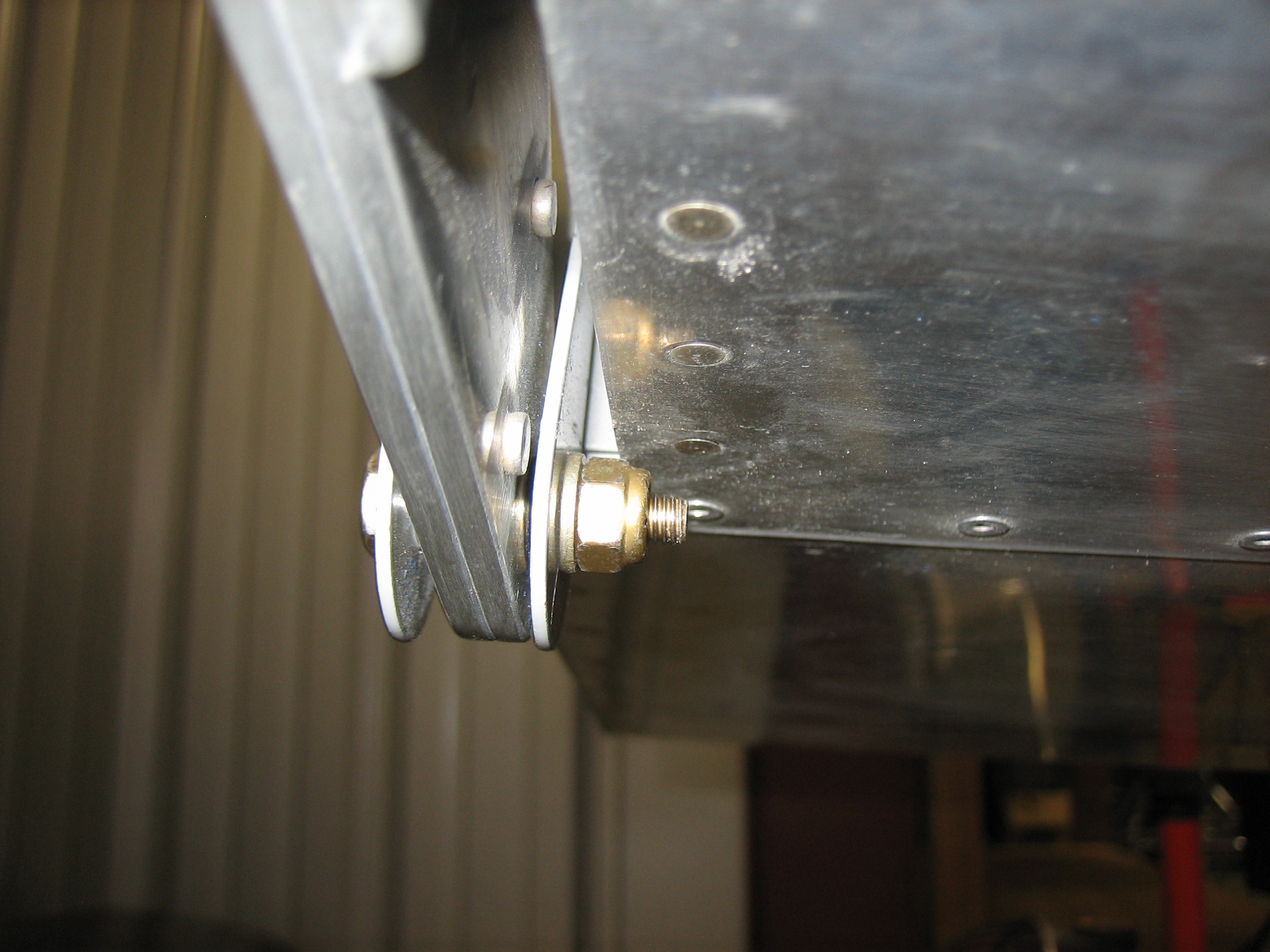
I wasn’t quite getting the aileron throw I wanted, so I switched to the smaller bushing I had.

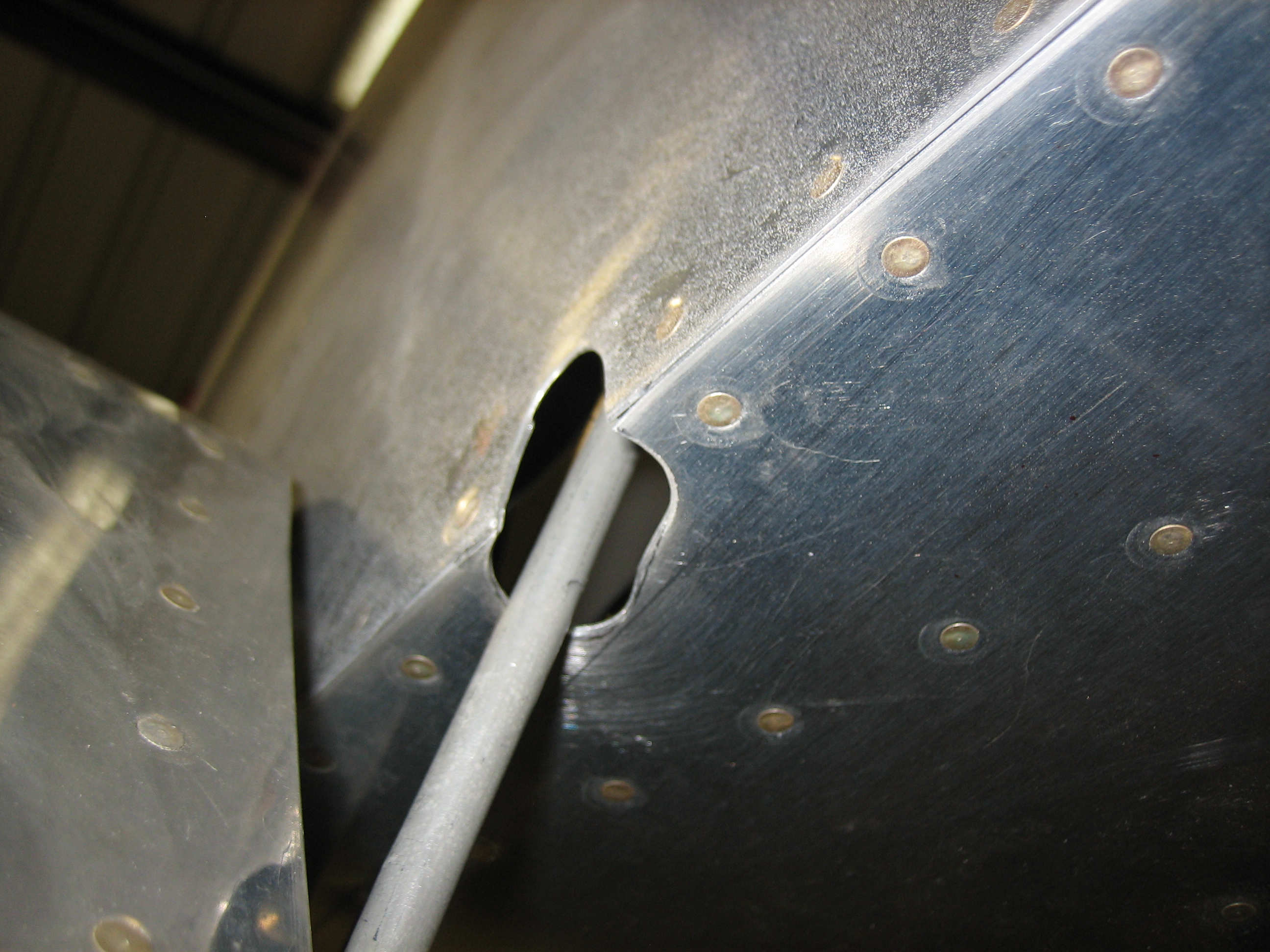
Adjusting the aileron bolt required dropping the flaps.  I could almost remove the rod end that screws into the flap, but the pushrod hit the edge of the hole just before the bolt could slip out.  I sanded the hole a little bit larger, but kept it inside the black line I drew that showed where the flap overlap sits.  This covers the hole when the flaps are up.

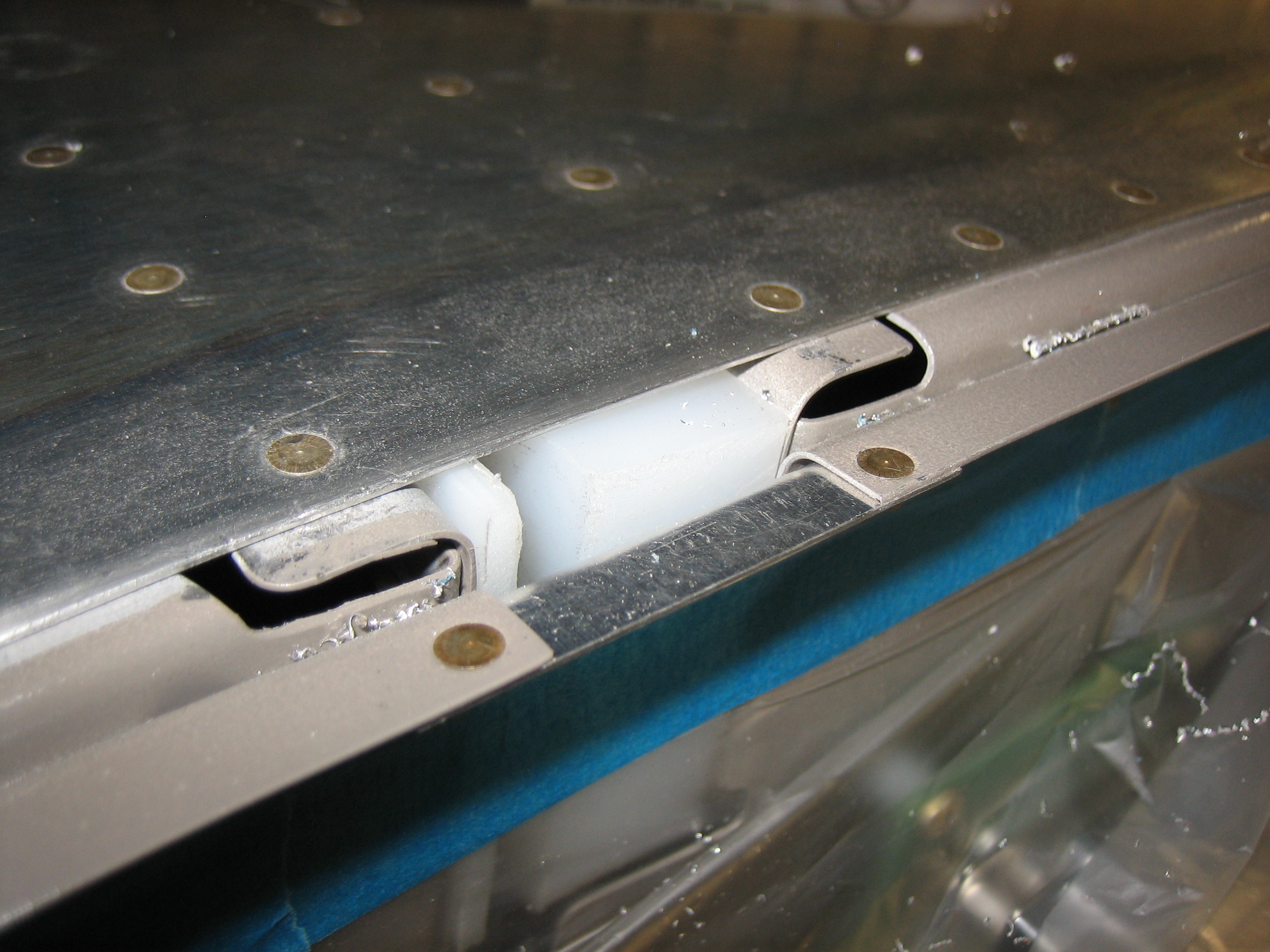
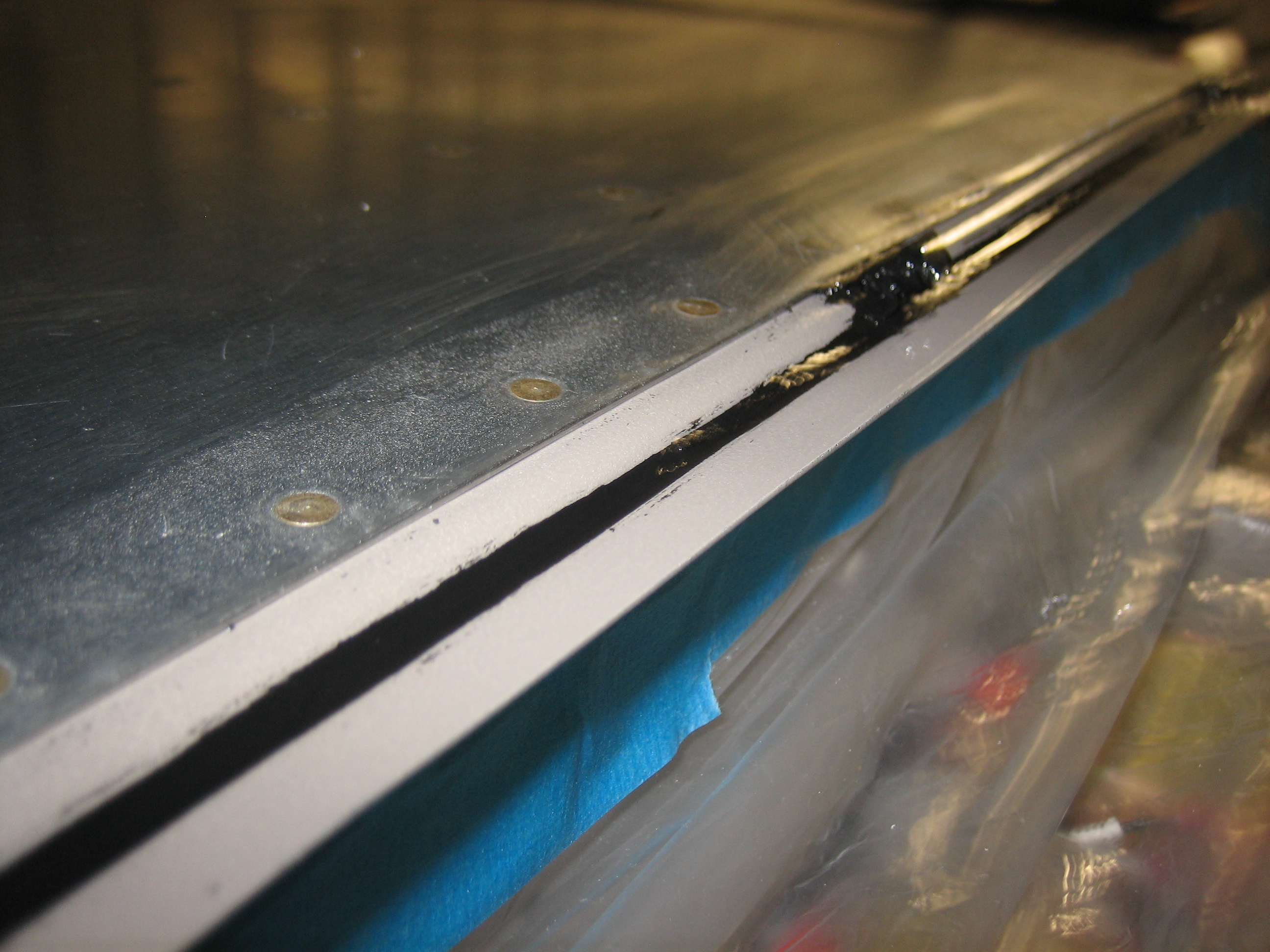
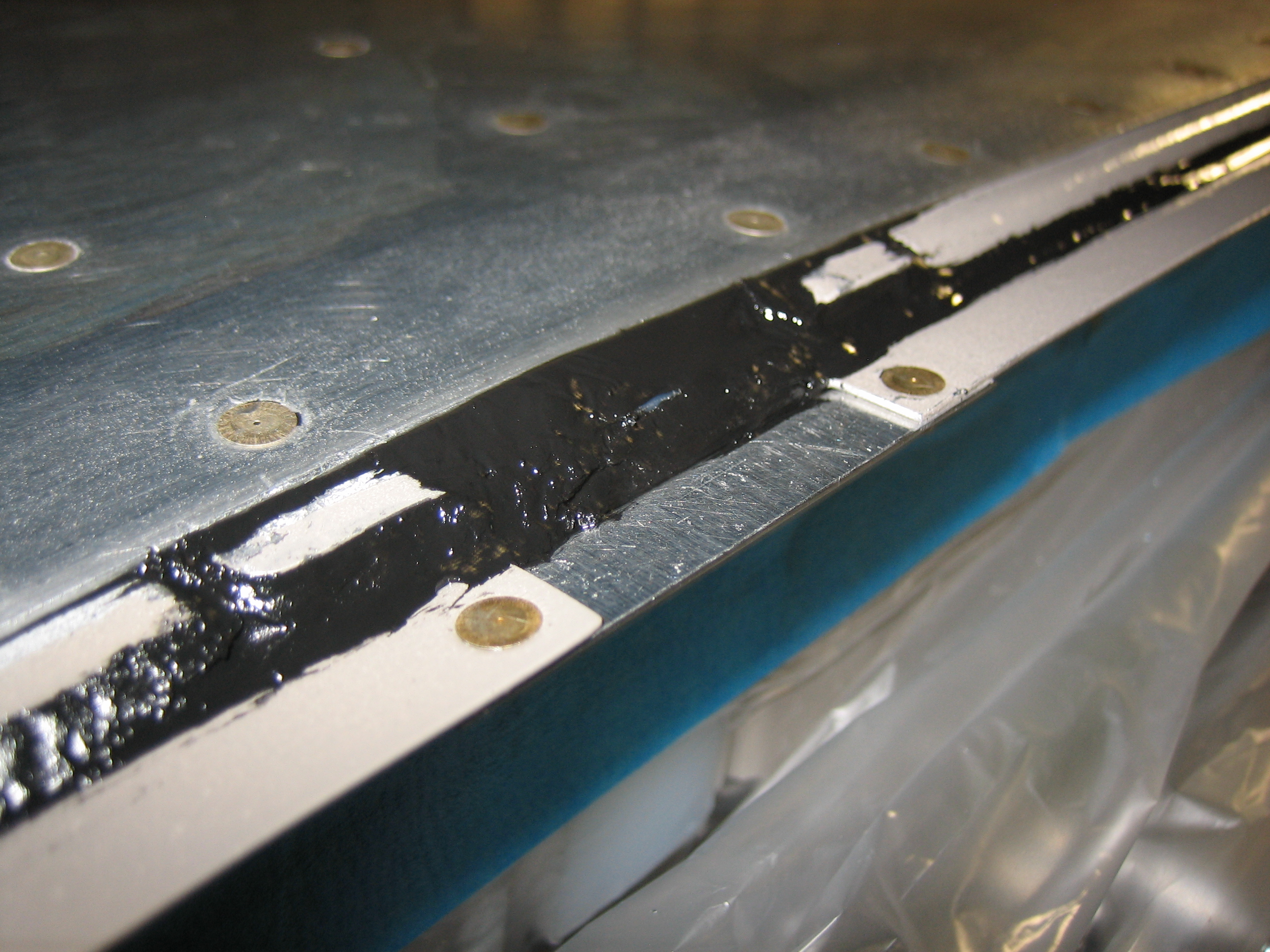
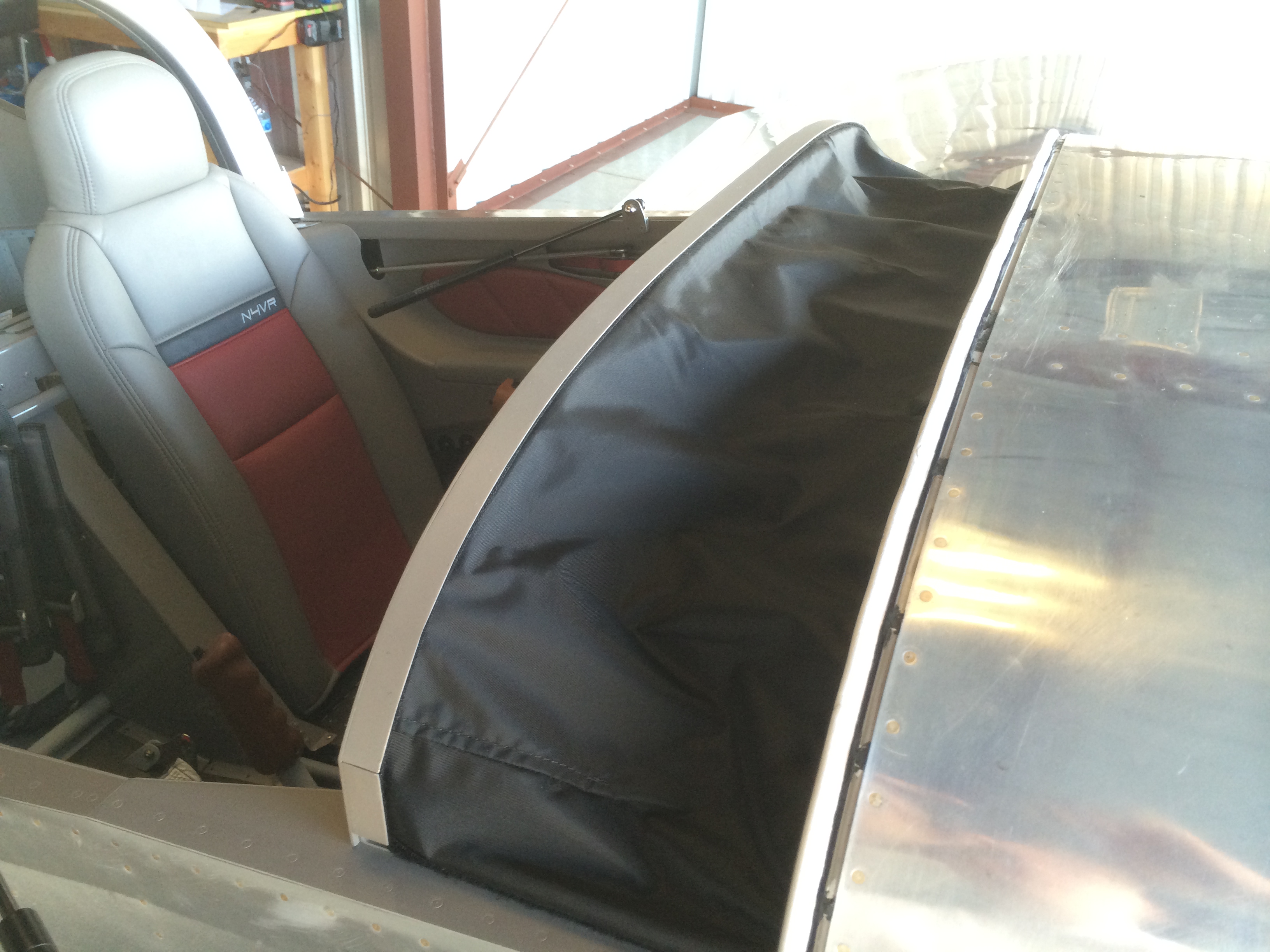
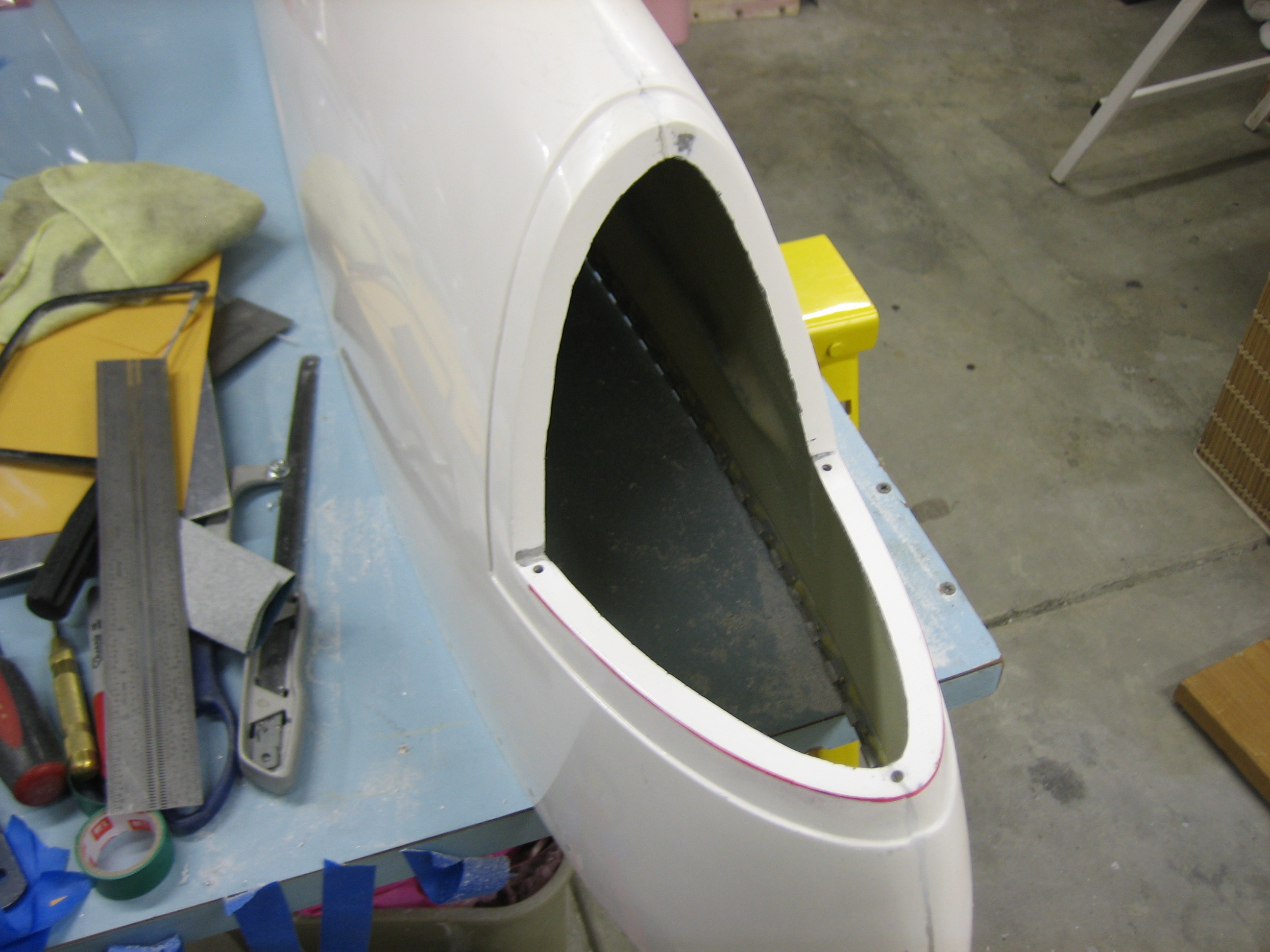
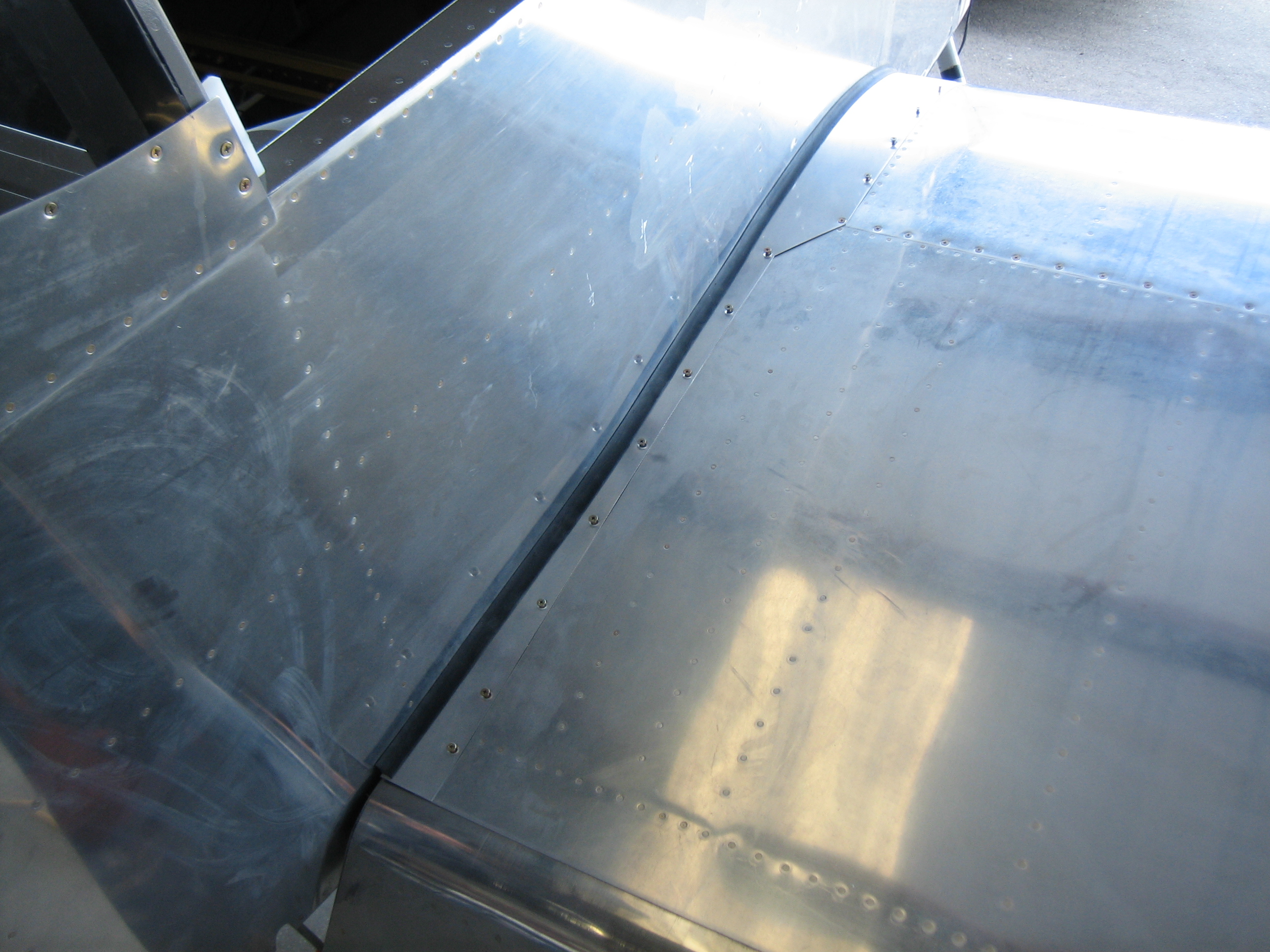
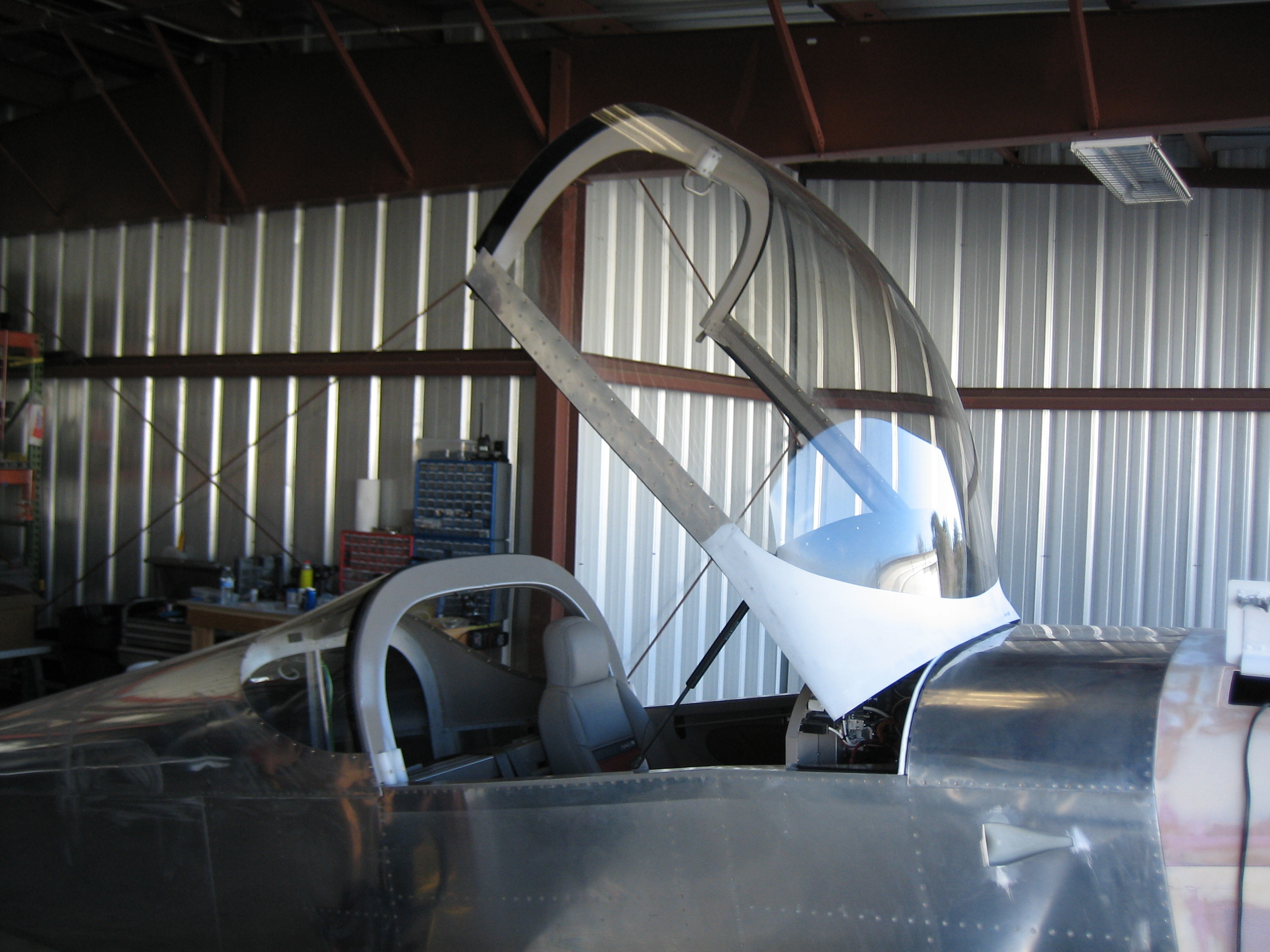
In preparation for installing the weatherstripping that will seal the forward edge of the canopy, I fabricated a couple of strips to span the gap in the flange.  This way I can have a continuous strip of the weatherstripping across the entire edge.

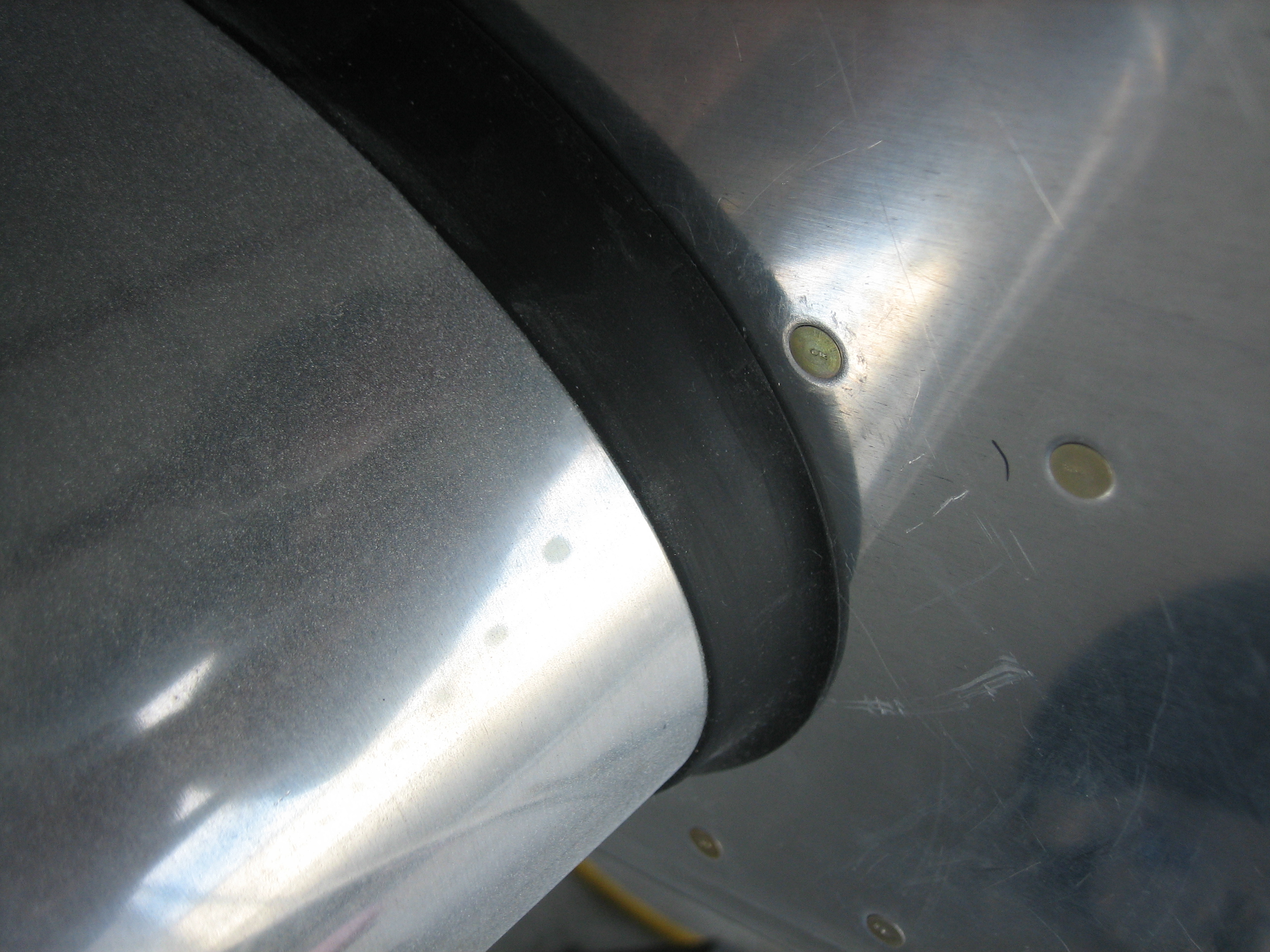
Afterward, I used some Sikaflex to seal up all of the gaps.

Sealing around the canopy hinge is the most tricky, but I think this will do a pretty good job.

Miscellaneous Tasks

No pictures tonight, but I spent a few hours at the hangar knocking various tasks off of the to-do list.  First, I trimmed the excess sealant around the leading edge of the canopy and put a little bit more where there were a couple of small holes  Next, I finished torquing the vent line fittings in the cabin and zip tied the fuel sender coax to it on the right side.

Airplane Inspection Party

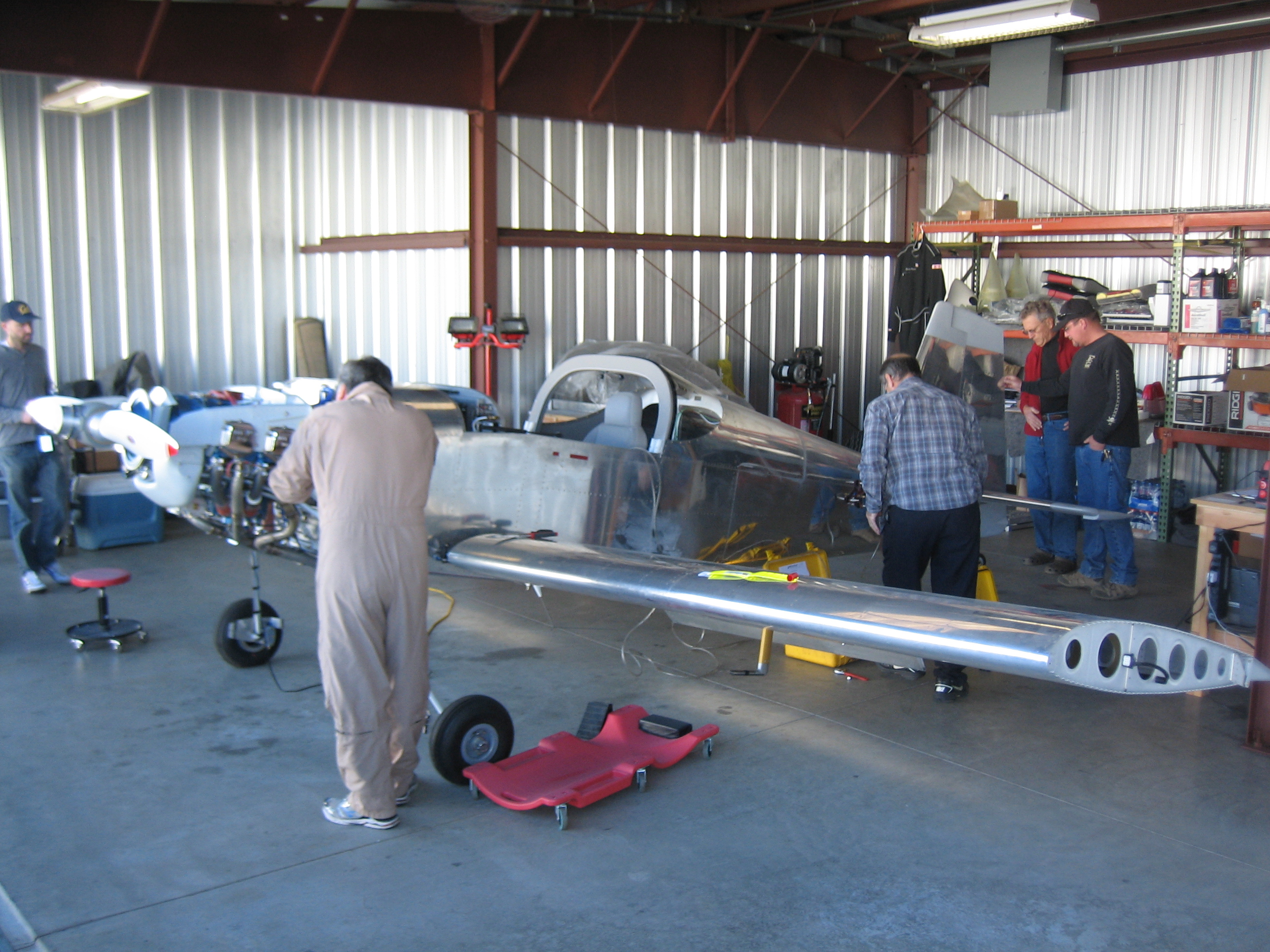
I had my airplane inspection party today.  I invited RV builders from all over the region to come give my plane a good once over before scheduling time with the DAR.  I had a great turnout; roughly 40-50 pilots and builders stopped by over the course of the day.  Overall, the inspection went very well.  Nothing major was found, but there were a number of small items people caught (some of which I knew about and some I didn’t).  I just want to give a huge thank you to everyone who stopped by.

The day started with my transponder certification and pitot/static check.  The transponder check passed with flying colors, but I had a leak in my pitot system.
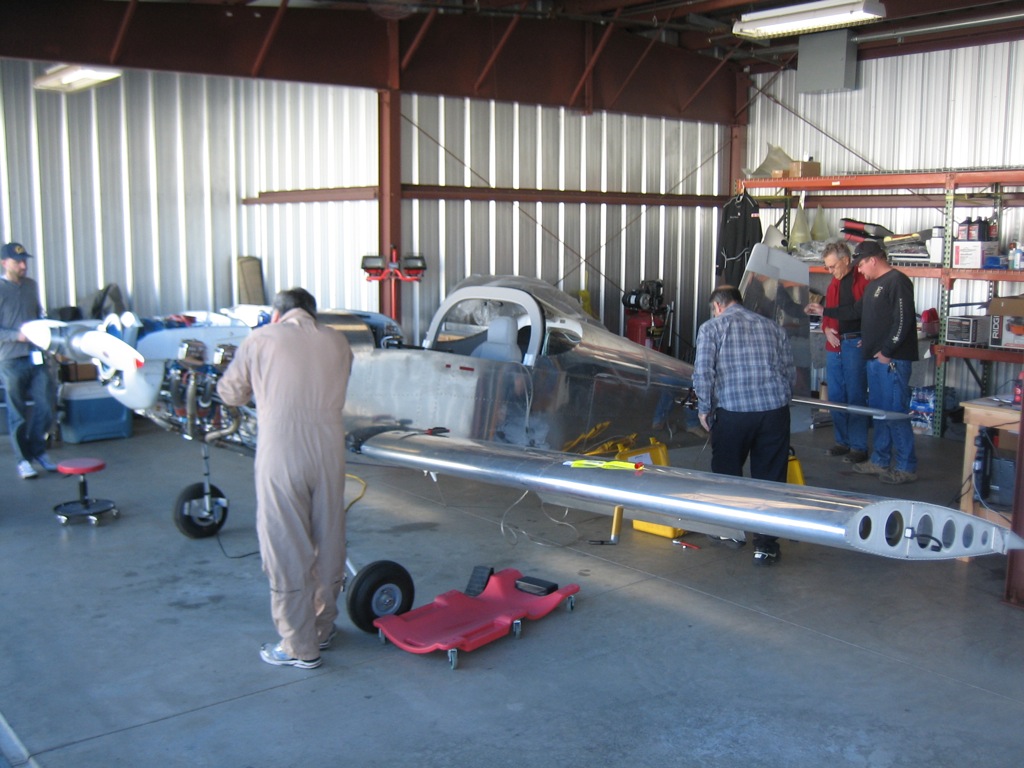
Unfortunately, the leak turned out to be in the wing root fittings where I didn’t quite get one of the pieces of tubing fully seated.  In the process of trying to seat it, the tubing popped out and I had essentially no access to get it back in.  This was really the wrong place to put these, so I’m probably going to have to pull new lines through the wings and make the connections under the pilot’s seat.  Do yourself a favor and avoid all wiring and tubing connections between the fuselage and wing on the RV-7; there is simply no room to work in there.
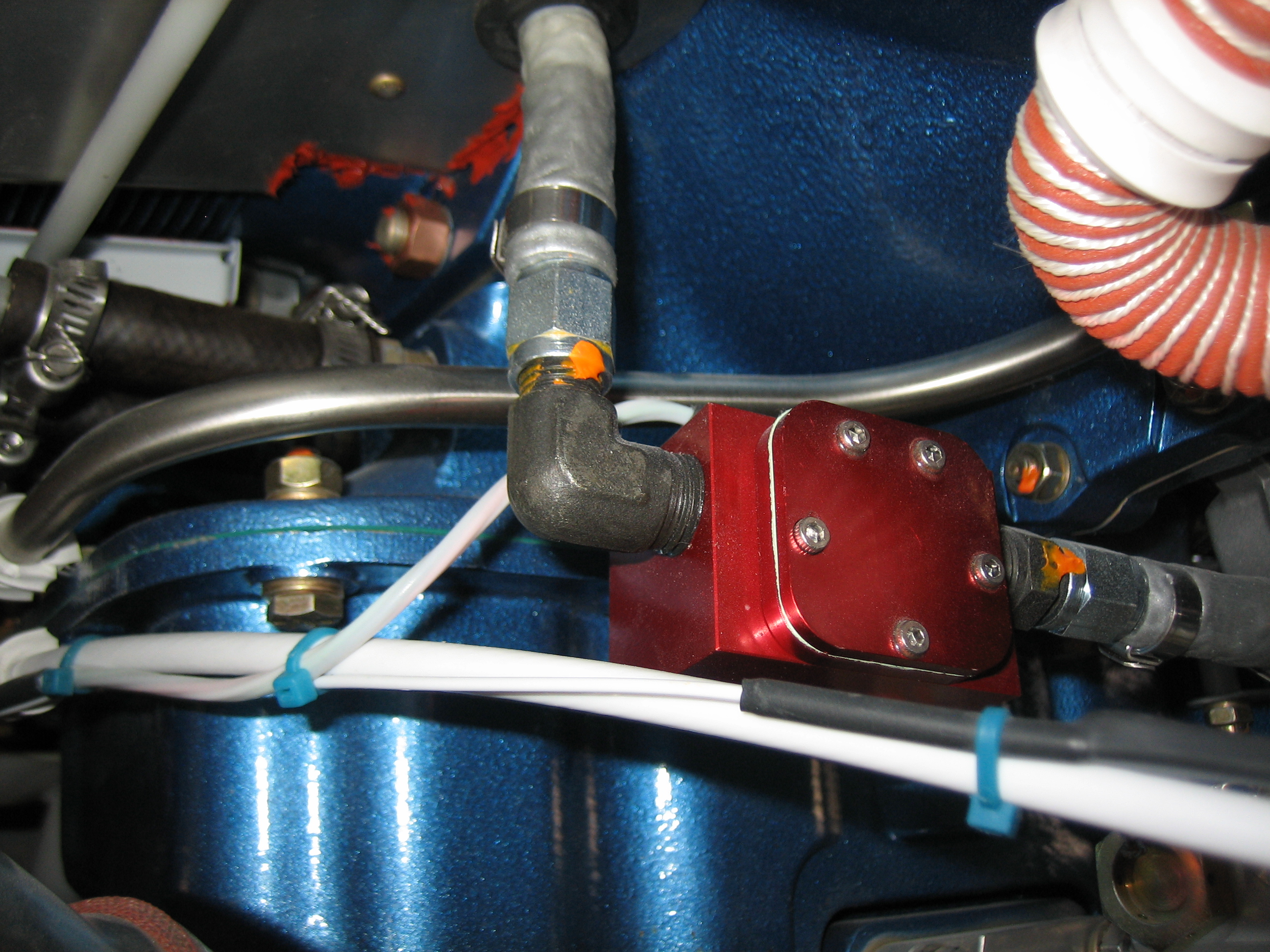
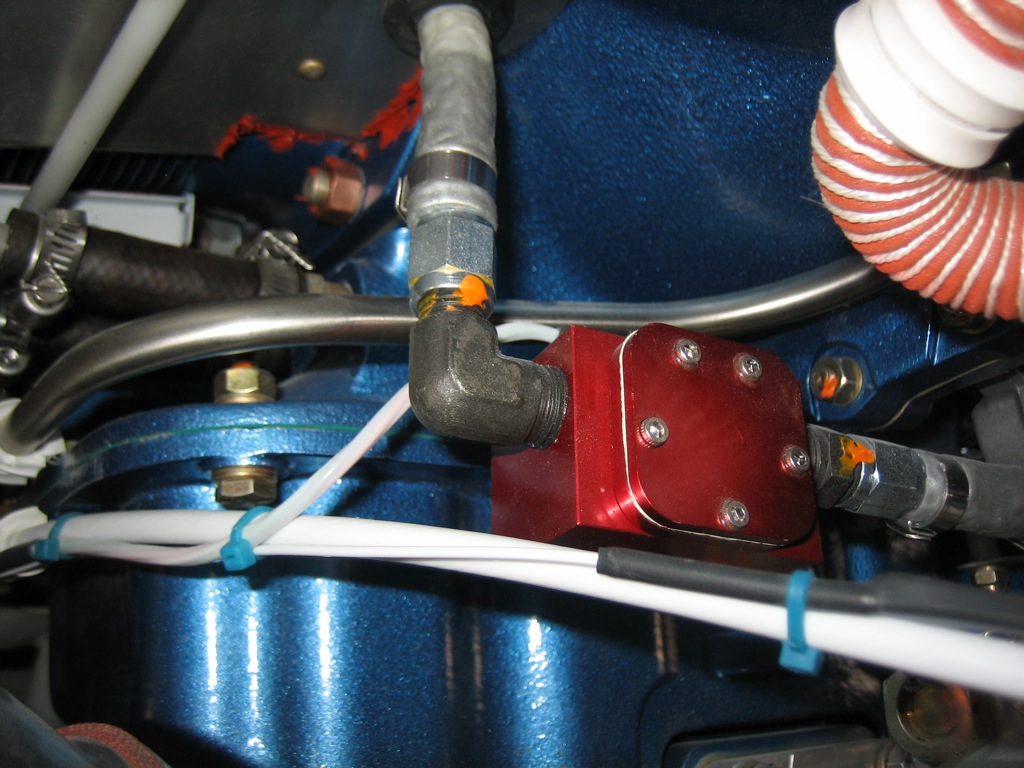
Now, on to the things that were caught during the inspection.  Let’s start with a few things that were squawked, but are not actually issues.  A couple of people questioned the mounting of my fuel flow transducer which is simply suspended from the fuel lines.  Apparently, there are two versions of the red cube.  The earlier one didn’t tolerate being rigidly mounted to the engine, but the later one could be mounted like this or to the sump.  When I purchased this, I called the manufacturer and they recommended this mounting approach.
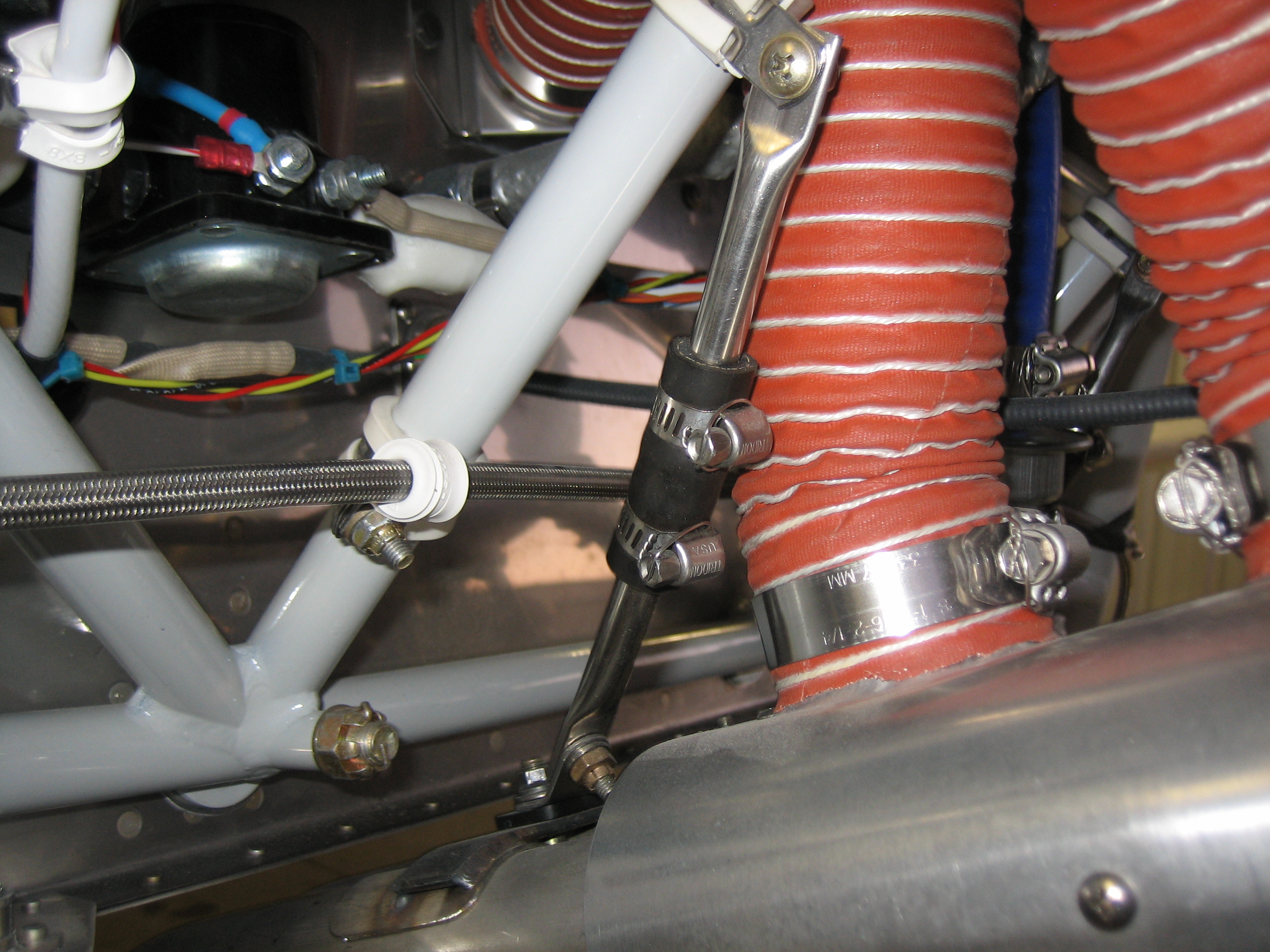
Another builder squawked that there was not enough rubber material on the exhaust hangers which would not allow sufficient movement in the exhaust pipe.  Larry Vetterman specifies that the stainless steel tubes only be separated by 1/4″ inside the rubber tubing, so this is installed as the manufacturer recommends.
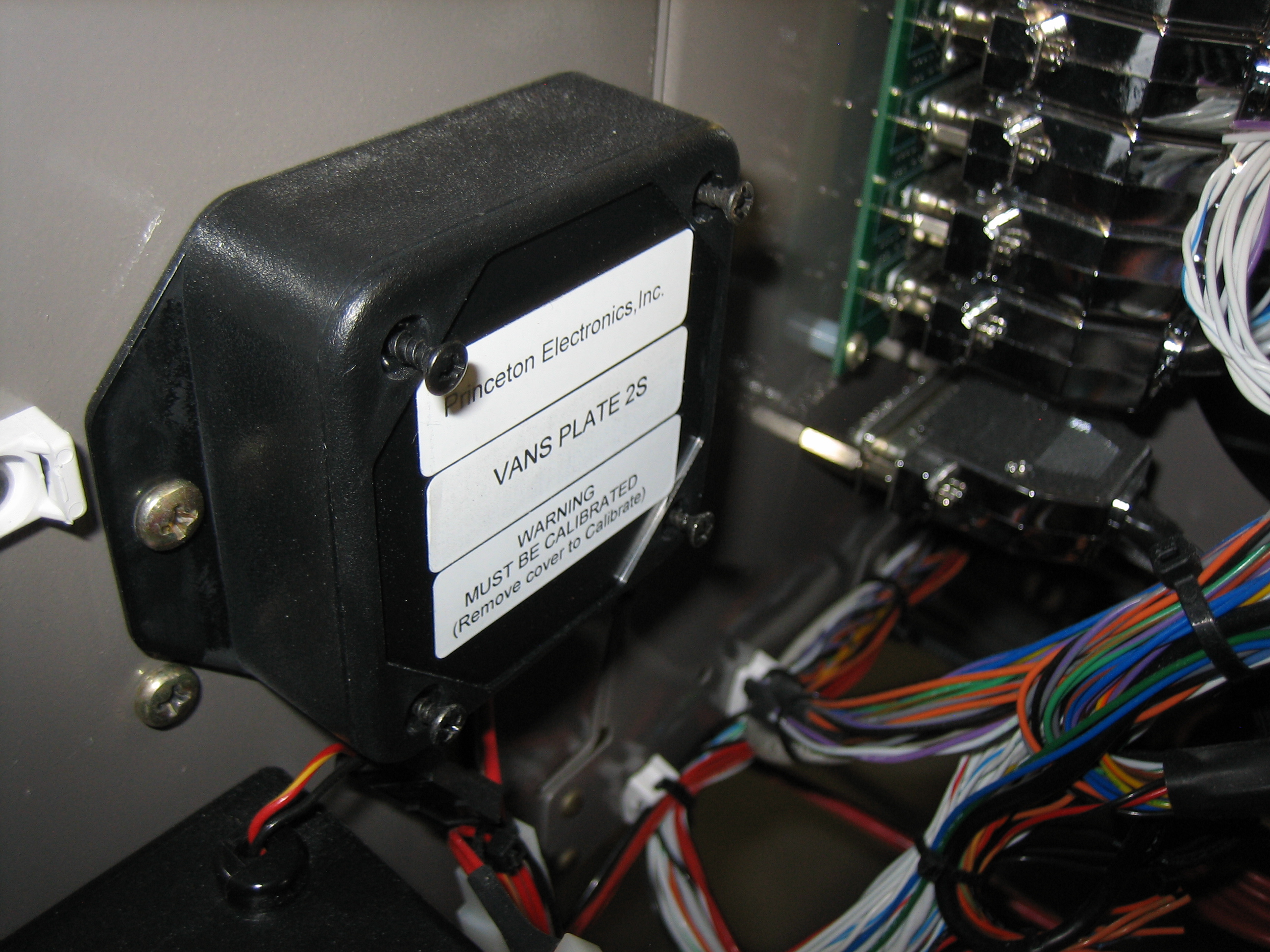
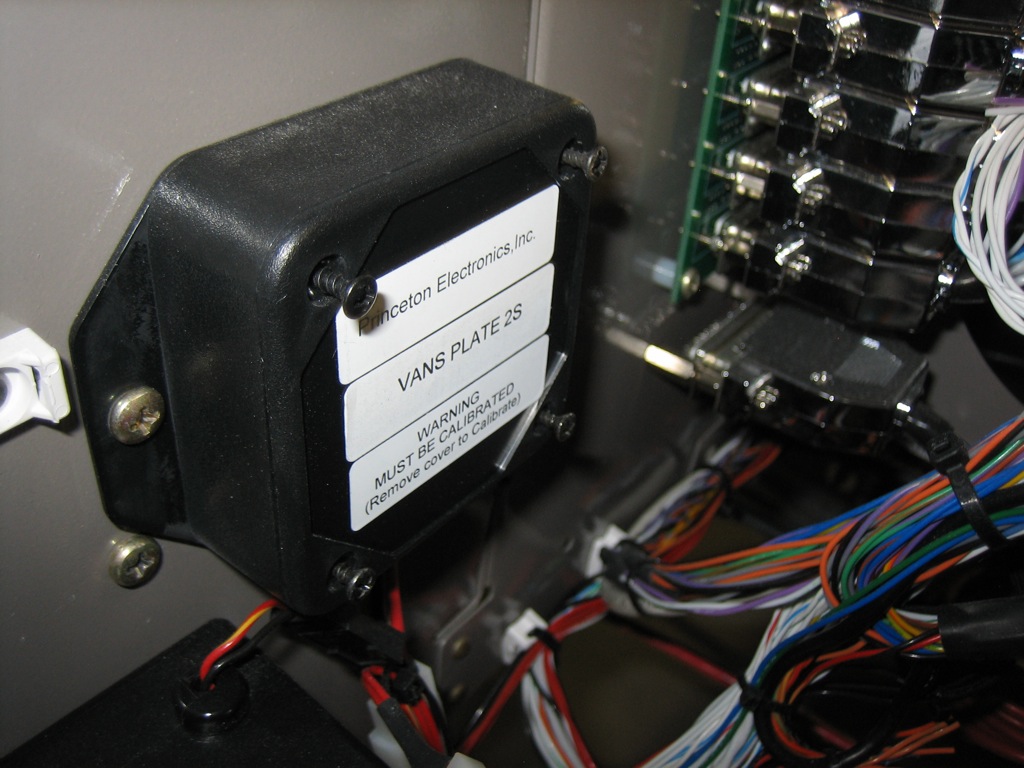
Next, let’s move on to some things that are actually issues, but I knew about.  Someone mentioned that the screws weren’t fully installed in the fuel senders.  This is because I haven’t had a chance to calibrate the fuel tanks.  I have to remove this cover plate to do the calibration, so I left the screws loose until this is taken care of.
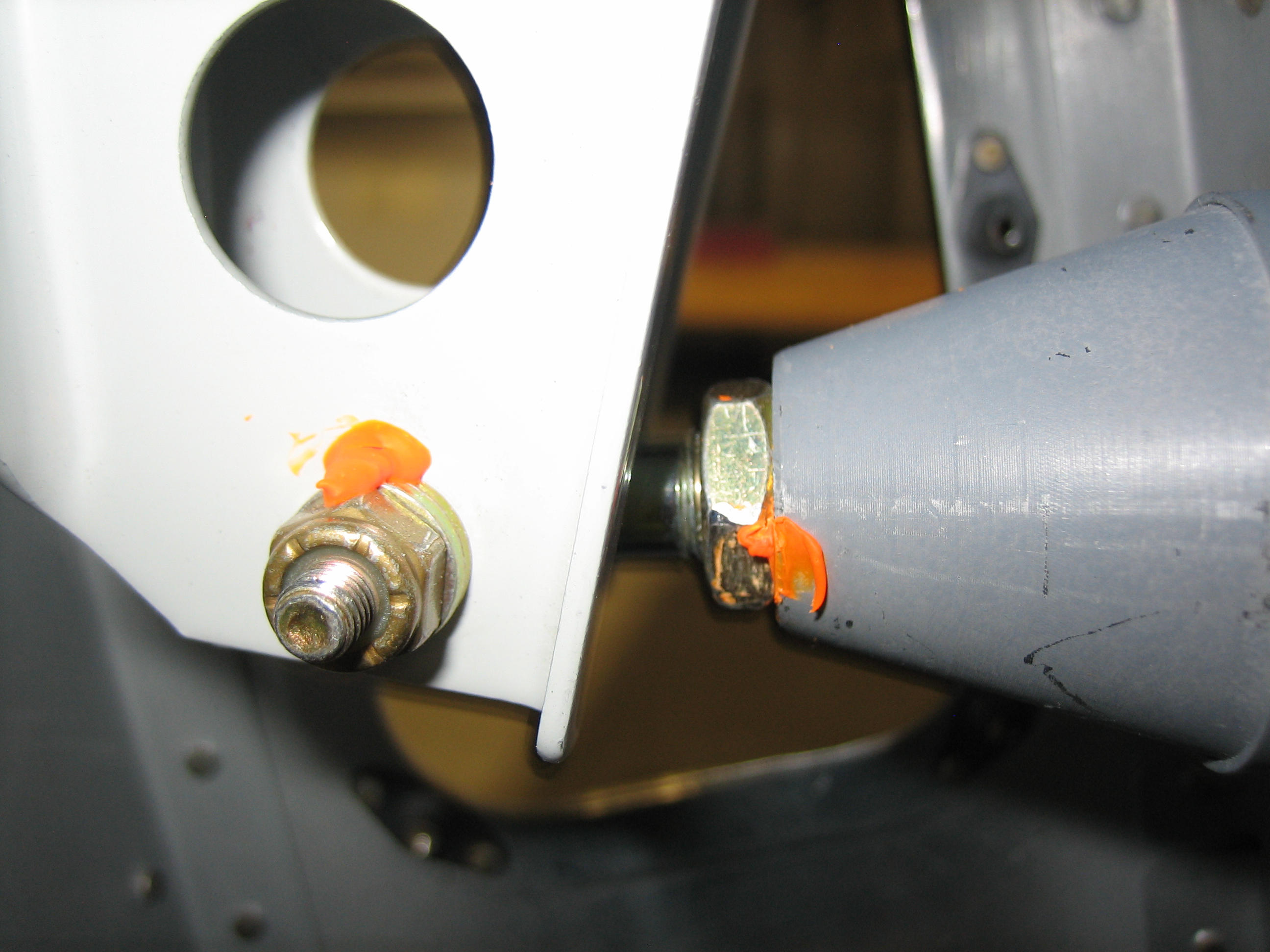
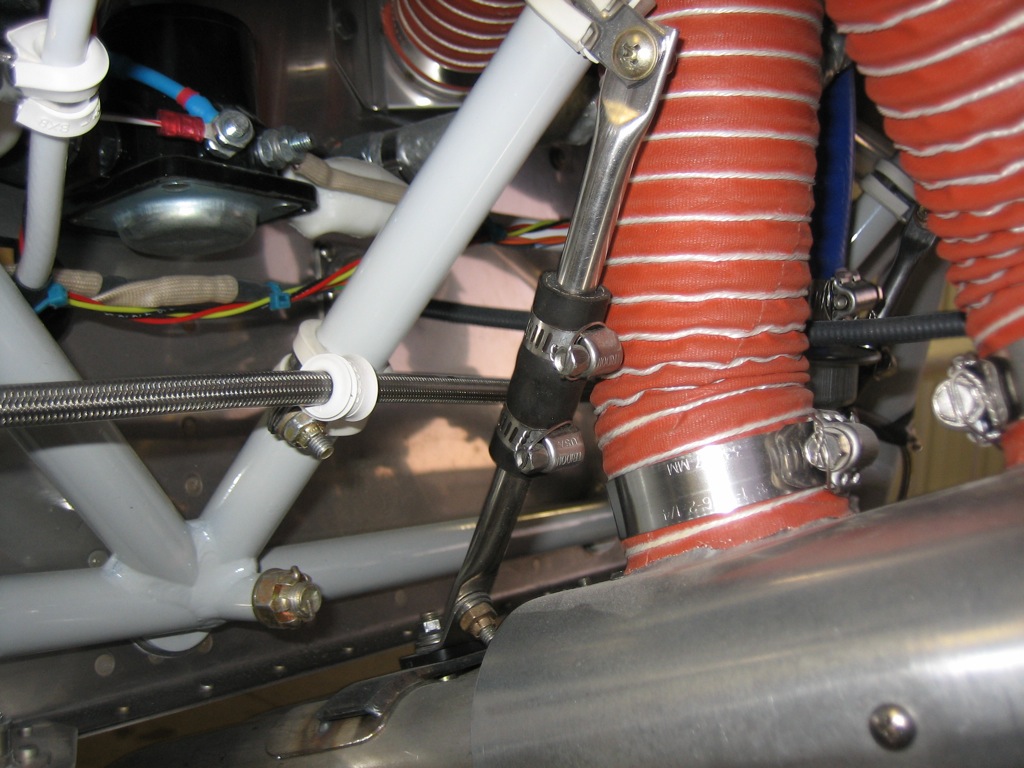
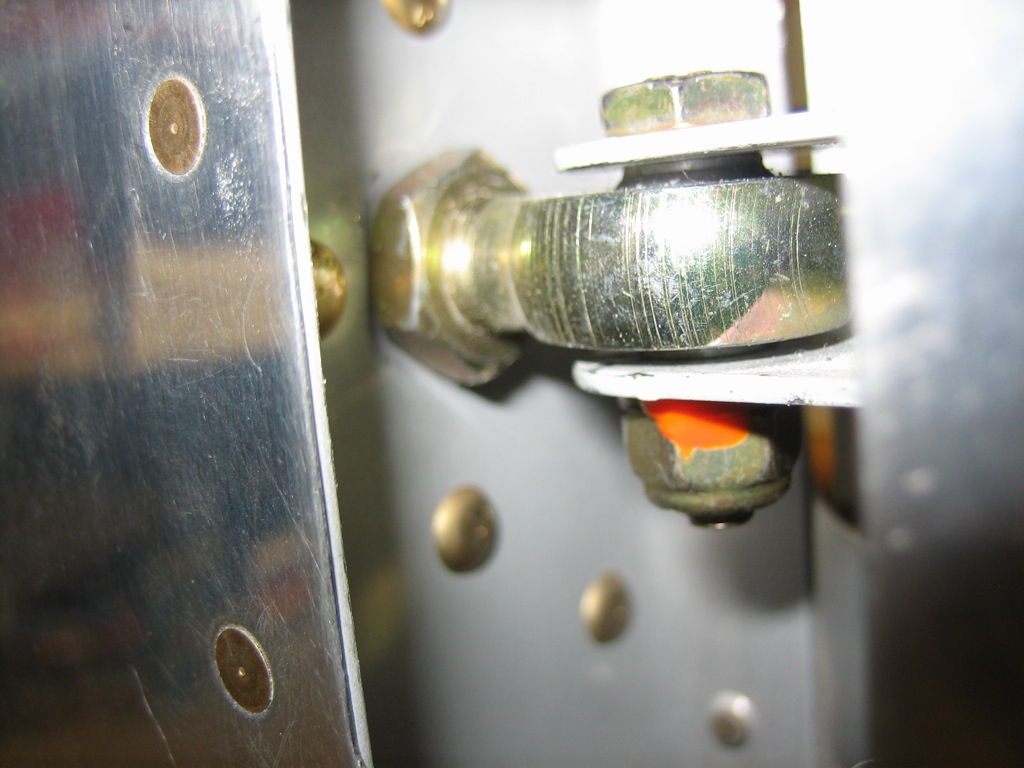
Another builder noticed that the jam nuts on the empennage bearings weren’t torque sealed.  Although I modified a tool to fit in here, I wanted to modify it further before torquing these down for good.
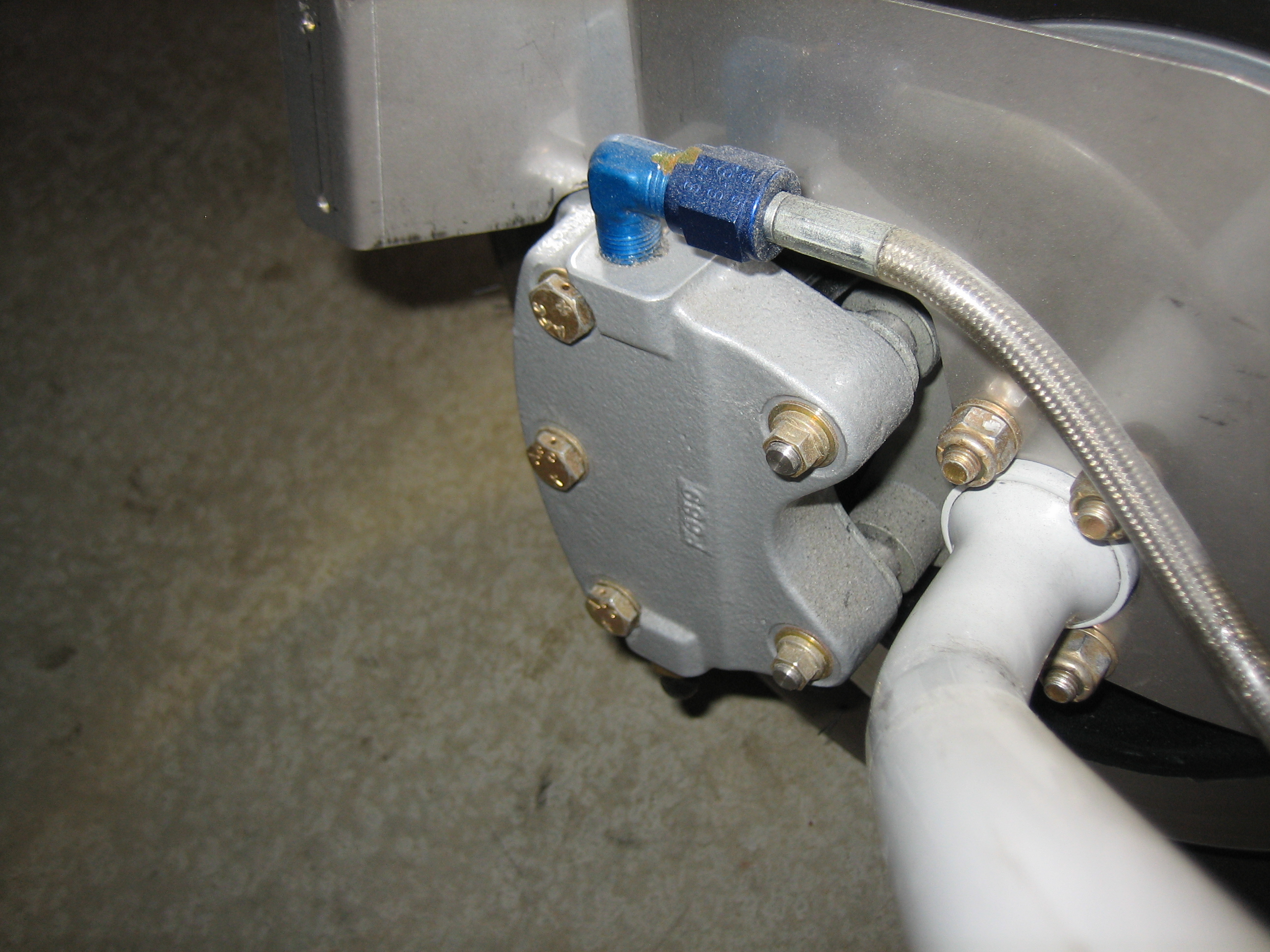
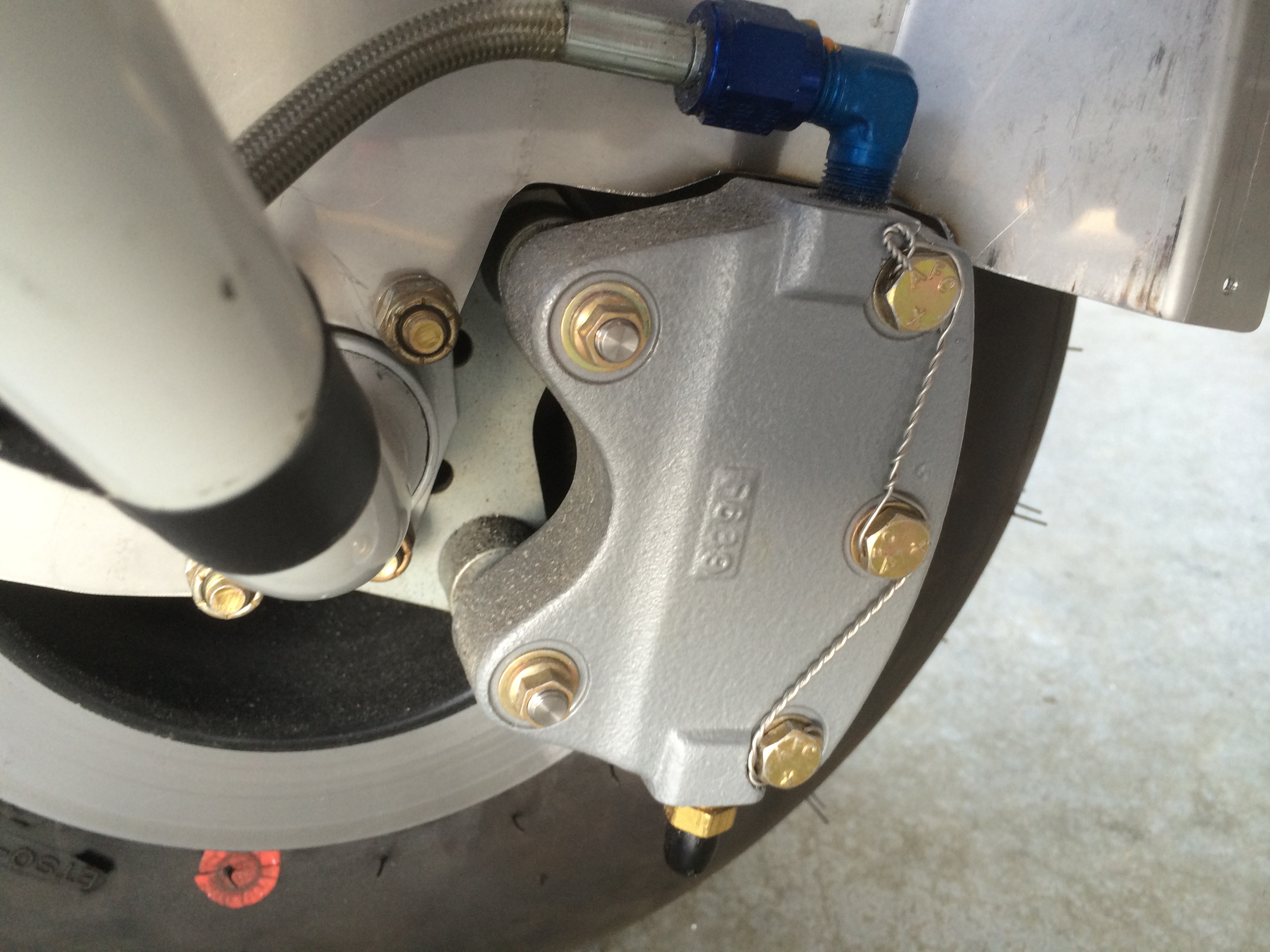
Several builders noticed that my brakes weren’t safety wired.  I had intentionally put this off since I thought I might need to pull the wheels off again, but I don’t think I have any need now before first flight.
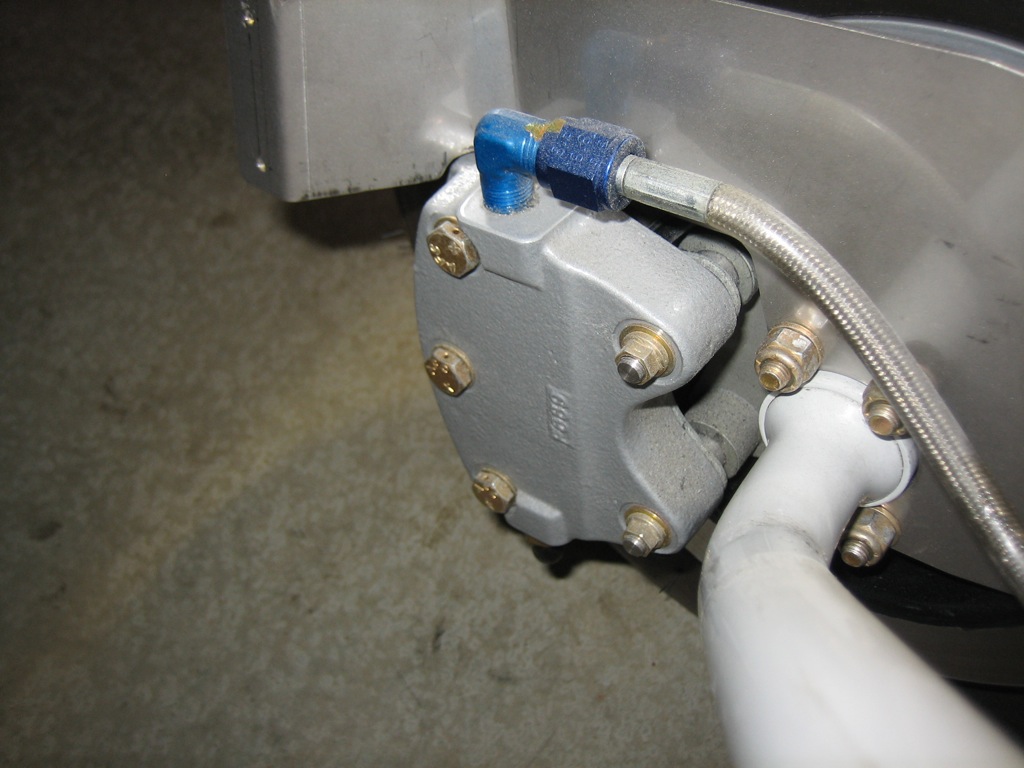
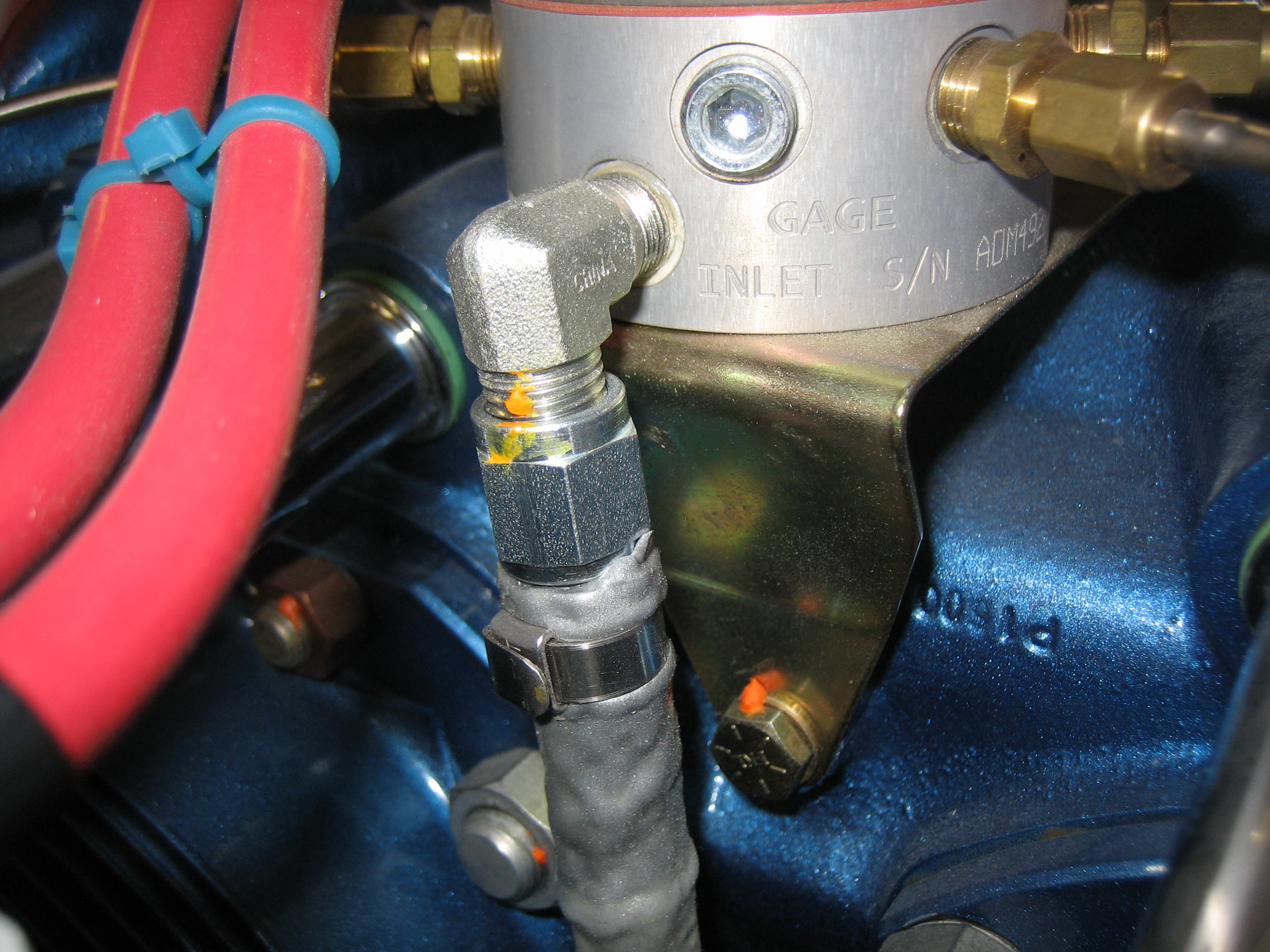
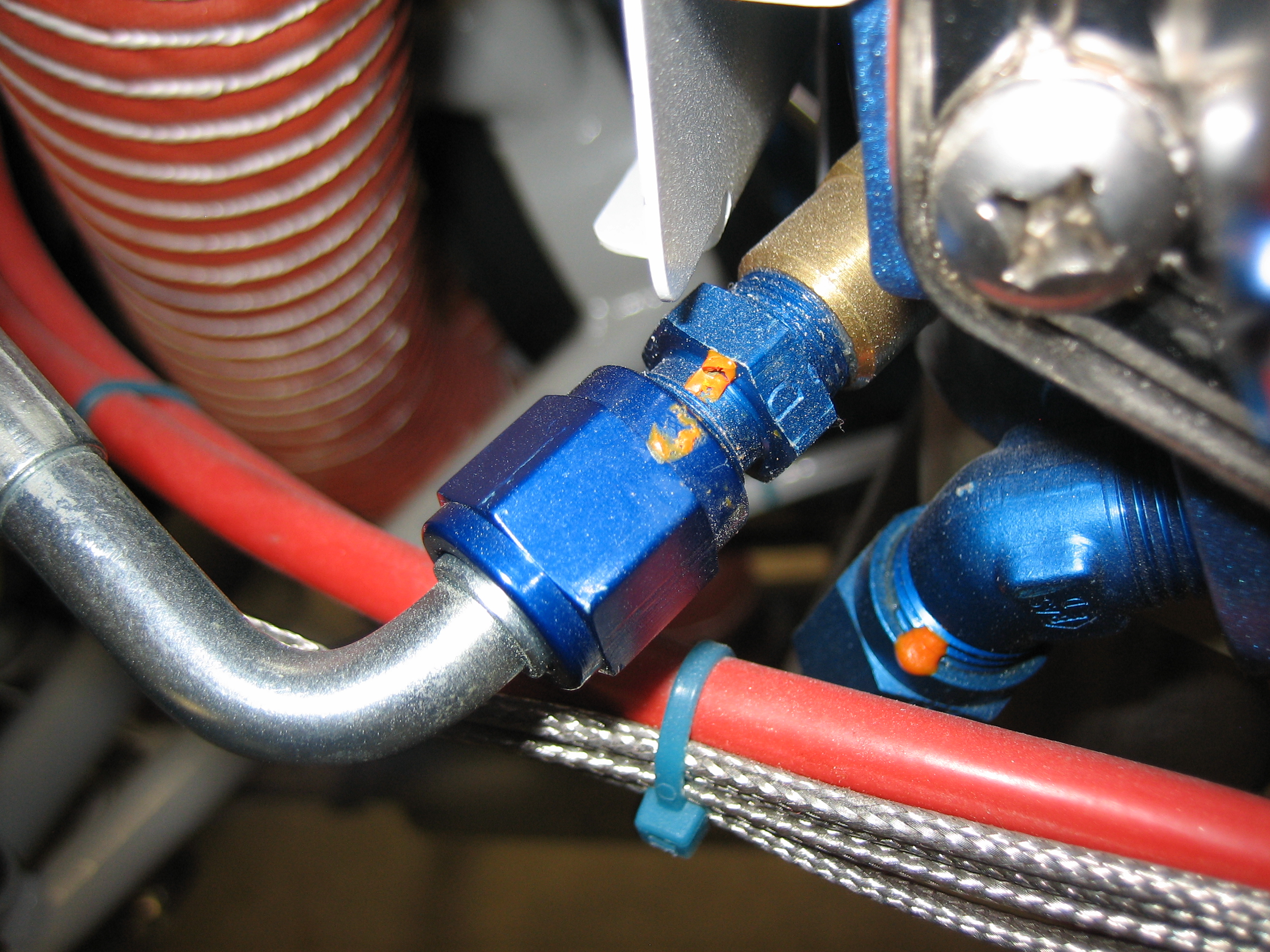
A builder noticed the torque seal was broken on the inlet to the spider.  I had pulled this off before first engine start because I wanted to run some fuel through the line to flush any debris out so that it wouldn’t clog the injectors.  We hooked the line back up before the engine run, but I didn’t put a torque wrench on this then.
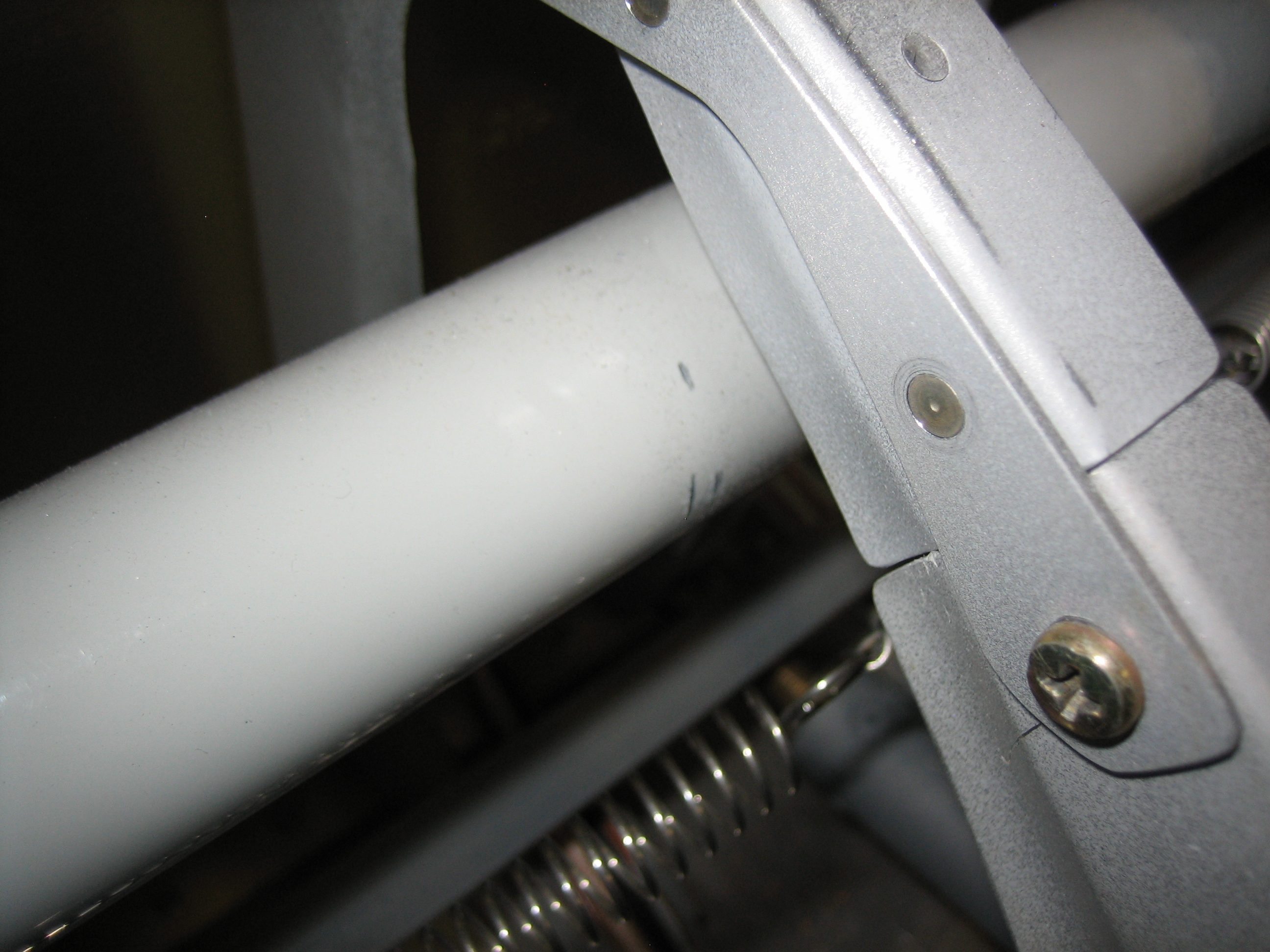
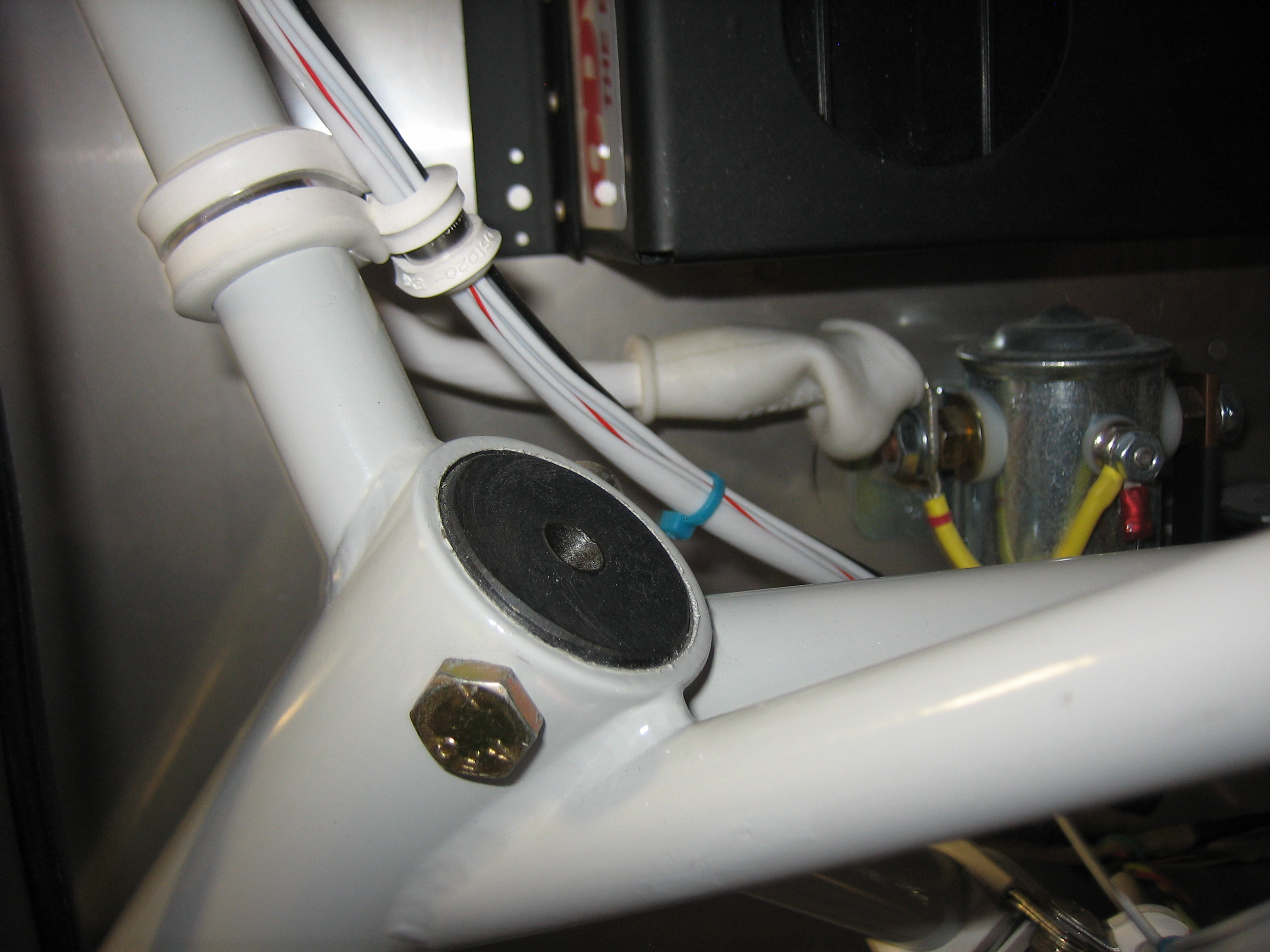
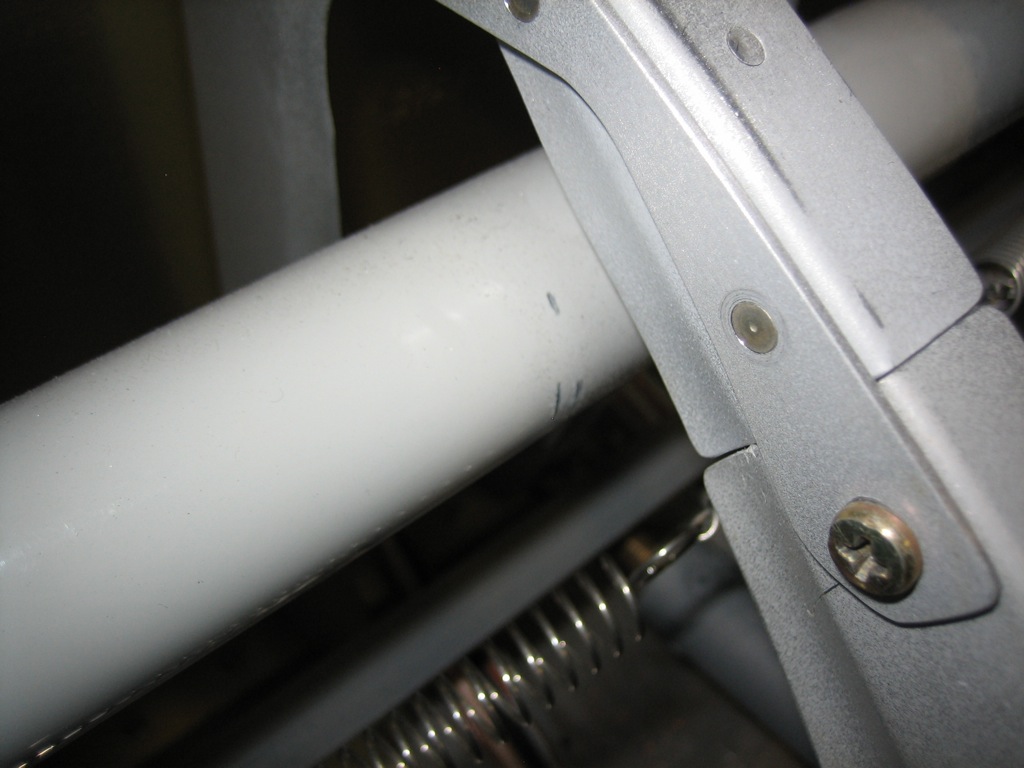
When I was doing the final adjustment of the control sticks, I noticed that the torque tube that connects the control stick was slightly rubbing on the seat ribs.  The builder that also spotted this said it is worse when people are sitting in the seats, so you really want some clearance here.  Fortunately, I made this section removable on all four of these ribs.  I’ll pull these off and remove some material to get a good 1/8″ or so between the ribs and the tube.
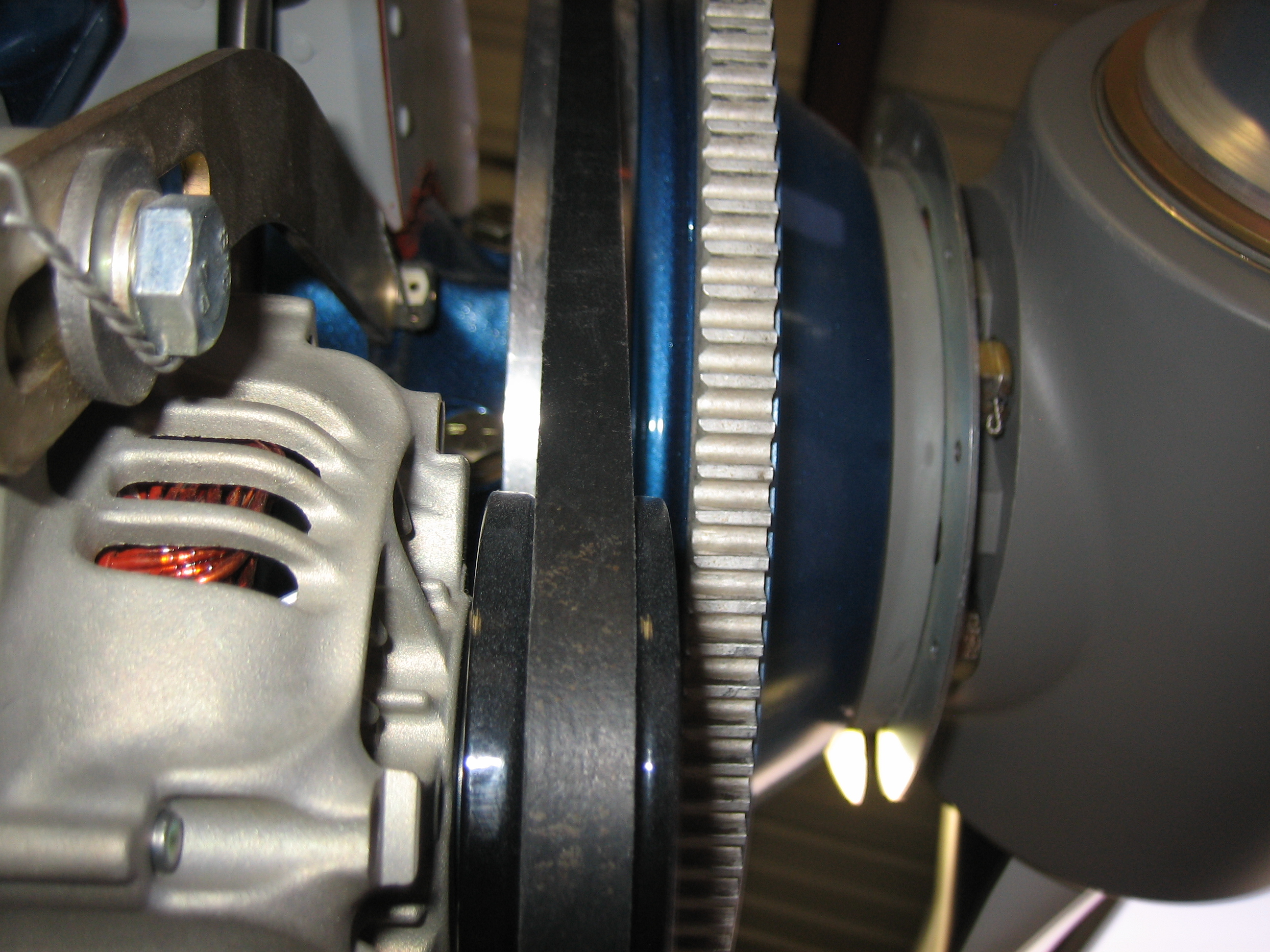
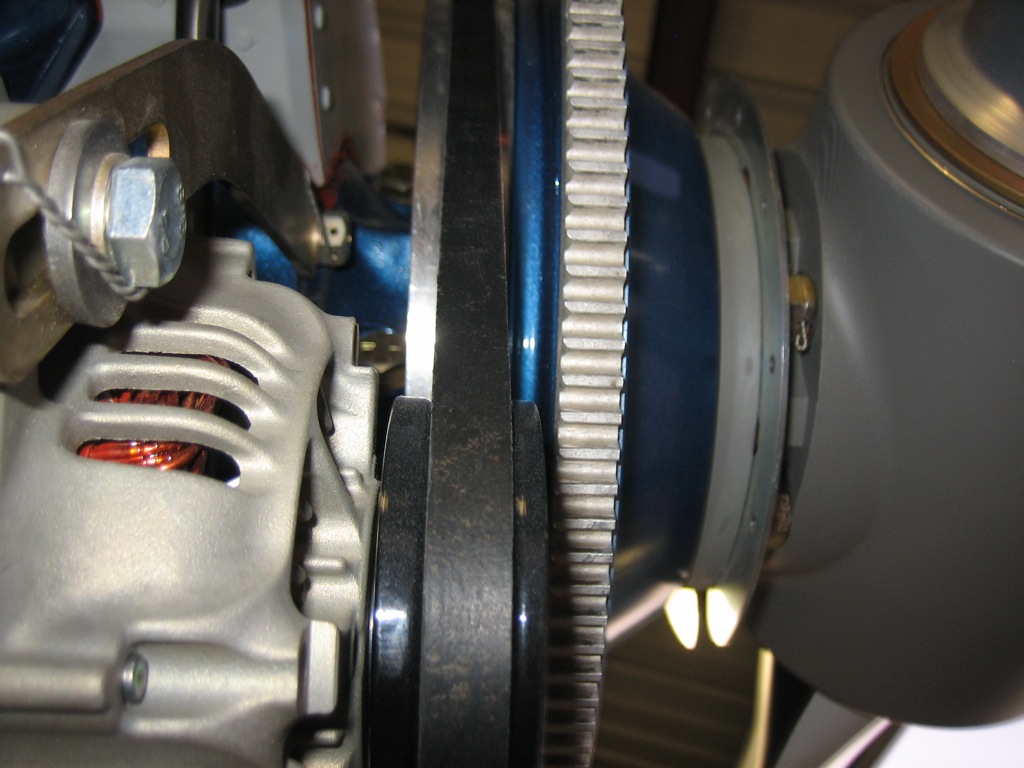
Finally, let’s move on to the things I hadn’t caught.  I couldn’t get a great picture of it, but a couple of people noticed that the alternator pulley wasn’t perfectly aligned with the flywheel.  This will not only make the belt wear faster, it also is apparently hard on the alternator bearings.
There are four thread showing on the outer aileron bolt.  I’ll probably have to add another washer here.
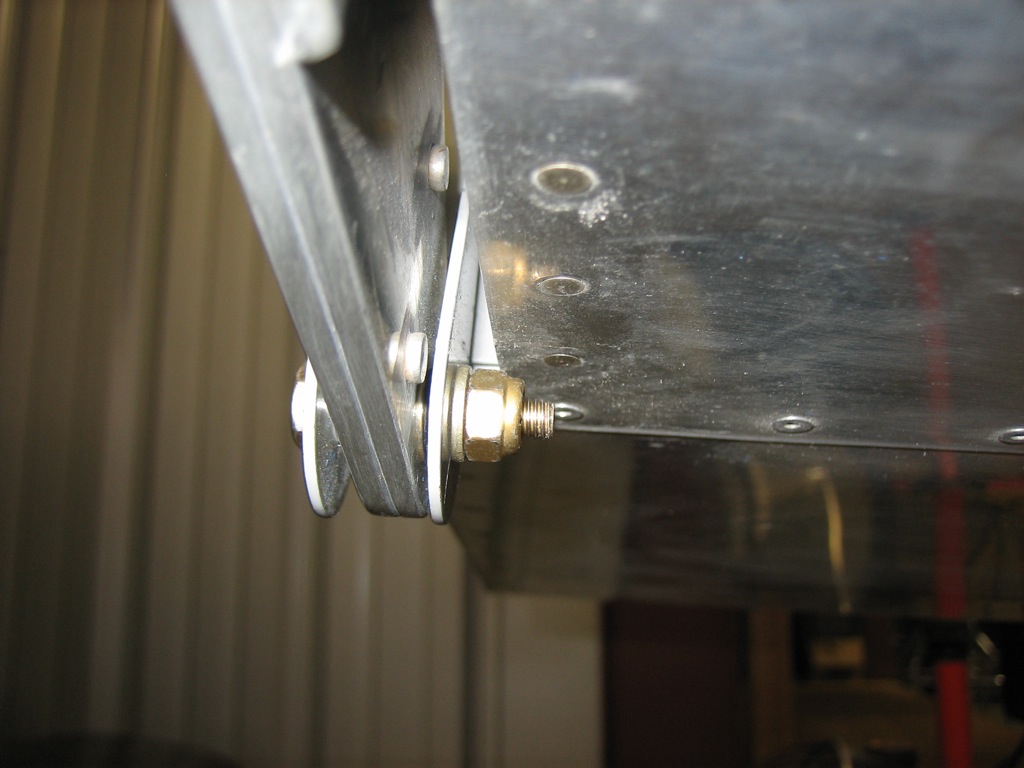
There are also four threads showing on the bolt attaching the pushrod to the elevators horns.
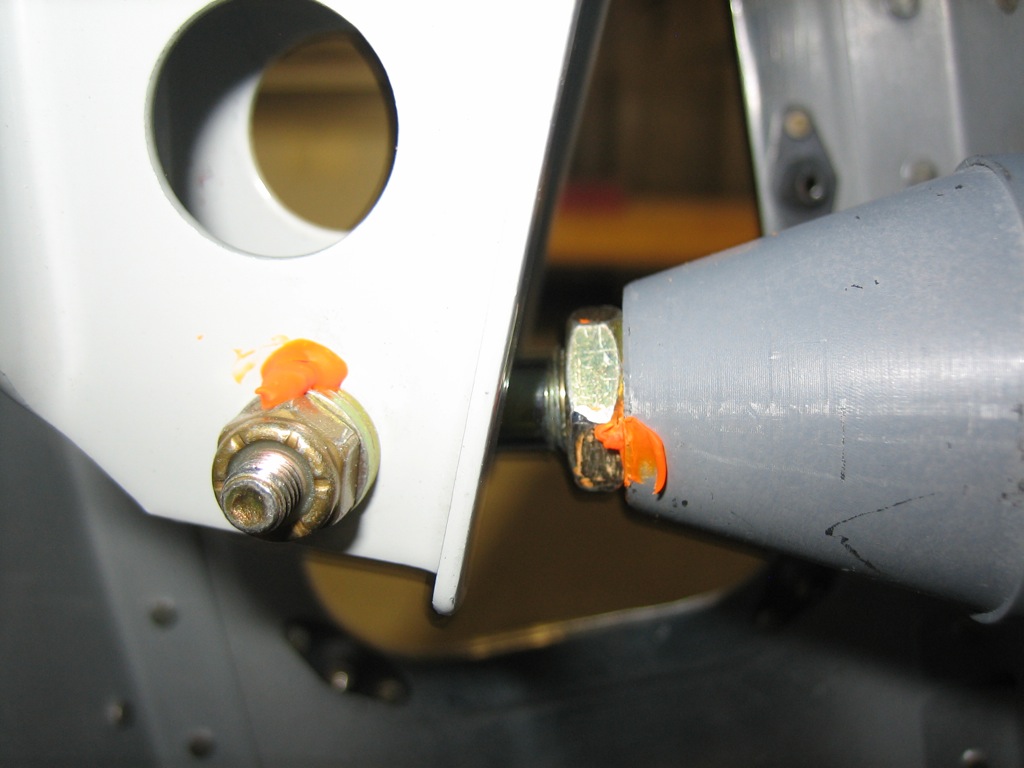
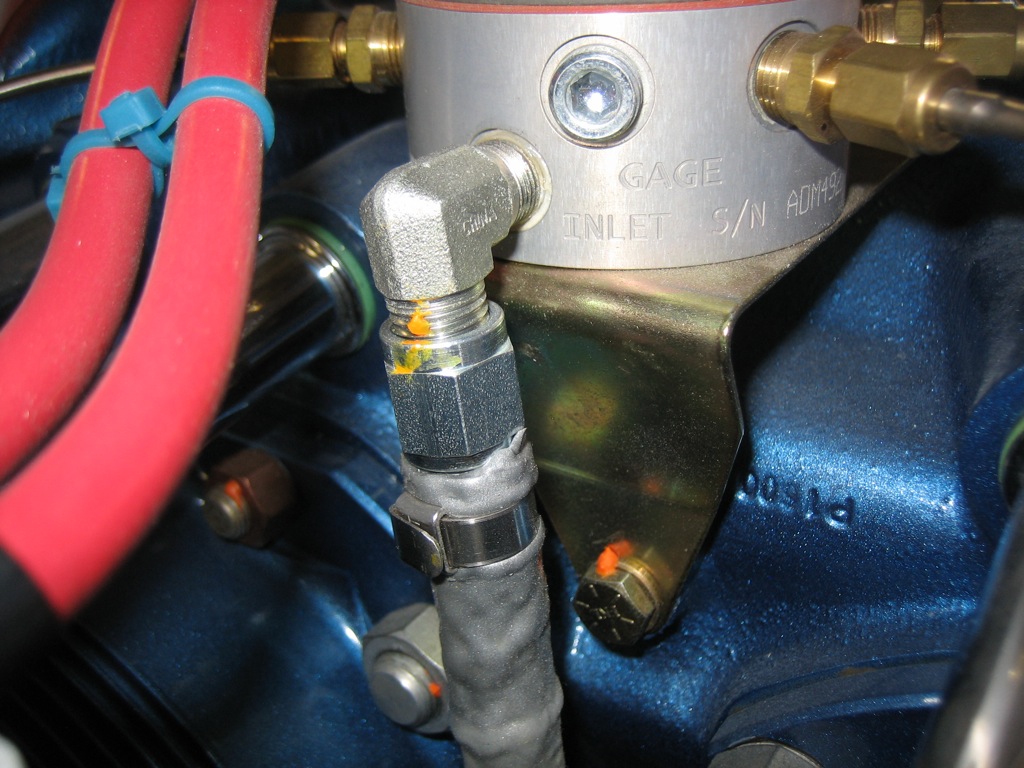
The torque seal was also broken on the manifold pressure hose.  I don’t recall why I removed this, but I’ll need to retorque and seal this.
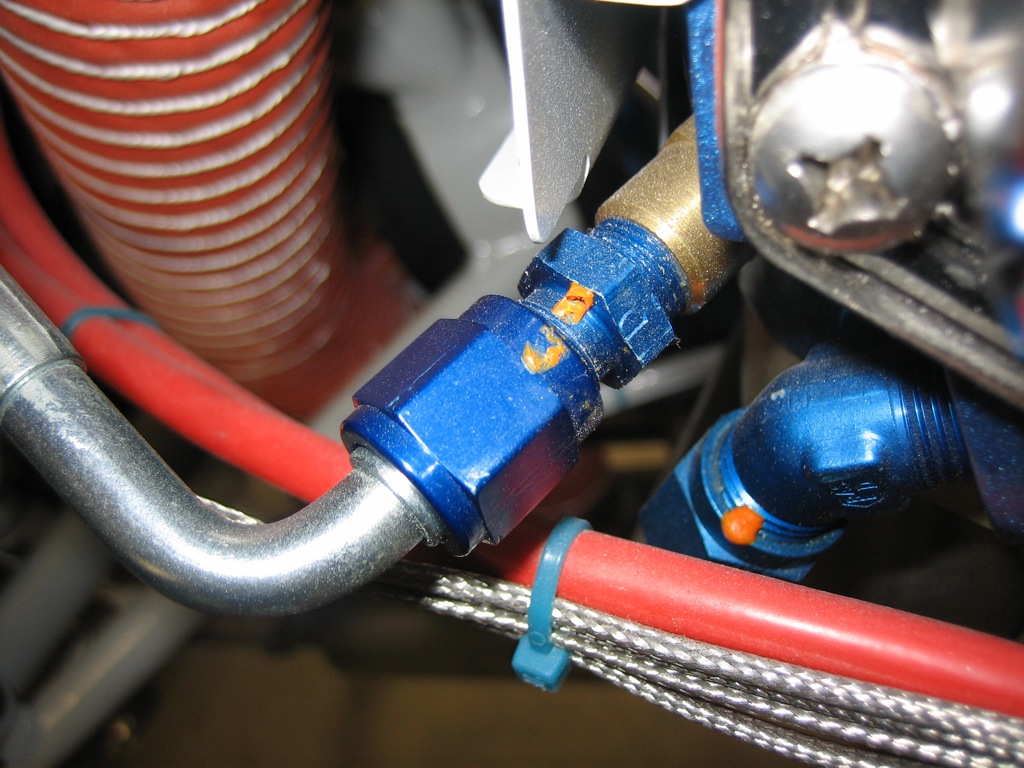
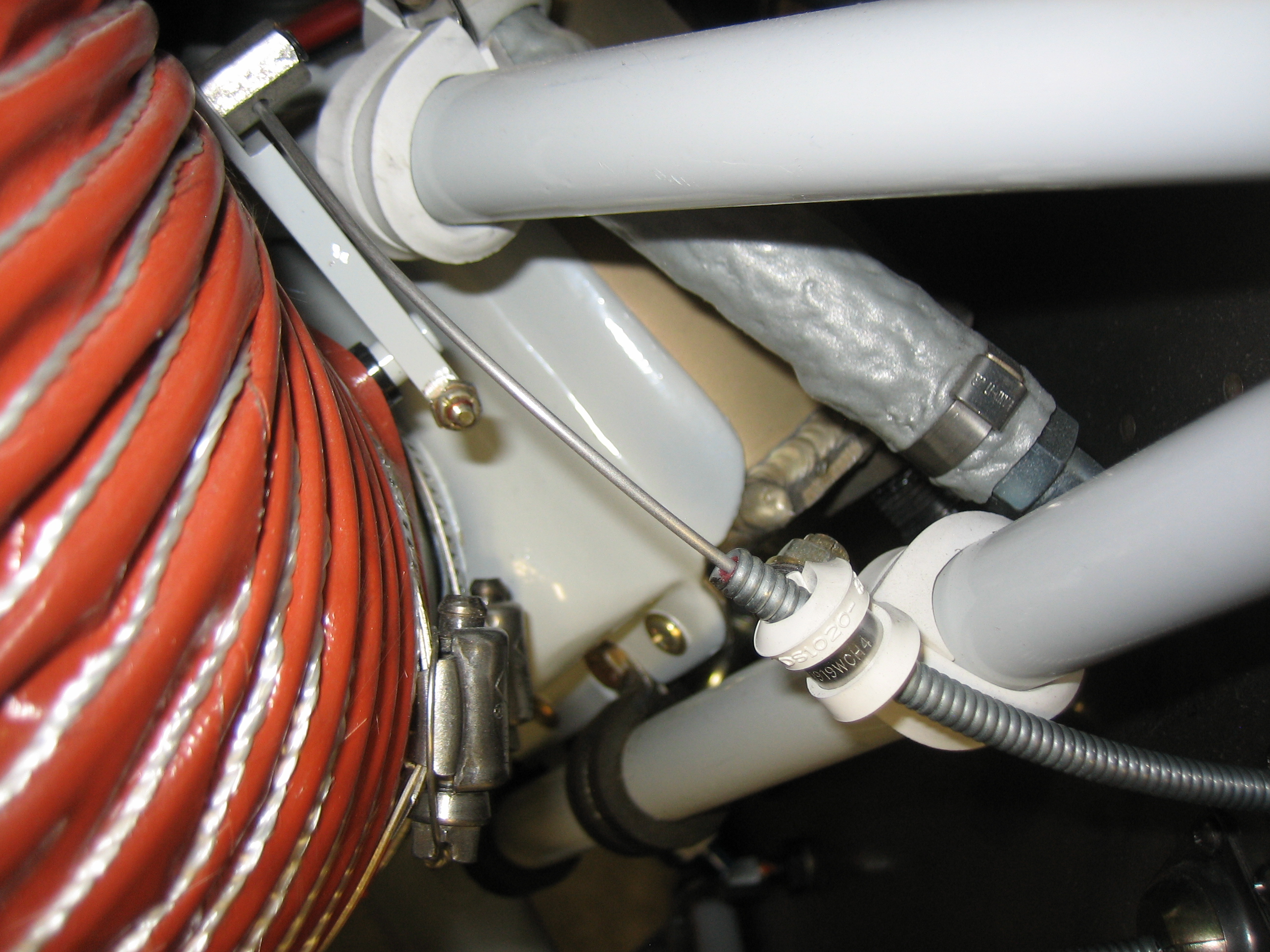
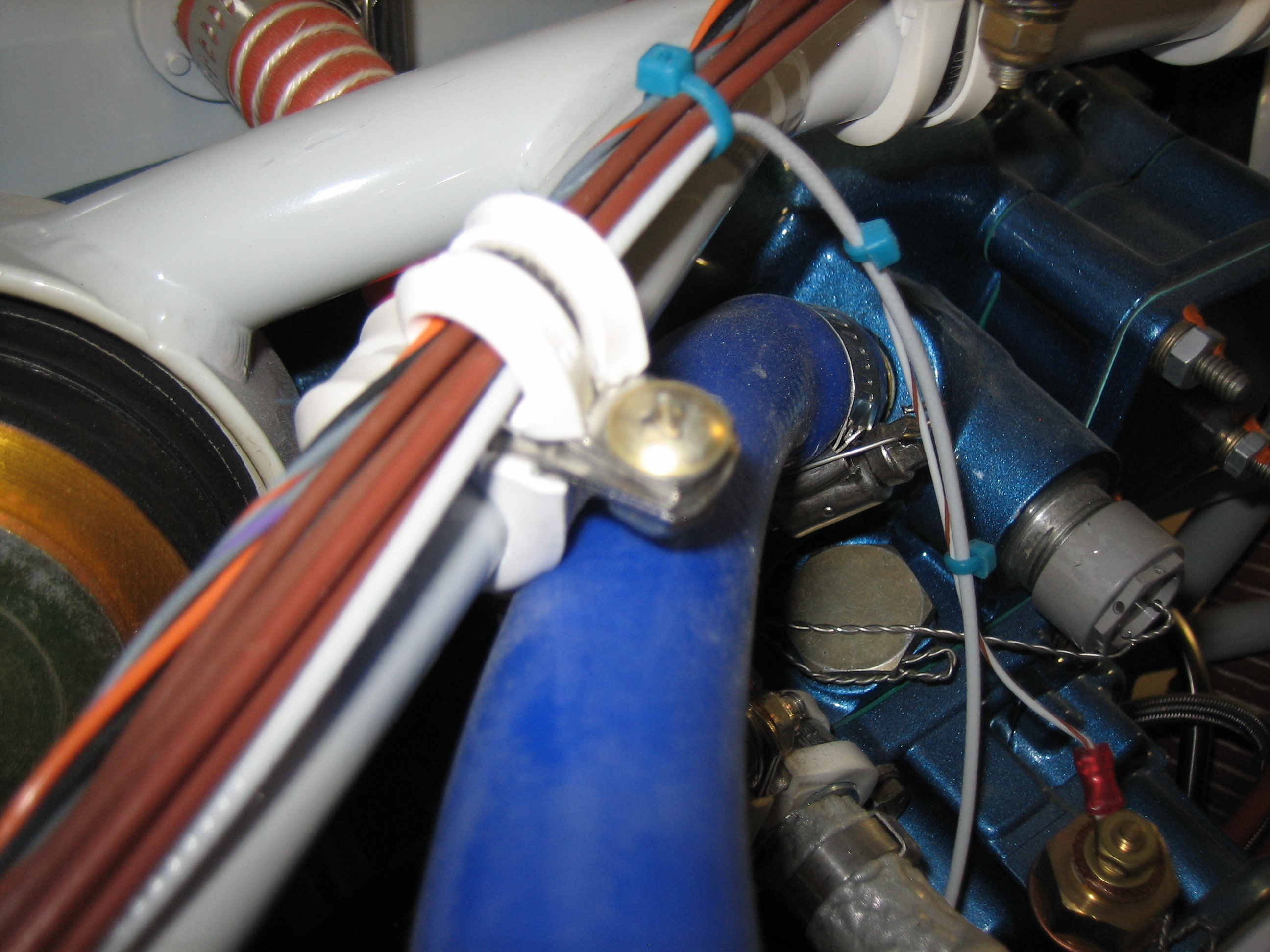
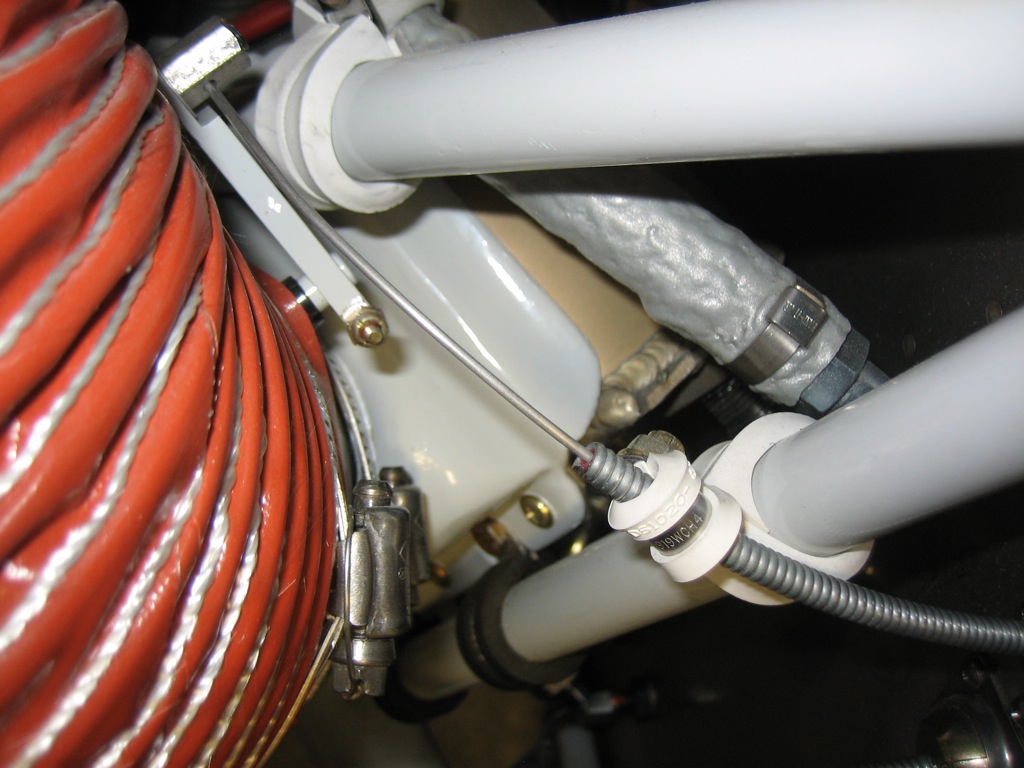
The cushion clamp anchoring the cable sheathing on the oil cooler butterfly valve wasn’t gripping the sheathing well enough and was allowing the cable to move.  I’ll need to swap out this for a non-cushion type clamp.  There was also not enough thread showing on the bolt holding these adel clamps together.
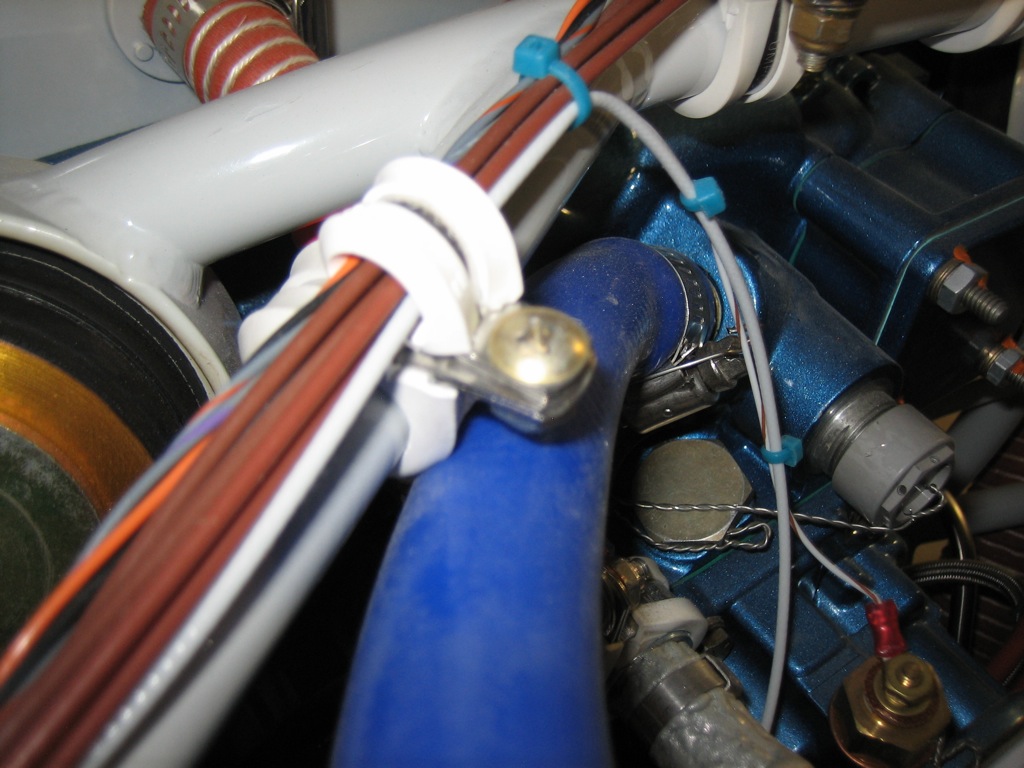
The crankcase breather hose was rubbing on the adel clamps securing wires to the upper engine mount tubing.  I’ll probably add another adel clamp to this group to keep this from chafing.
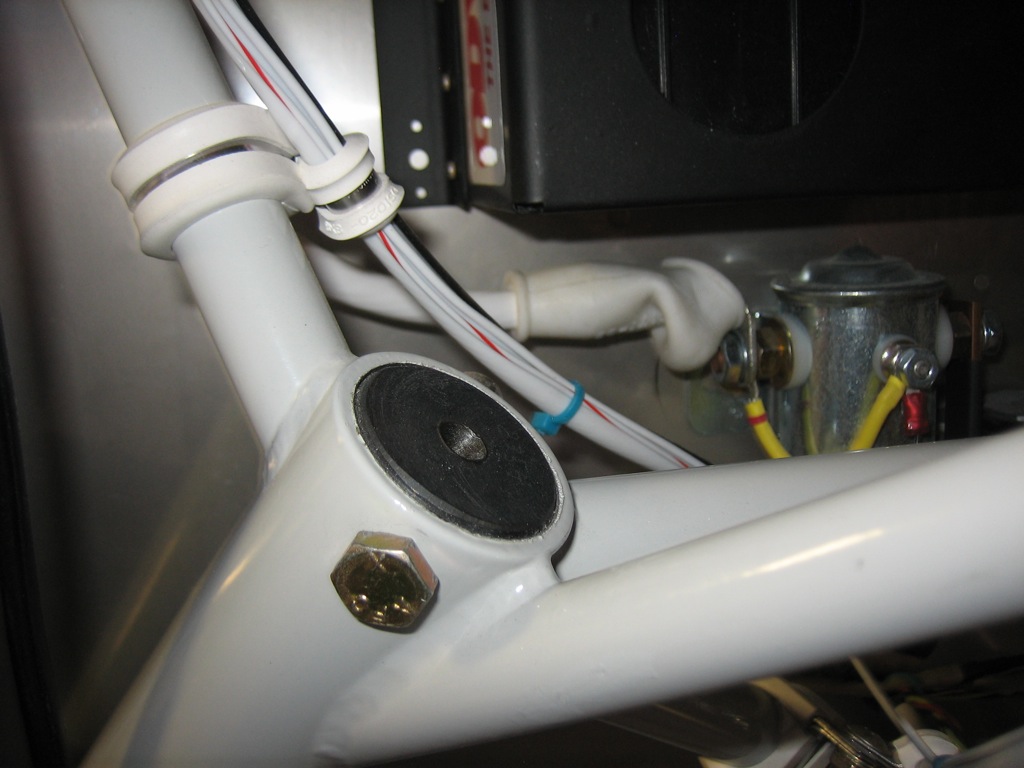
Apparently, the top of the gear leg will rust if left unfinished like this.  I’ll clean it and paint it with the touch-up paint that Van’s sells to match the powder coat on the engine mount.
Weatherstripping, Avionics Cover and Brake Safety Wiring

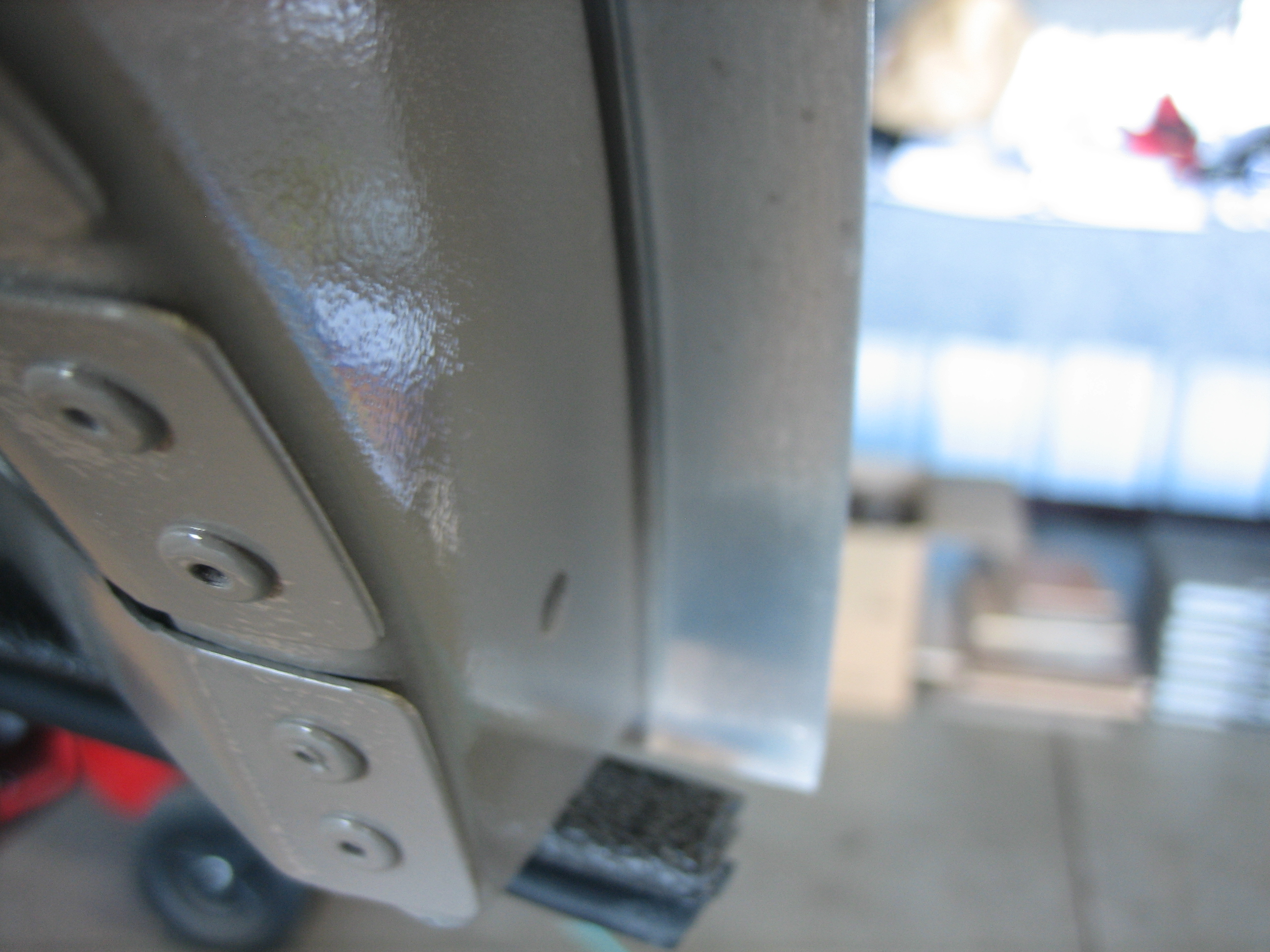
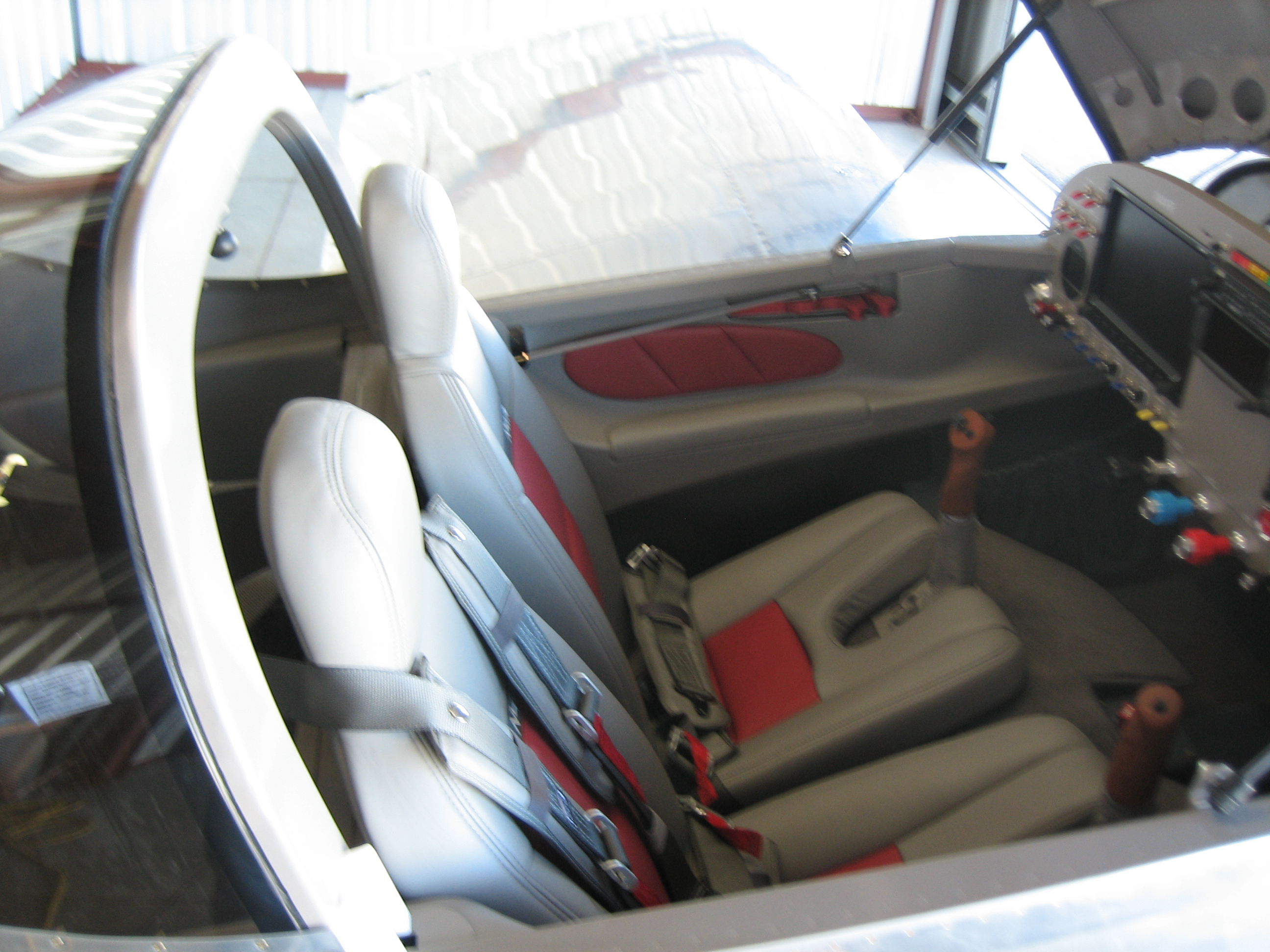
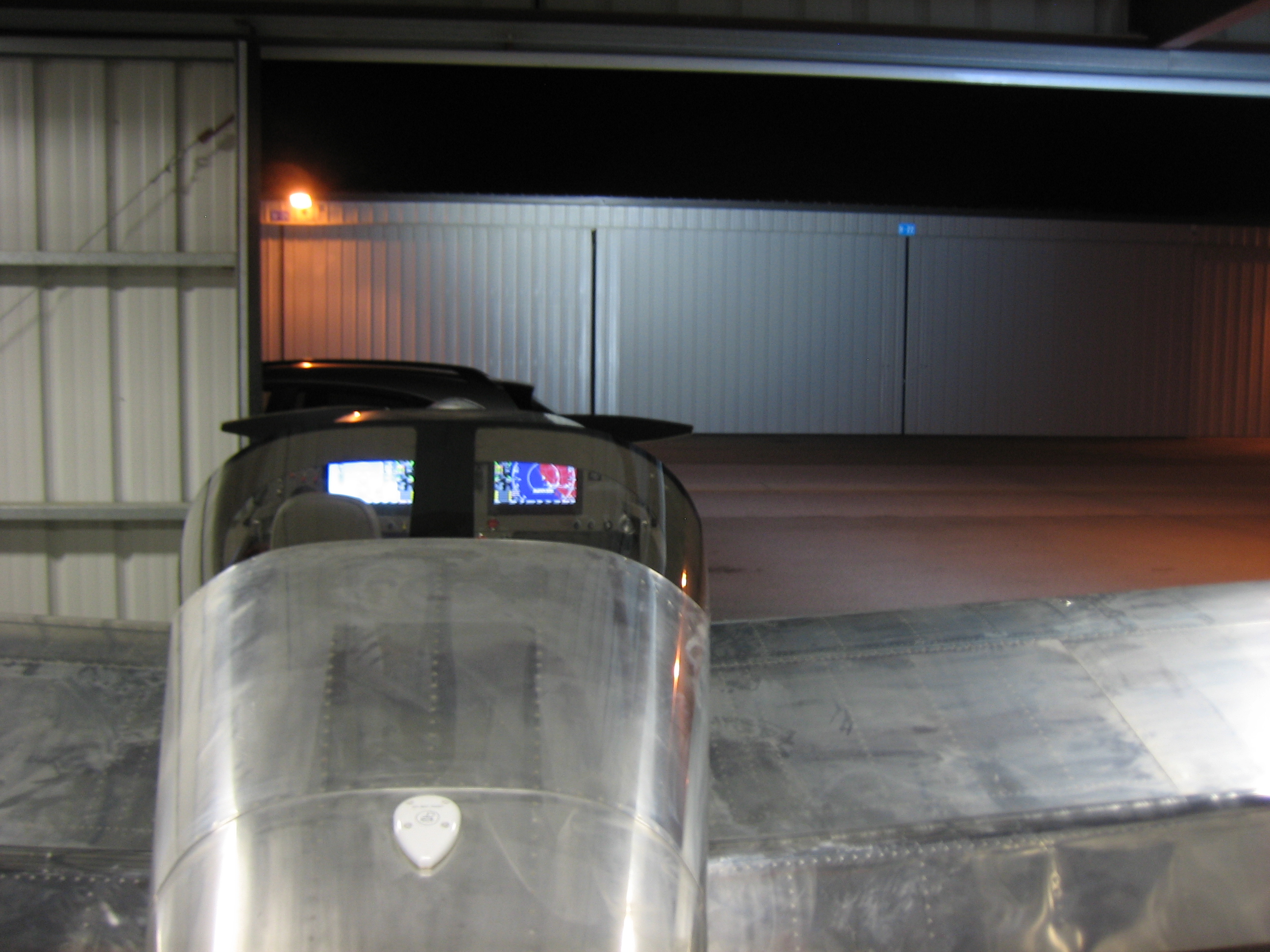
In preparation for wrapping up the canopy and getting it reinstalled, I applied the weather stripping to the flange and trimmed it to fit.  I also recently received my avionics cover from Flightline Interiors, so I installed the supplied velcro and tested the fit.  It works great and should hopefully help me keep my avionics dry.

Next up, I started working through the list of issues that were found in the inspection yesterday.  I safety wired both brakes since I don’t think there is any reason to remove the wheels now before first flight.  I also checked the two bolts identified yesterday as having too many threads showing, and they’re both fine.

Positioned Wingtip Lights

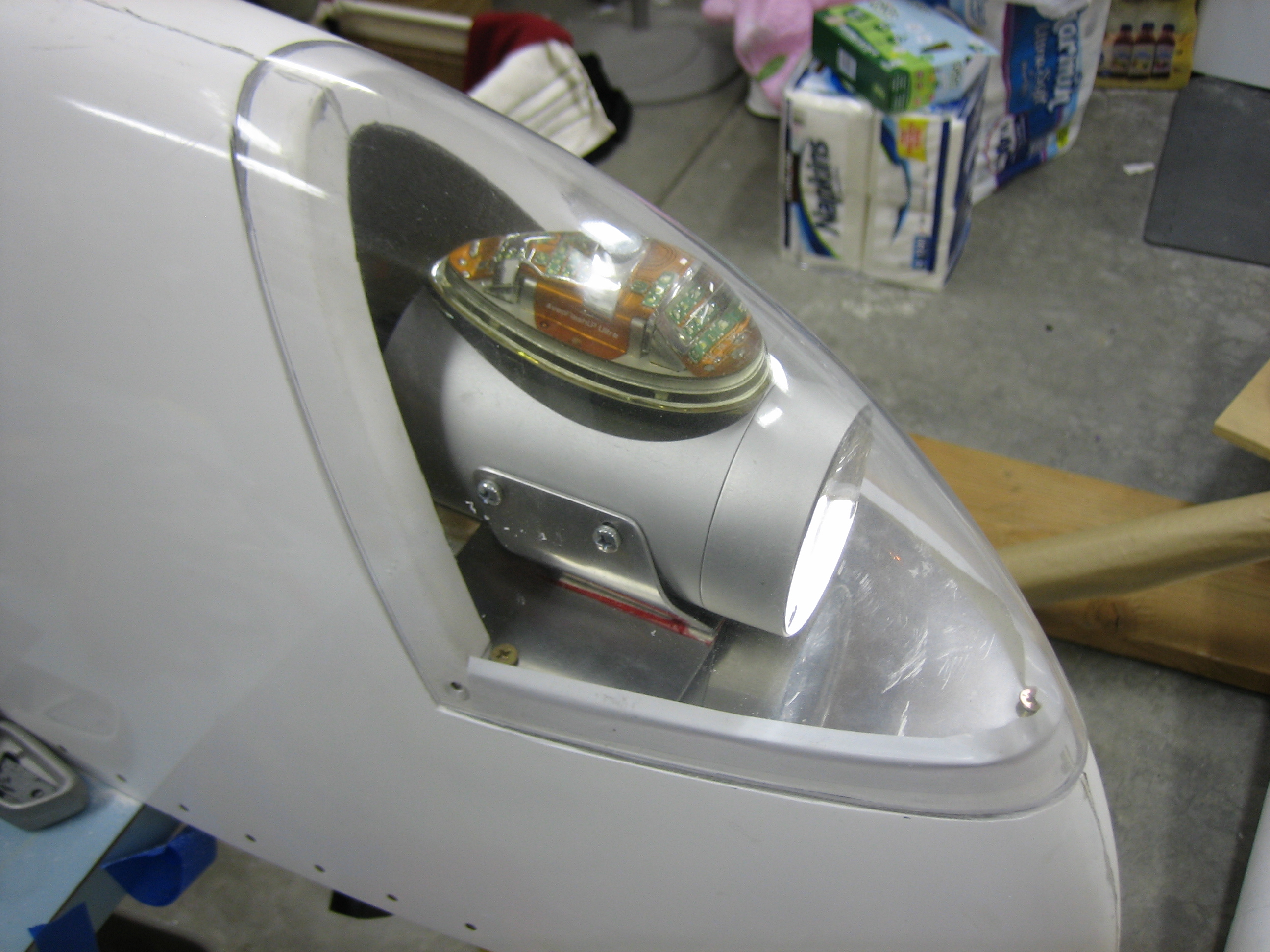
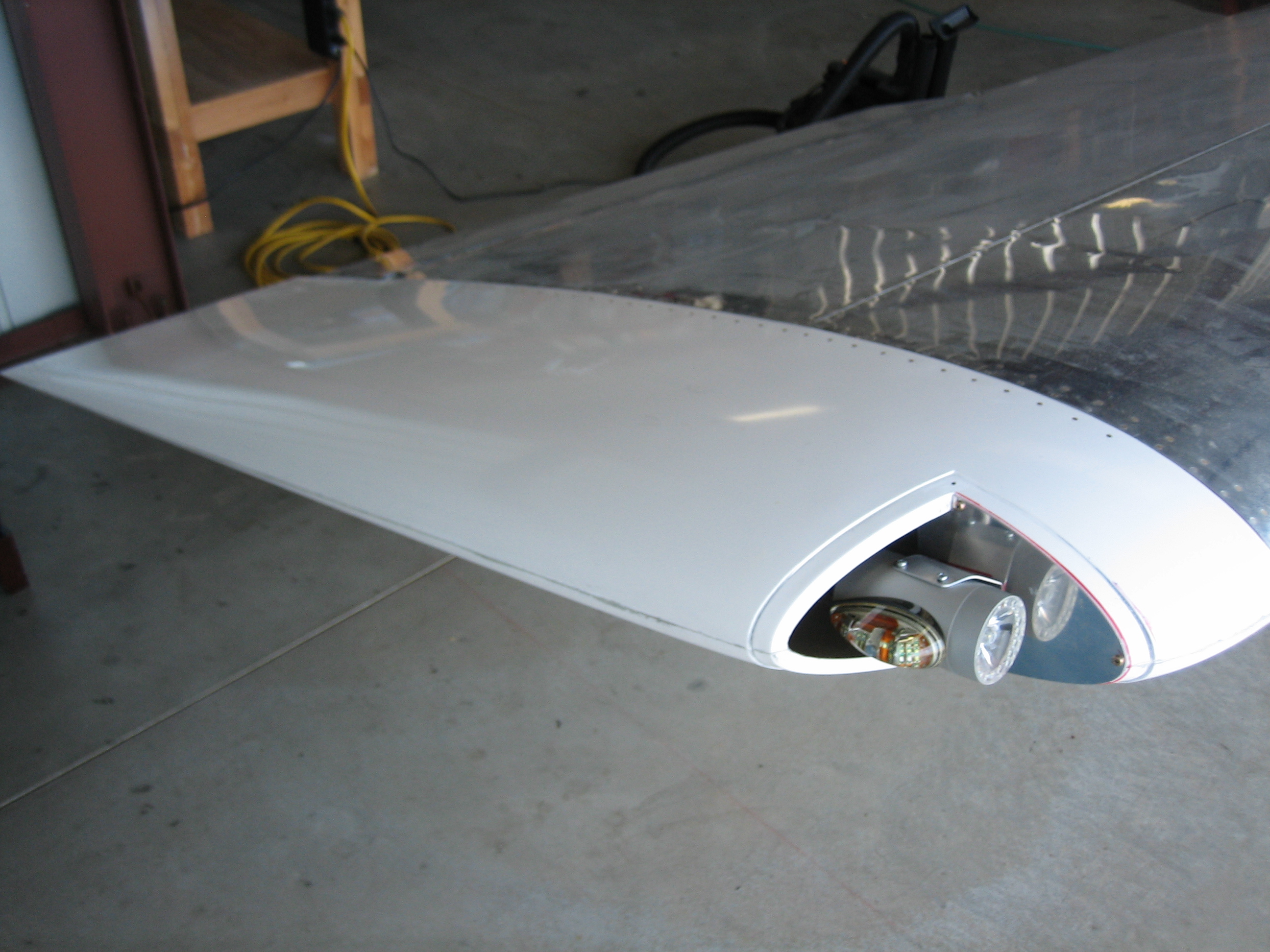
I spent a little time playing with the positioning of the landing lights.  They need to be far enough forward that I can access all of the mounting screws on the top and bottom, and the farther forward the lights are, the better they will illuminate the area right in front of the plane.  They can’t be so far forward that they bump into the lens though.  Since I still need to aim the lights, I needed enough clearance that the lights could be moved a bit.  I ended up moving them back about 1/4″ from where they are in this picture.  I’ve decided to just make the mounting plate sacrificial and use it to get the lights aimed correctly.  Once I’ve flown at night and am happy with the positioning, I’ll fabricate a new plate with only the set of holes I need along with the back plate.

New Fuel Pump, Wingtip Lights and Canopy Fairing

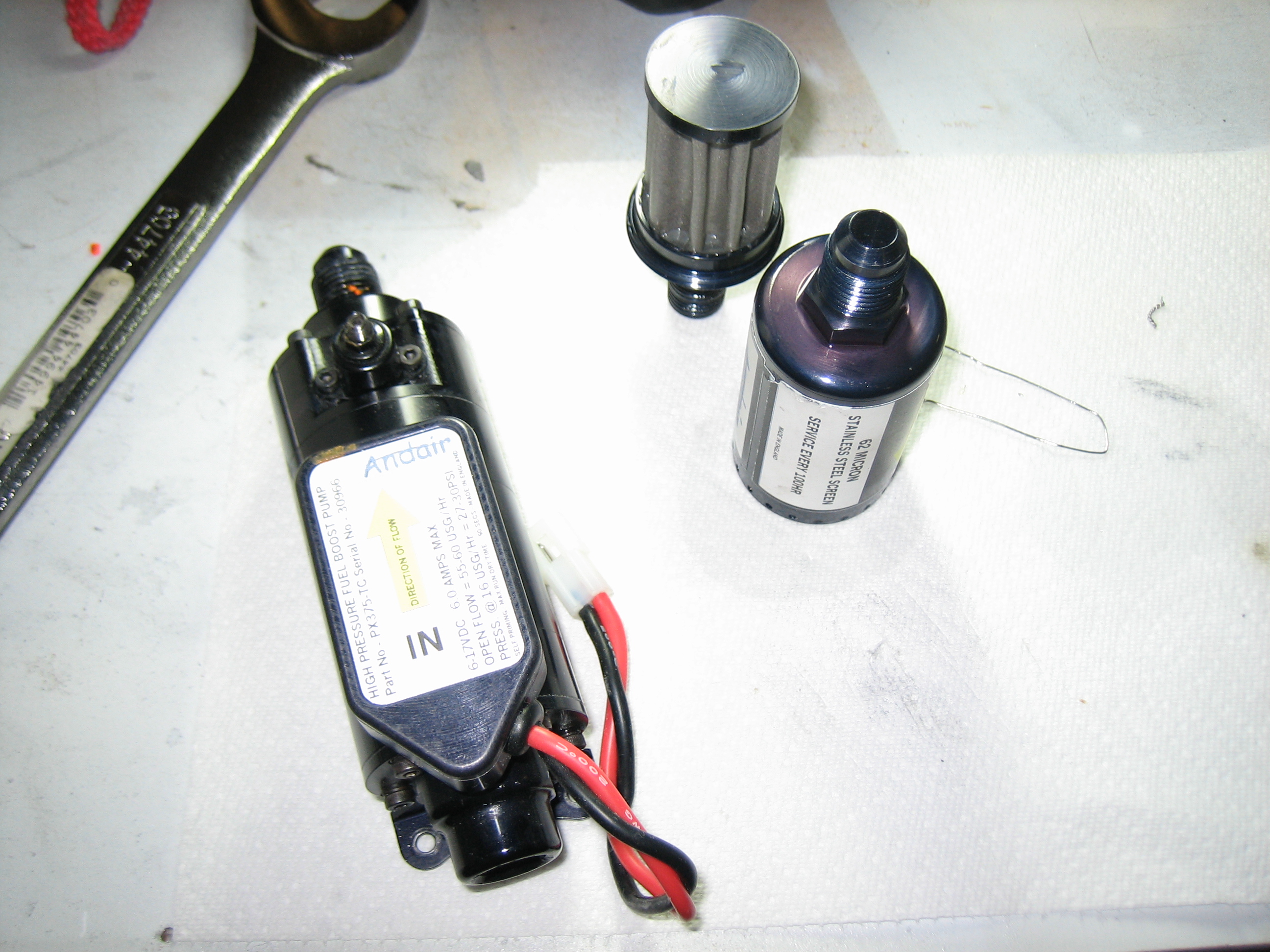
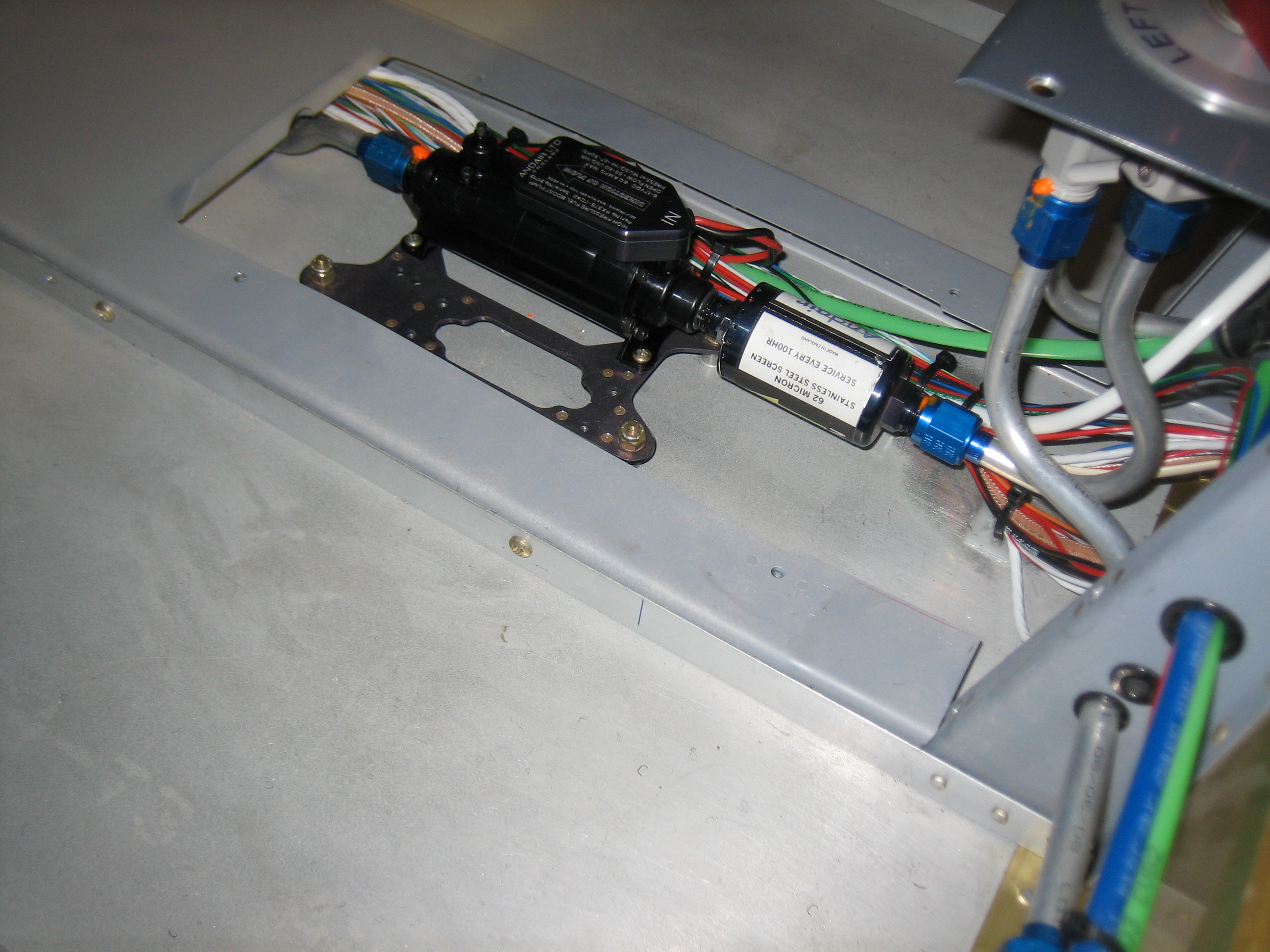
I got my replacement fuel pump from Andair, so I ran down to the hangar tonight to install it.  I pulled the old pump out and removed the fuel filter.  Since I’ve pulled fuel from both tanks, I wanted to clean the filter to remove any debris that might have made its way into the tank or fuel lines during construction.

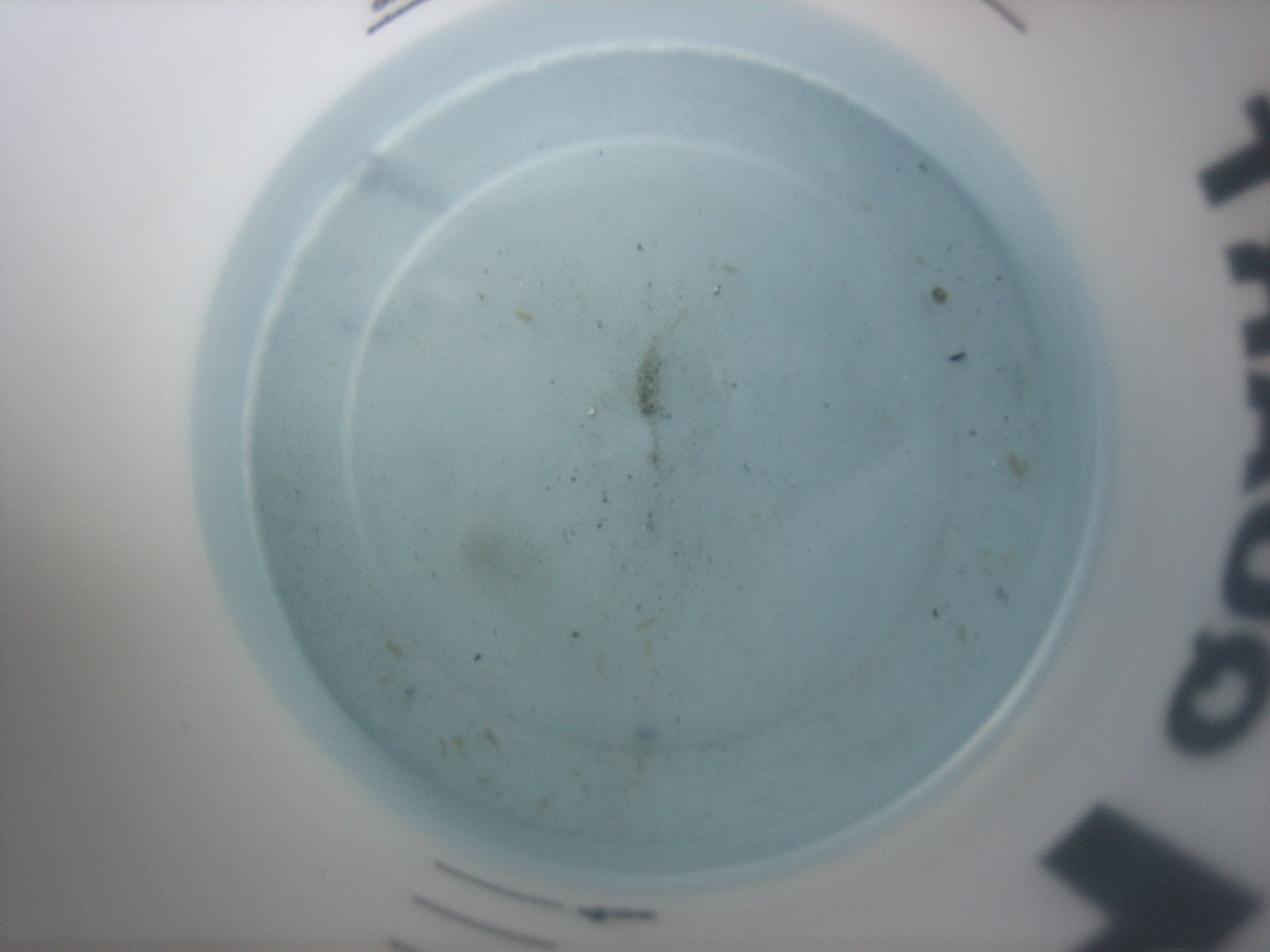
Despite my best efforts to keep the tanks clean and sealed and clean the fuel lines before installation, there was a surprising amount of junk in the fuel filter.  I rinsed everything in a few ounces of gasoline.  It looked like mostly dust and small sandy particles, but there were a couple of small metal particles mixed in.  It’s good to get all of this out of the fuel filter before the first flight.

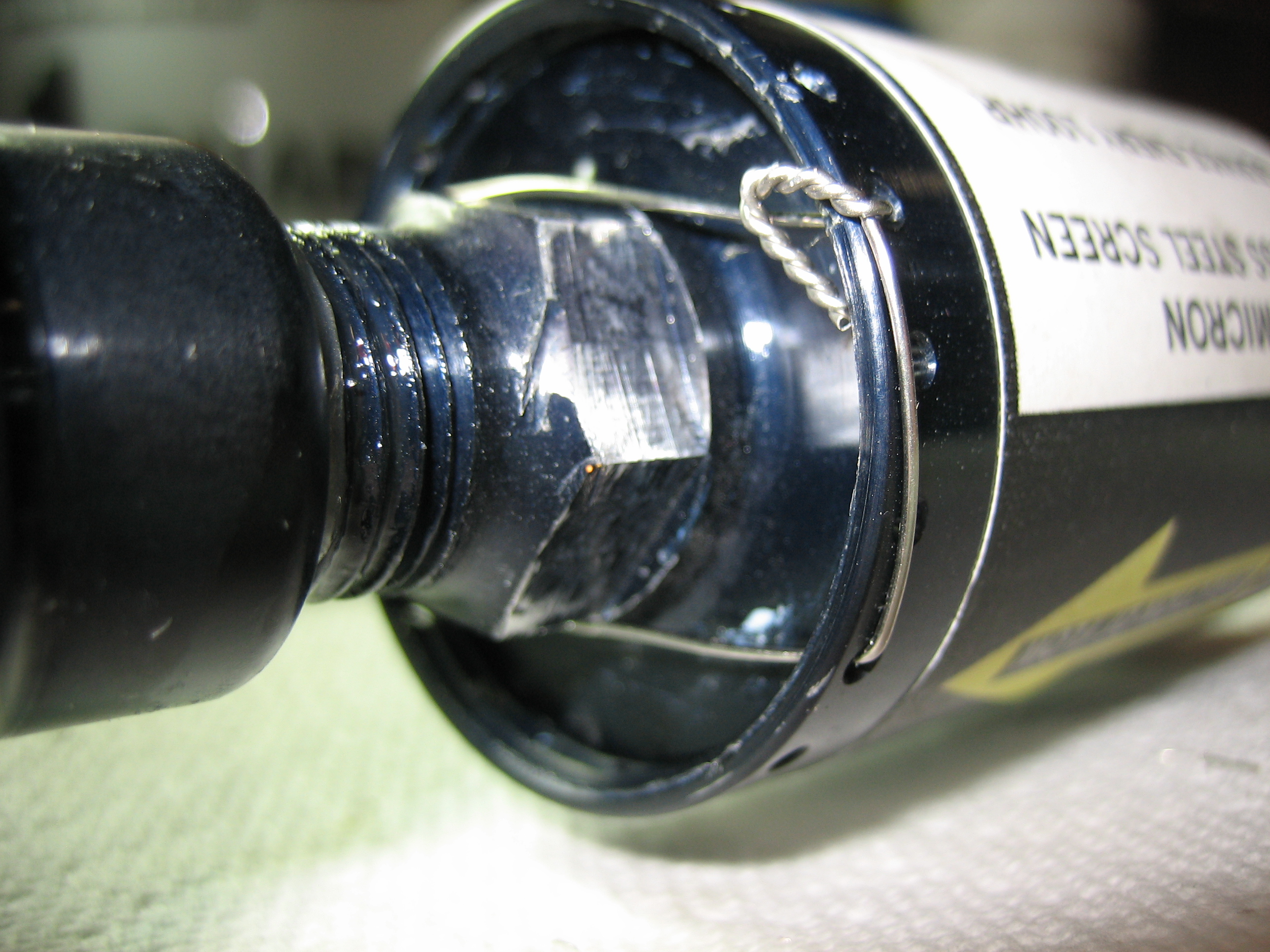
I lubricated the o-ring, safety wired the filter and reinstalled it on the pump.

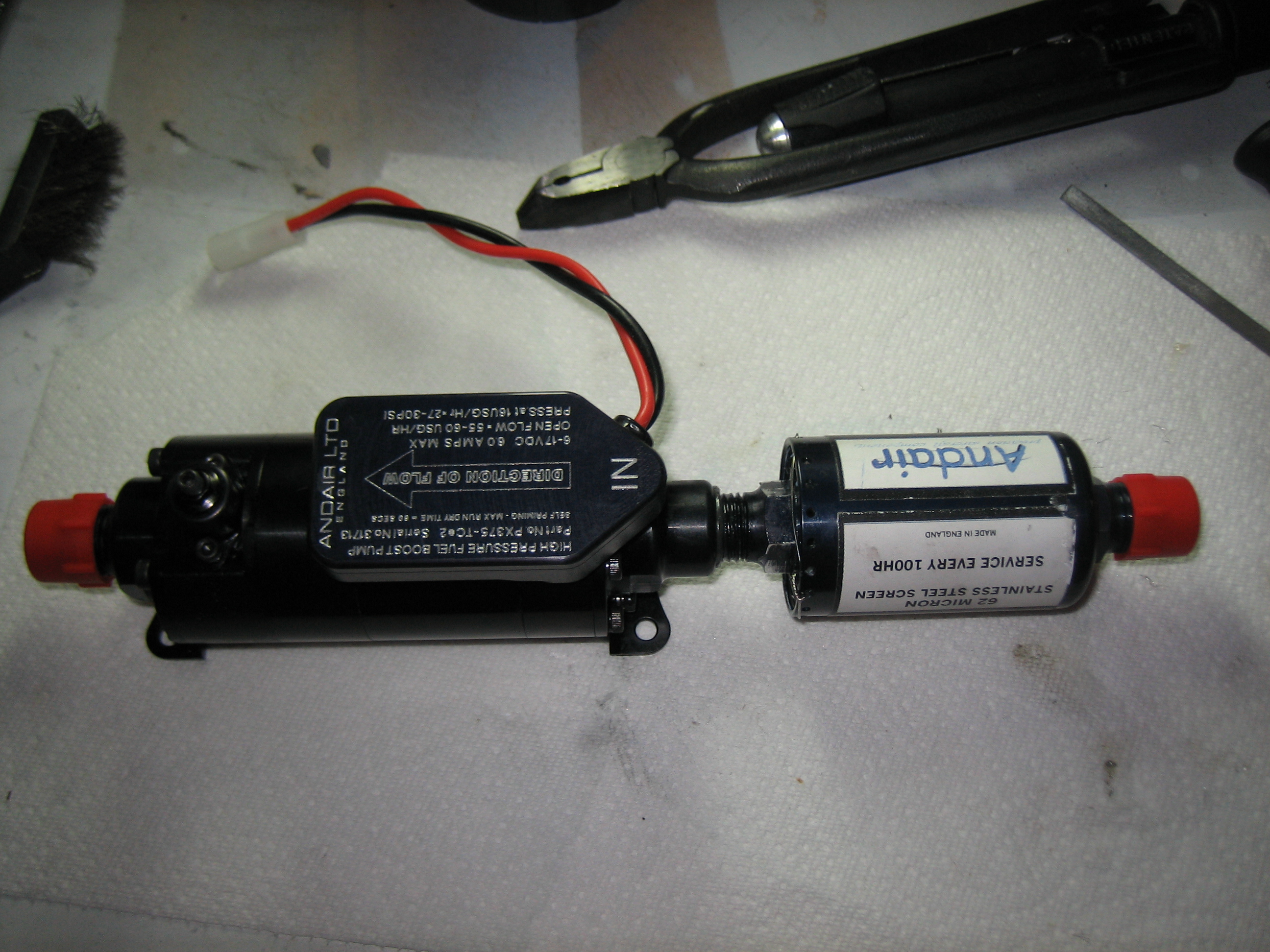
Here’s the completed pump assembly with wires cut to length and a molex connector installed.

Finally, I reinstalled it in the plane and re-torqued all of the fittings.

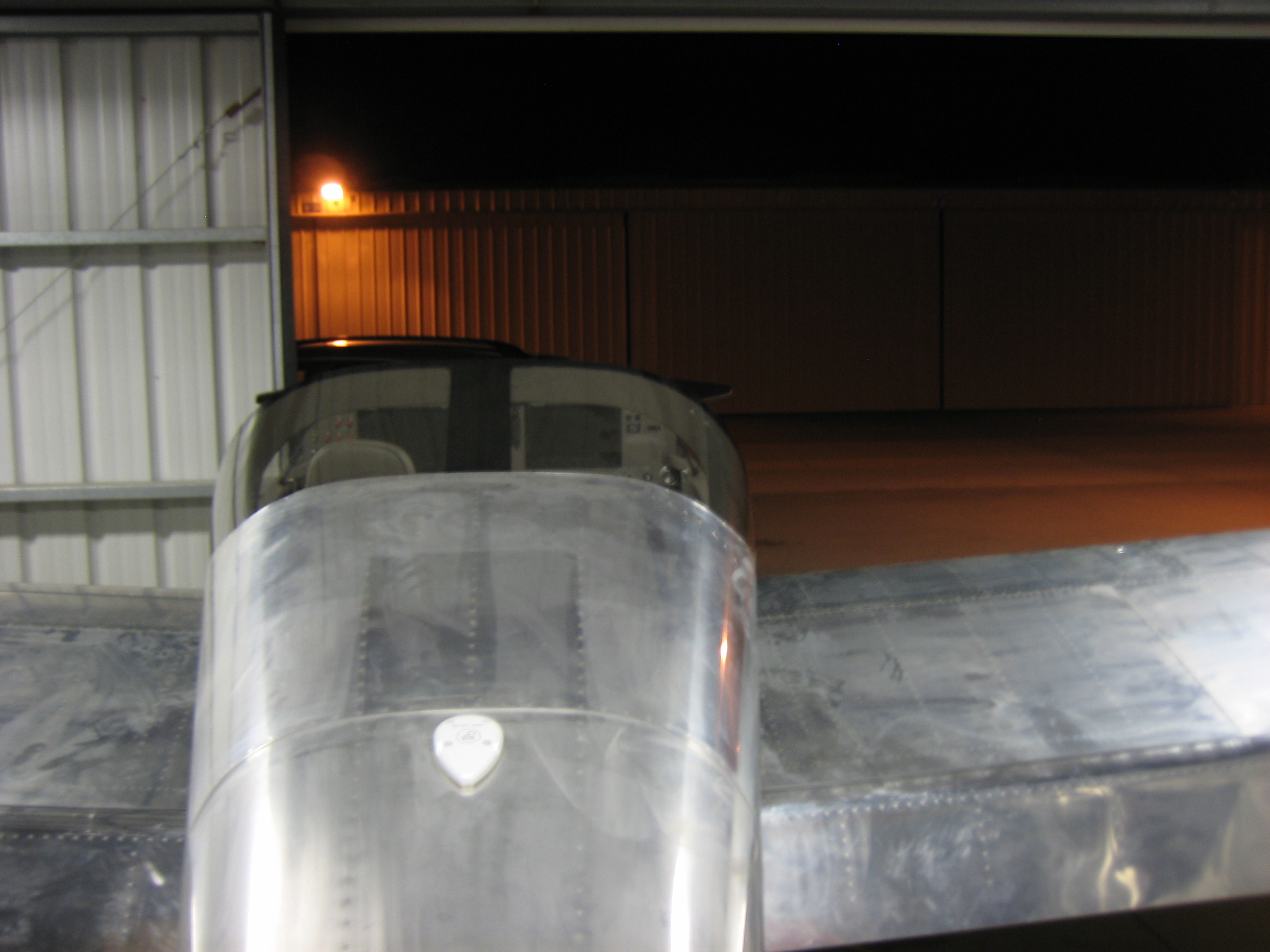
Next, I installed the wingtip so I could get an idea how the light was aimed.  It looks pretty high, but I’ll need to level the plane to be sure.  I’m pretty happy with how bright this is.  Here’s the hangar across the way with the light on.

And here it is with the light off.

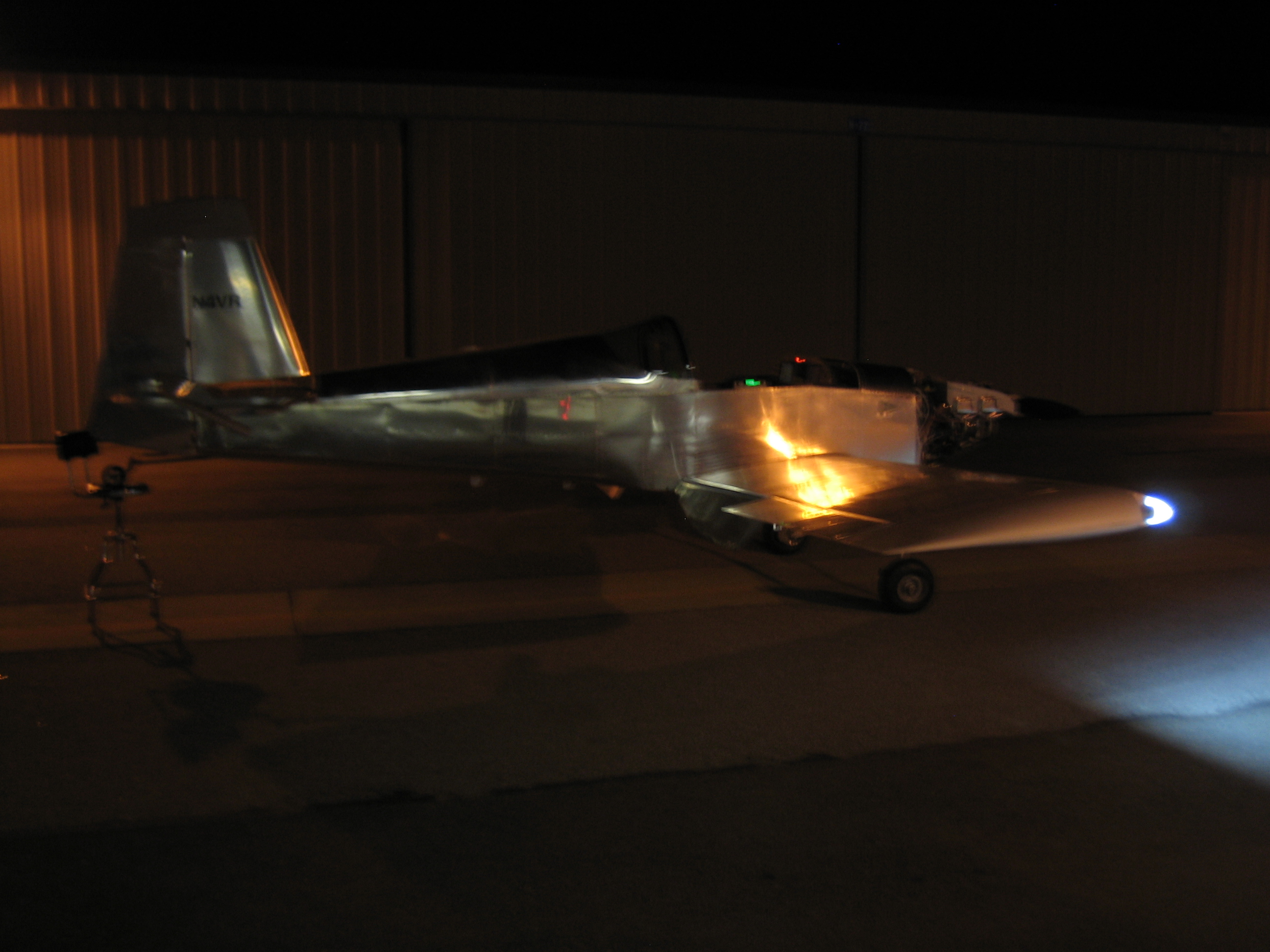
To get a better idea how the light is aimed, I pulled the plane out into the taxiway and put the tail up on my chair to get the fuselage level and then turned the light on.

I adjusted the light until the beam was roughly level.  You can see it does a pretty good job of lighting up the taxiway.

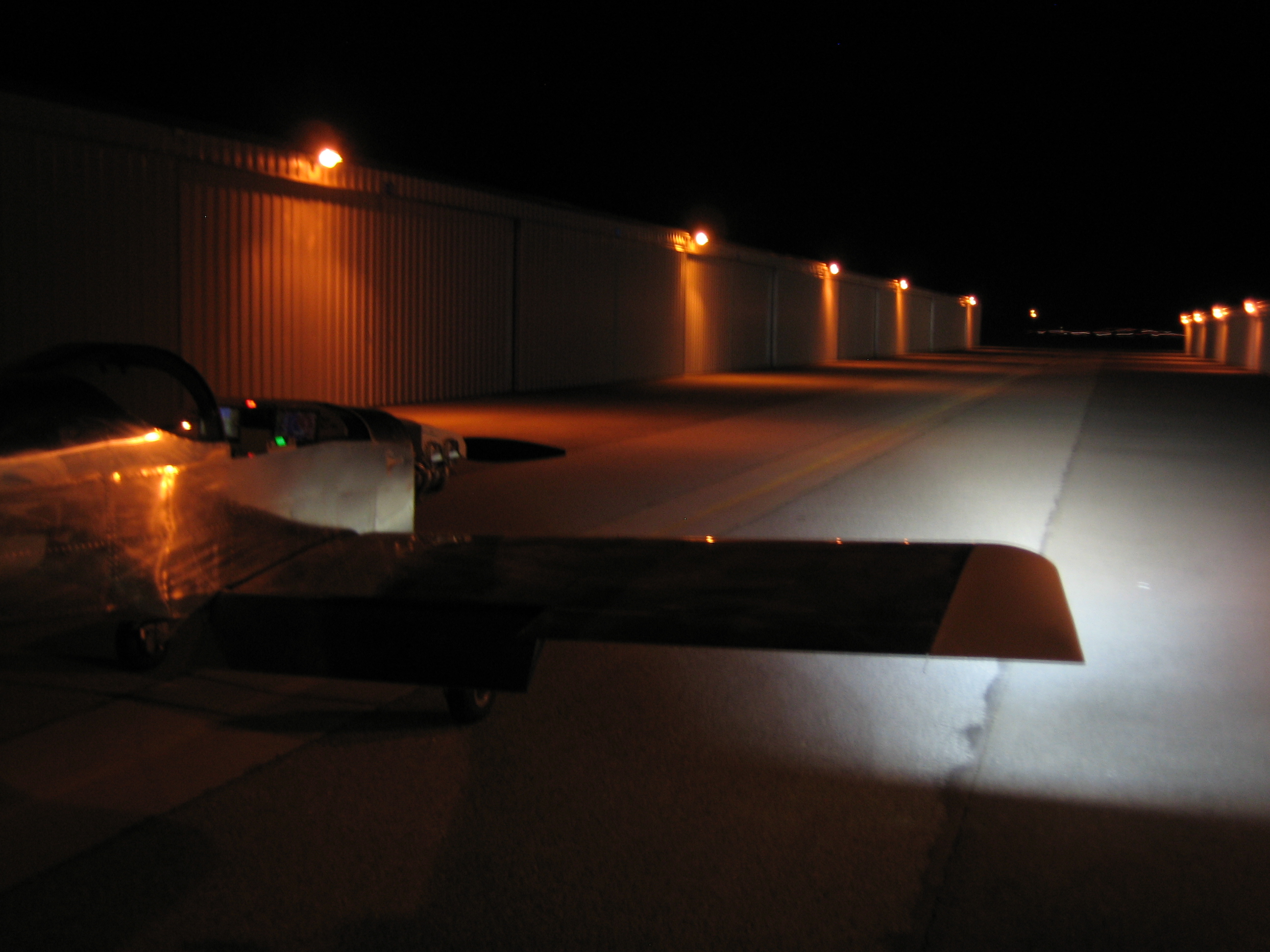
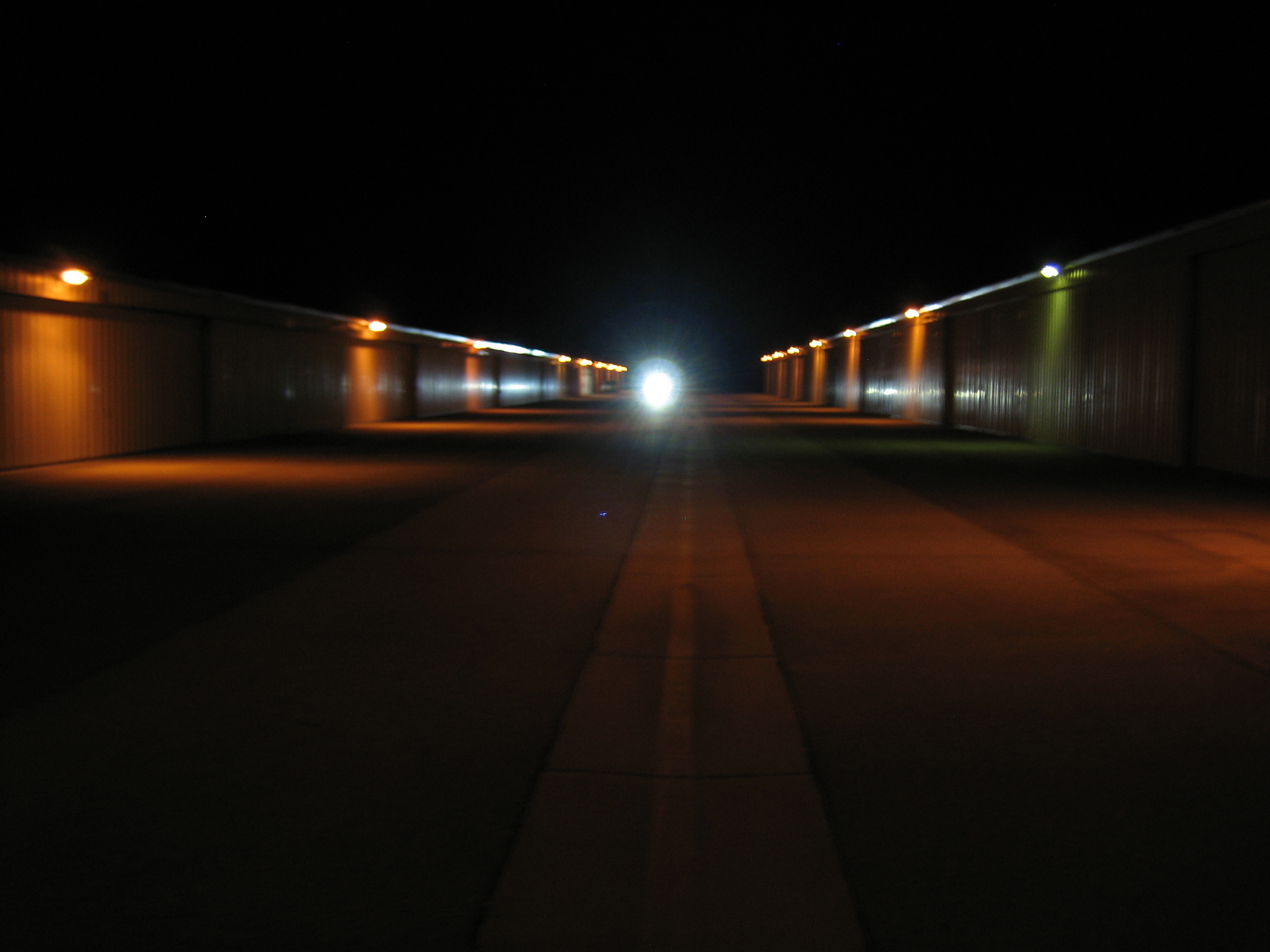
I walked to the far end of the taxiway to get an idea how much light was making it down there.  The picture doesn’t really capture it well, but it was uncomfortable to look directly at the light, even from this far away.

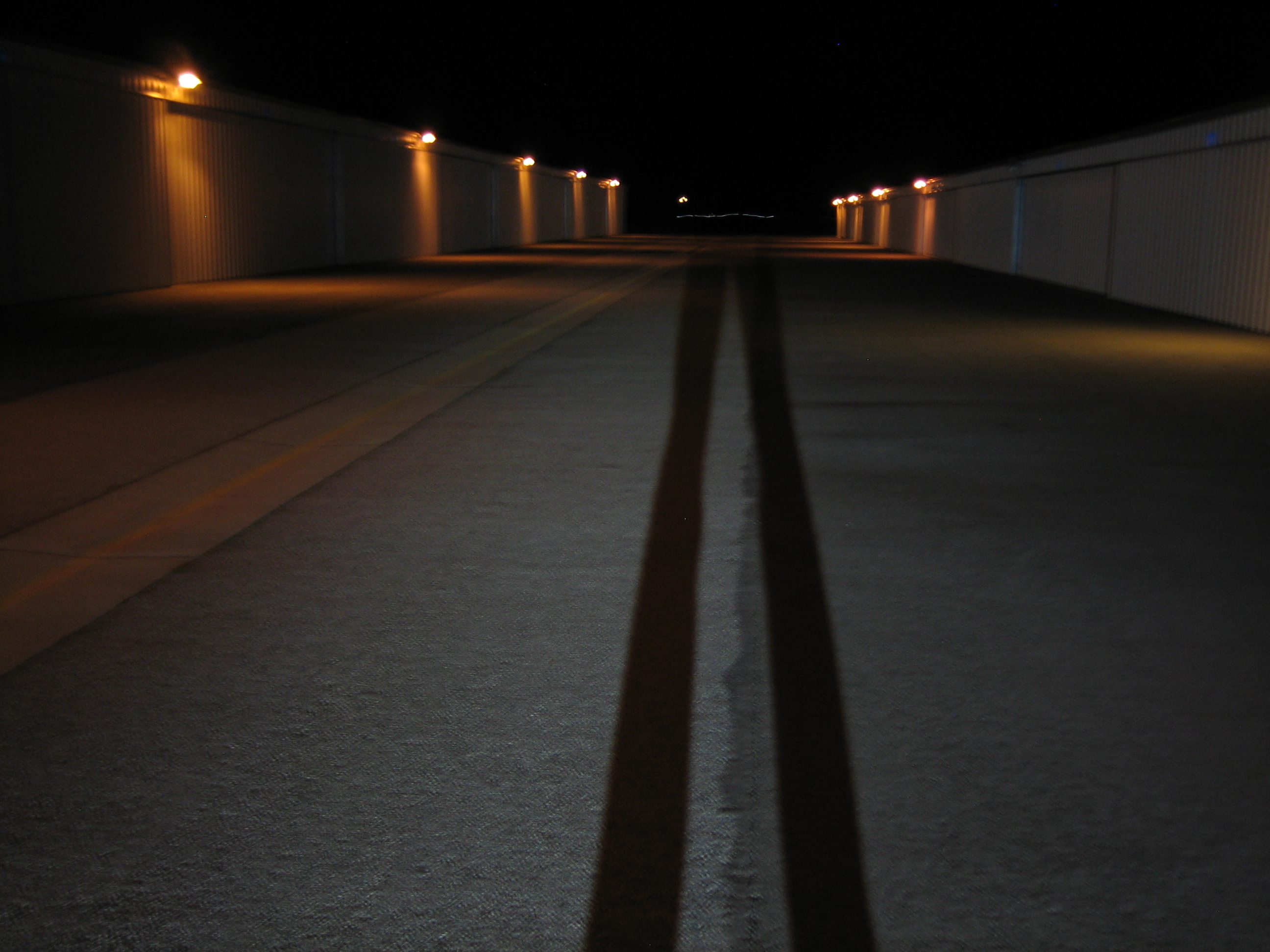
This picture of the shadows cast by my legs gives a pretty good idea how well the far end of the taxiway is lit up.

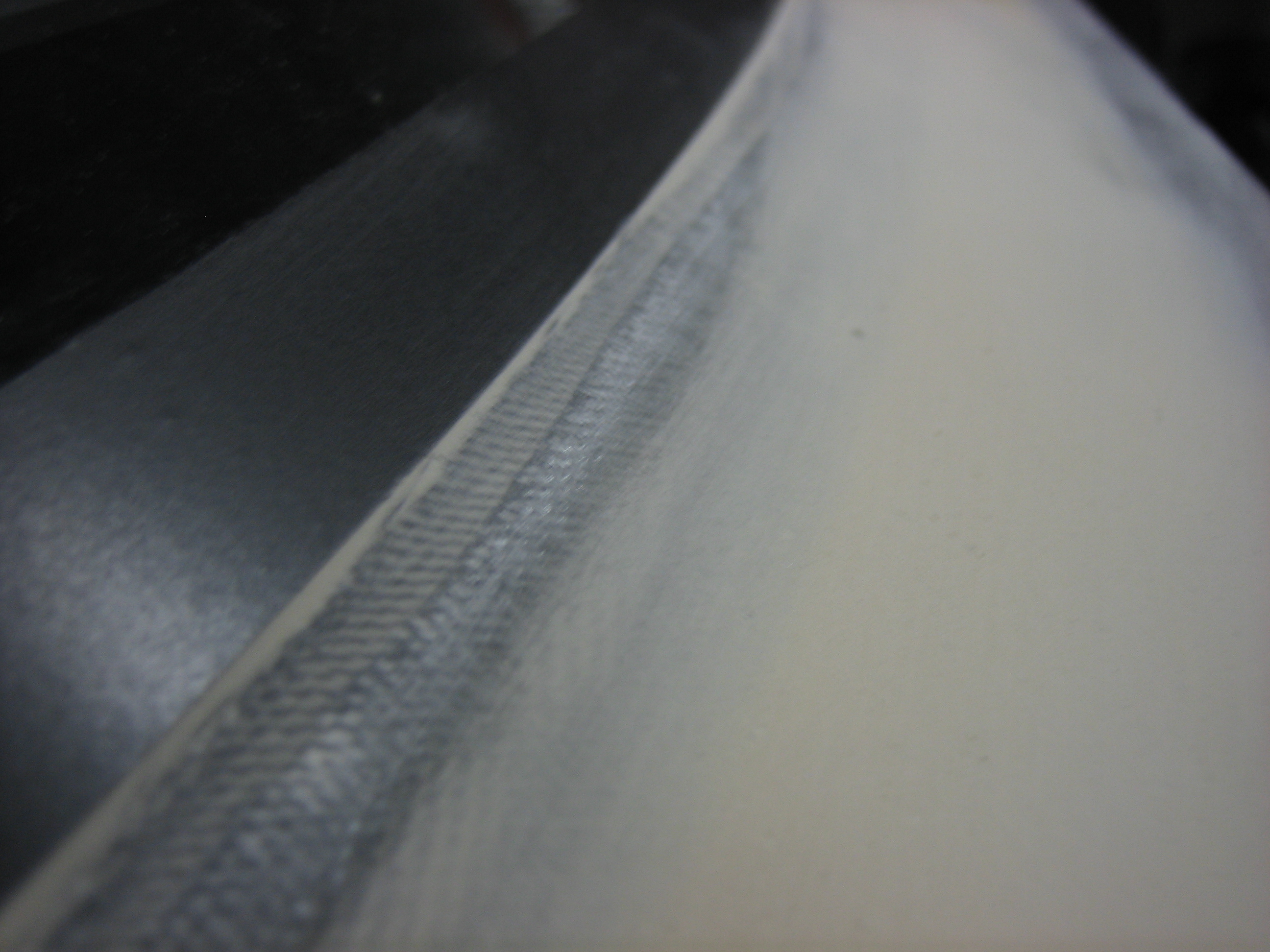
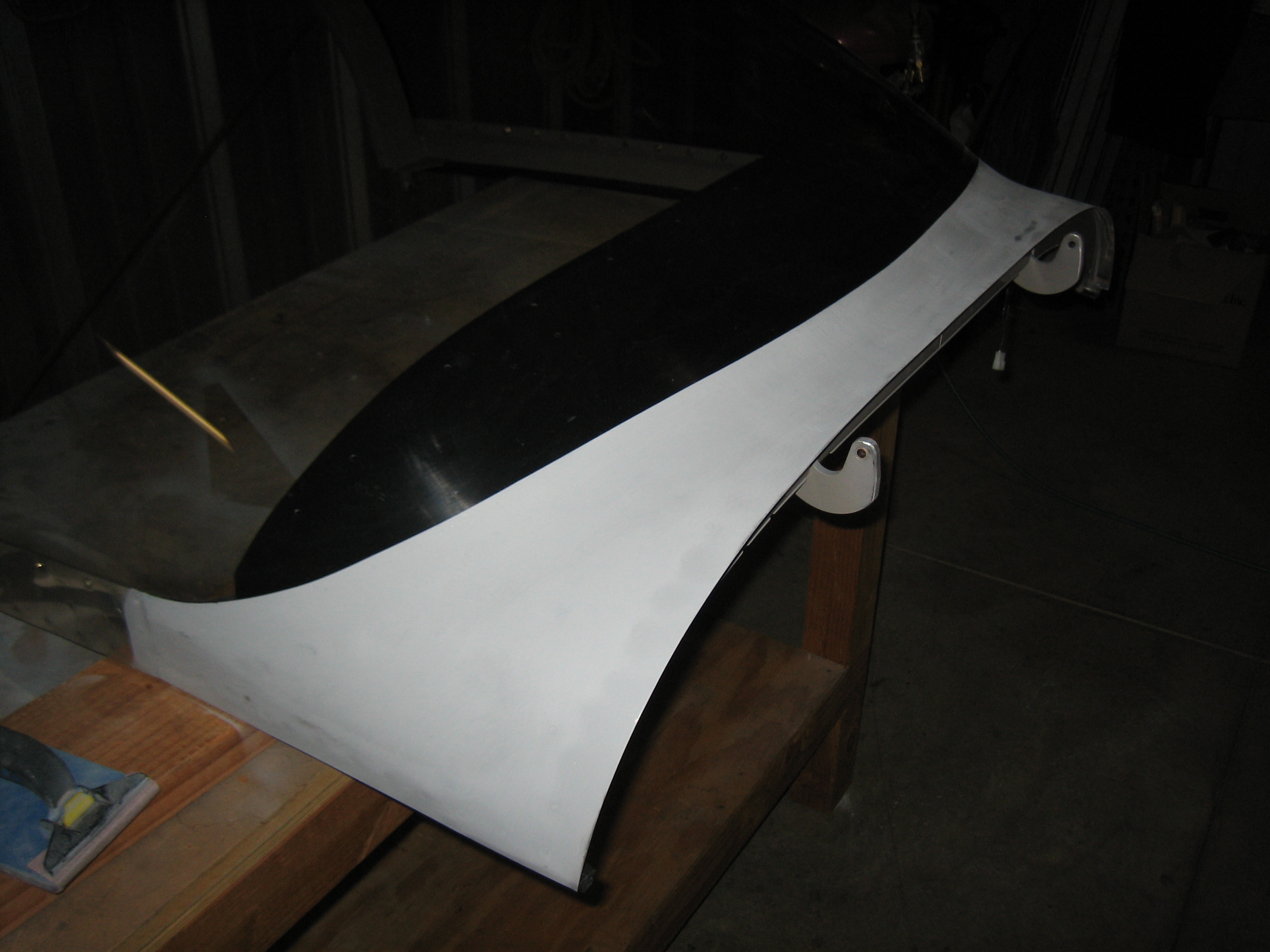
Finally, I resumed work on the canopy fairing.  I started with sanding the fairing down to be flush with the two layers of electrical tape and got the overall shape where I wanted it.  Next, I removed the upper layer of tape and sanded the fairing down again to be flush with the remaining tape.

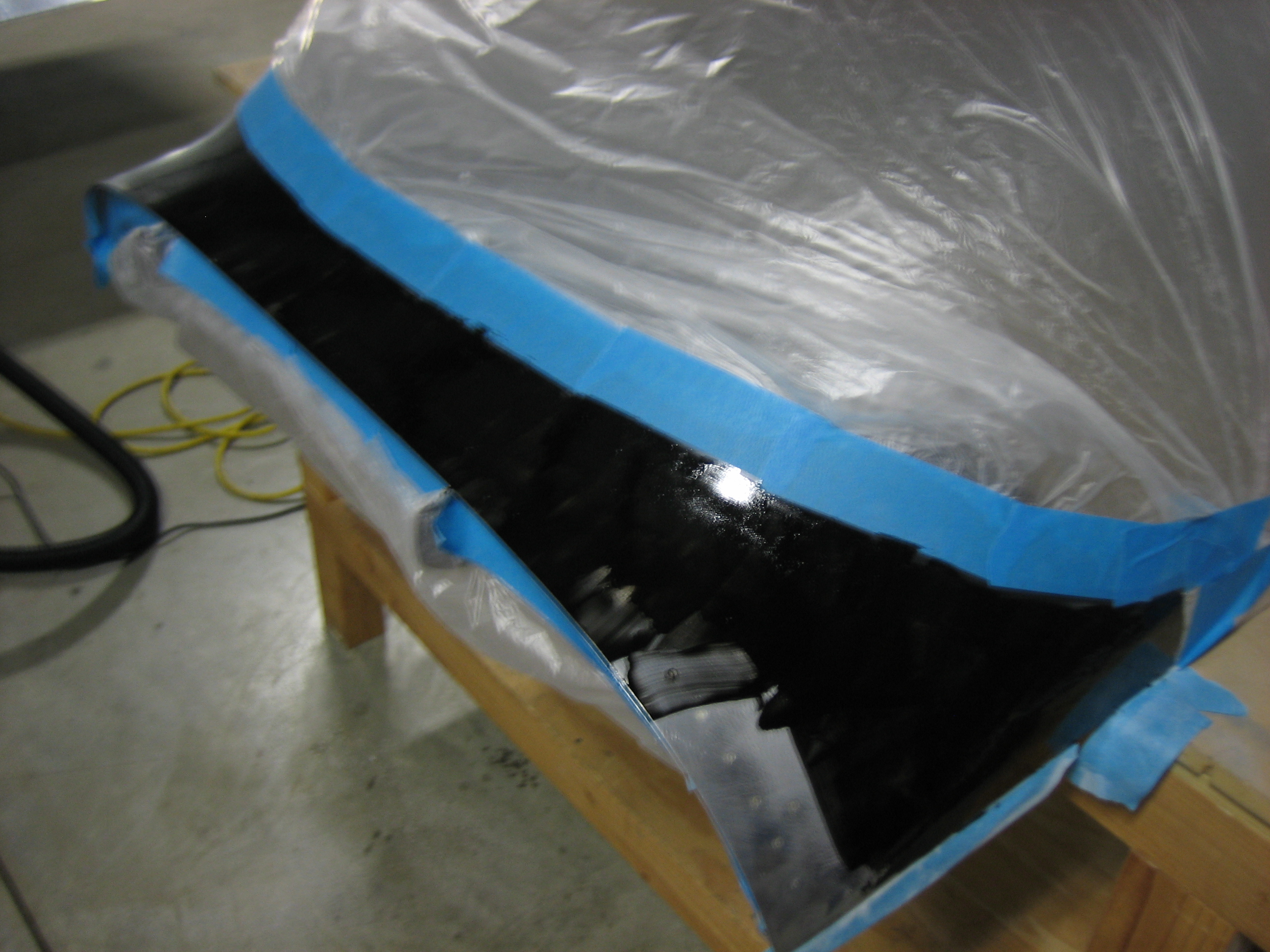
After taping over the exposed parts of the canopy bubble, I mixed up some epoxy with black pigment and applied a sealer coat on the fairing.  After this cures, I’ll sand it down and apply a coat of primer.

Worked on Left Wingtip

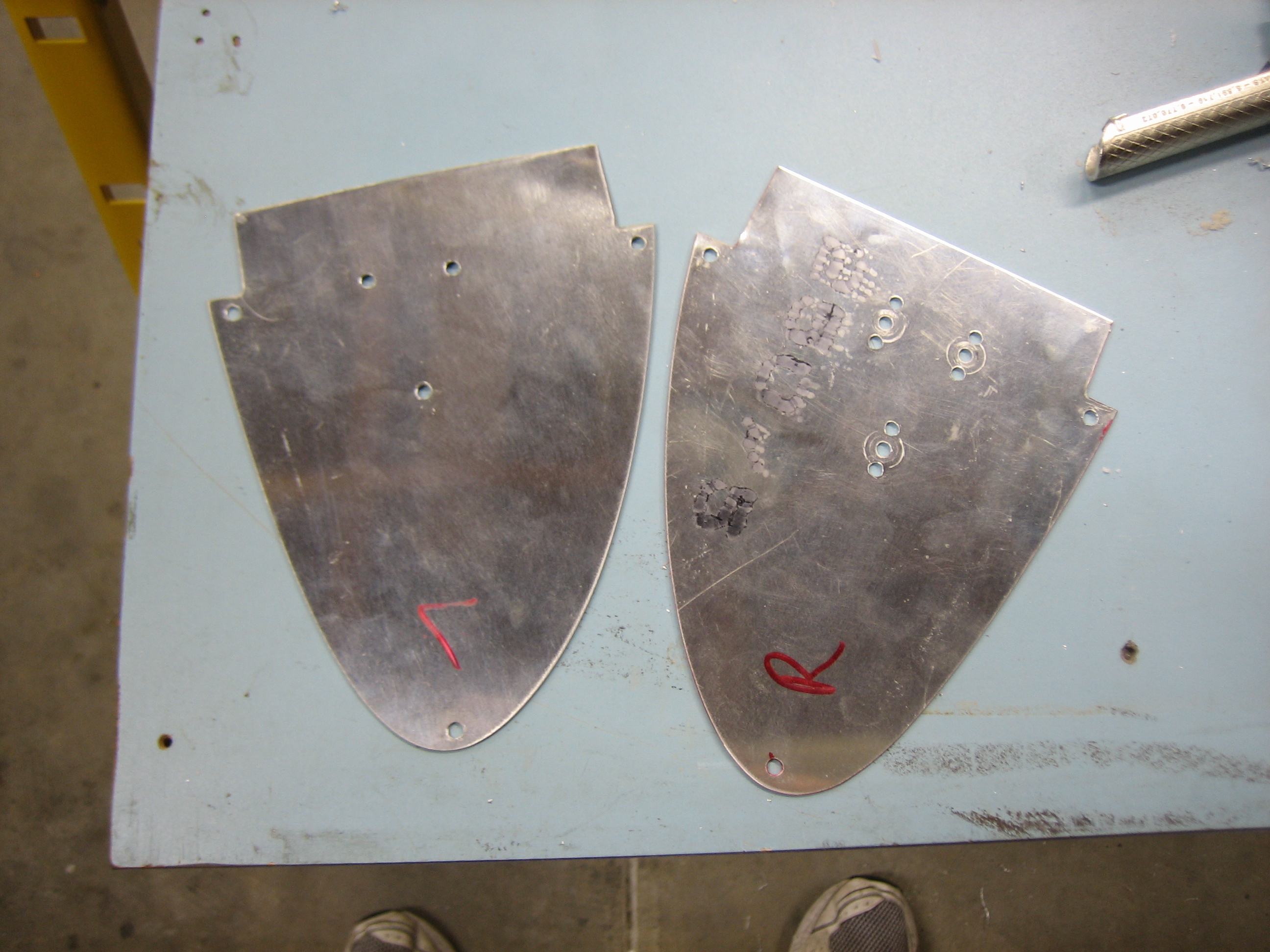
Now that I have a pretty good idea how the wingtip lights will be mounted, I could do the work on the other wingtip.  I marked and cut out most of the recess.

I then fabricated an approximate duplicate of the right mounting plate and then trimmed it to fit the left wingtip.  The two wingtips are slightly different, so I couldn’t make an exact duplicate.  I then transferred the plate mounting holes and the center set of light mounting holes.  You can see in the previous picture that I also drilled the plate to the wingtip.  All that is left now is to finish getting the lenses to fit properly.

Primed Canopy and Fixed Pitot and AOA Tubing

I sanded down the epoxy I applied the other night and painted on a few coats of primer.  There are a few pinholes I need to deal with, but this is good enough for first flight.

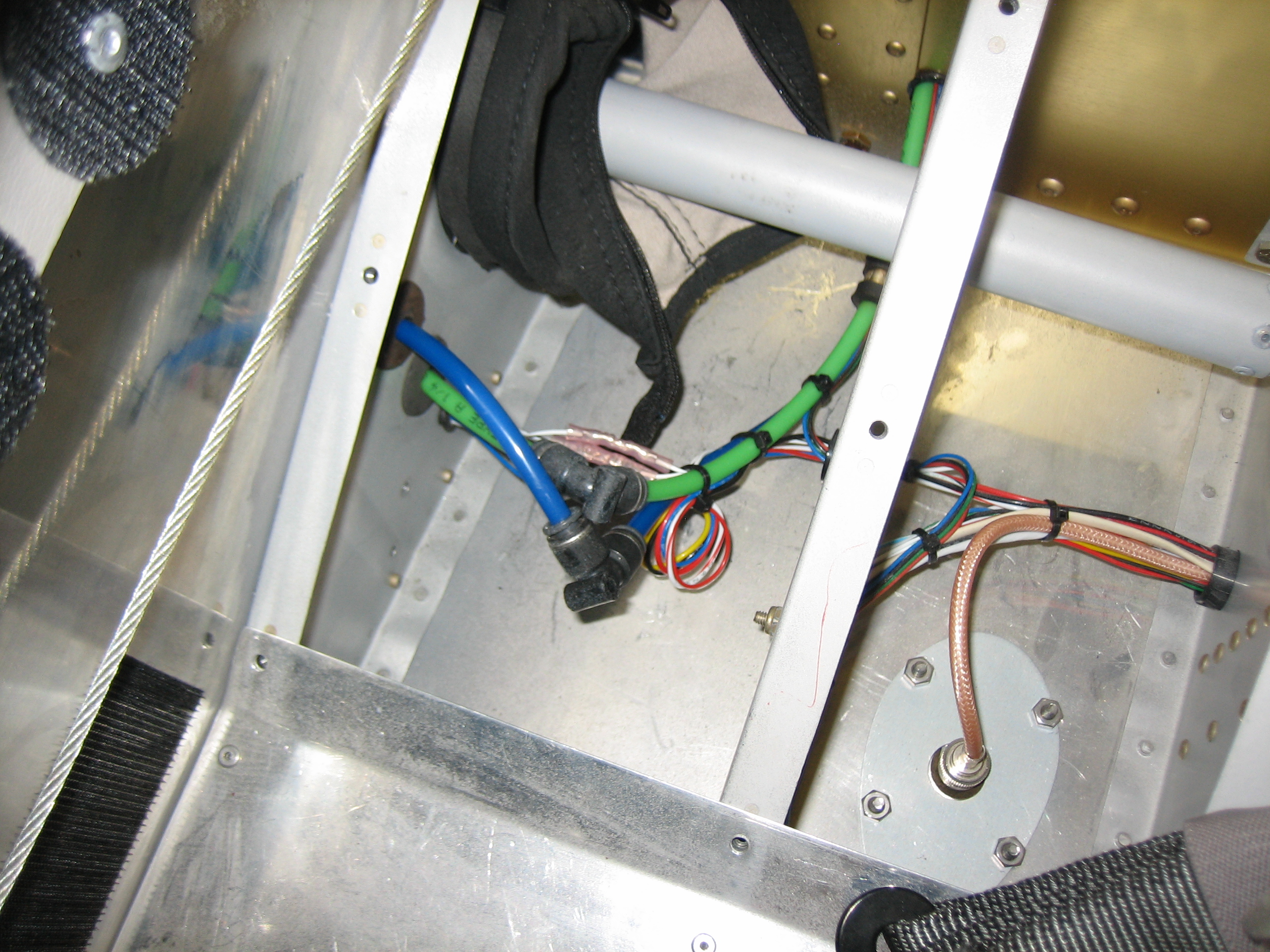
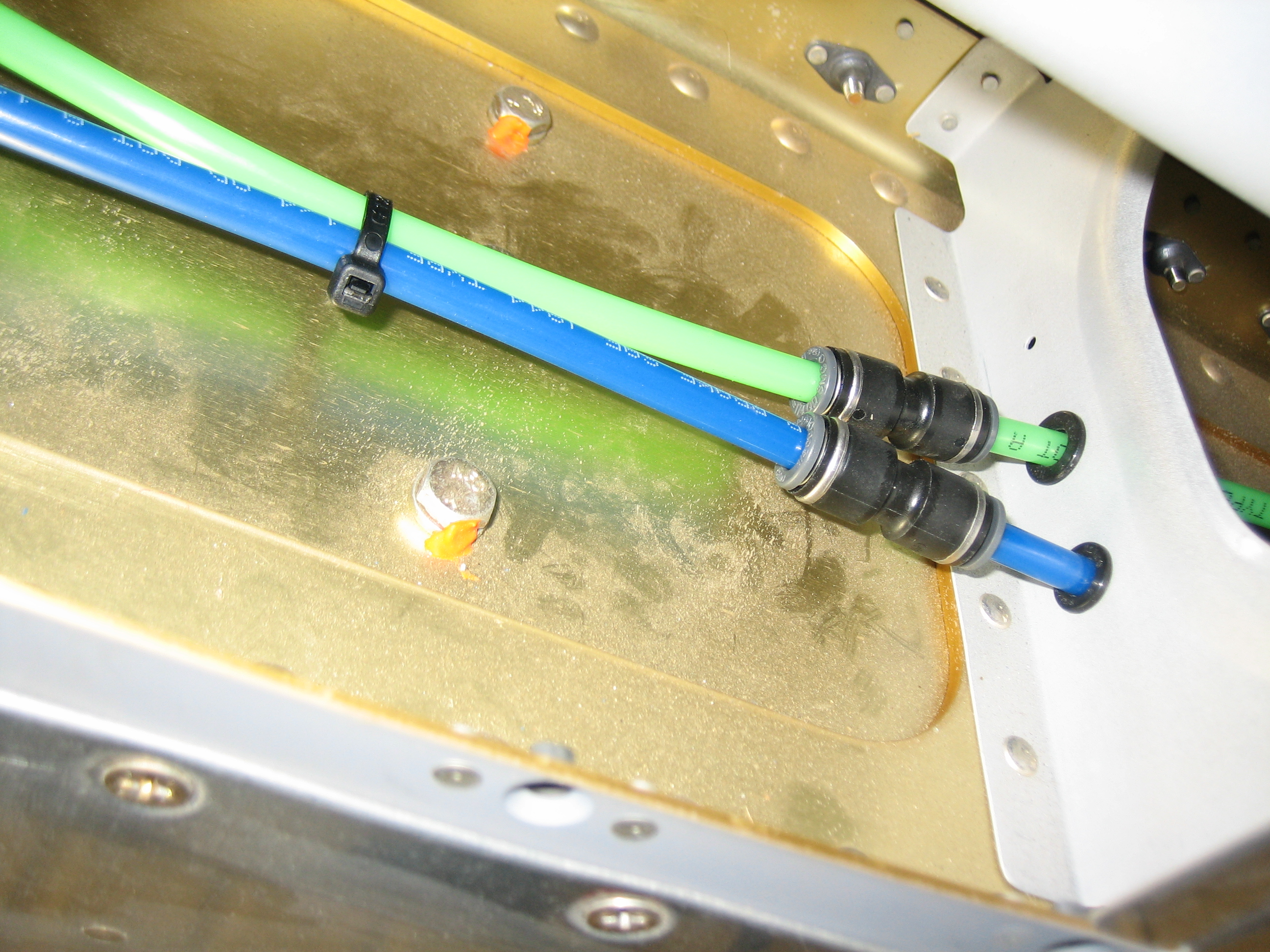
Between coats of primer, I fixed the pitot and angle of attack tubing.  I had previously made these connections in the wing root, but that was a mistake since there’s no room to ever service them.  I had planned on running new lines down the conduit, but I realized I could use the same lines if I added a couple of additional connectors in the wing.  I disconnected the tubing at the pitot tube and slid it inboard inside the wing enough that I could pull the excess through the holes in the fuselage.  These fittings will now be trivial to service if that is ever necessary.

I then cut the lines in the wing and took some longer pieces and ran them from the pitot tube to these fittings.  This is better anyway since I can disconnect the tubing here and pull the pitot tube out of the mount.  This is looking up into the inspection port just inboard of the pitot mast.  With the way the lines were previously run, pulling the pitot tube out of the mount required disconnecting the lines right at the top of the mount.  That wasn’t too painful, but reinstalling the pitot tube was a real pain since it required hooking up the tubing entirely by feel.  This way, the fittings are easy to inspect and verify correct installation.
Leak Checked Pitot System, Empennage Nutplates, Unusable Fuel and Firewall Passthroughs

I spent some time this morning working on the left wingtip lens before heading down to the hangar.  Since I reworked the pitot and AOA tubing yesterday, I wanted to leak check it today.  I disconnected the tubing at the new fitting in the wing inspection panel and attached some 1/4″ ID latex tubing.  I could roll up the other end of the tubing to increase the pressure in the pitot system and test for leaks.  AC 43.13 recommends increasing the pressure to an indicated airspeed of 150kts and then clamping the tubing for 1 minute to check for leaks.  As long as the leaks aren’t substantial enough to cause the indicated airspeed to drop more than 10kts, then everything is fine.  After 1 minute, I had a 3 kt drop, so I’m in great shape.

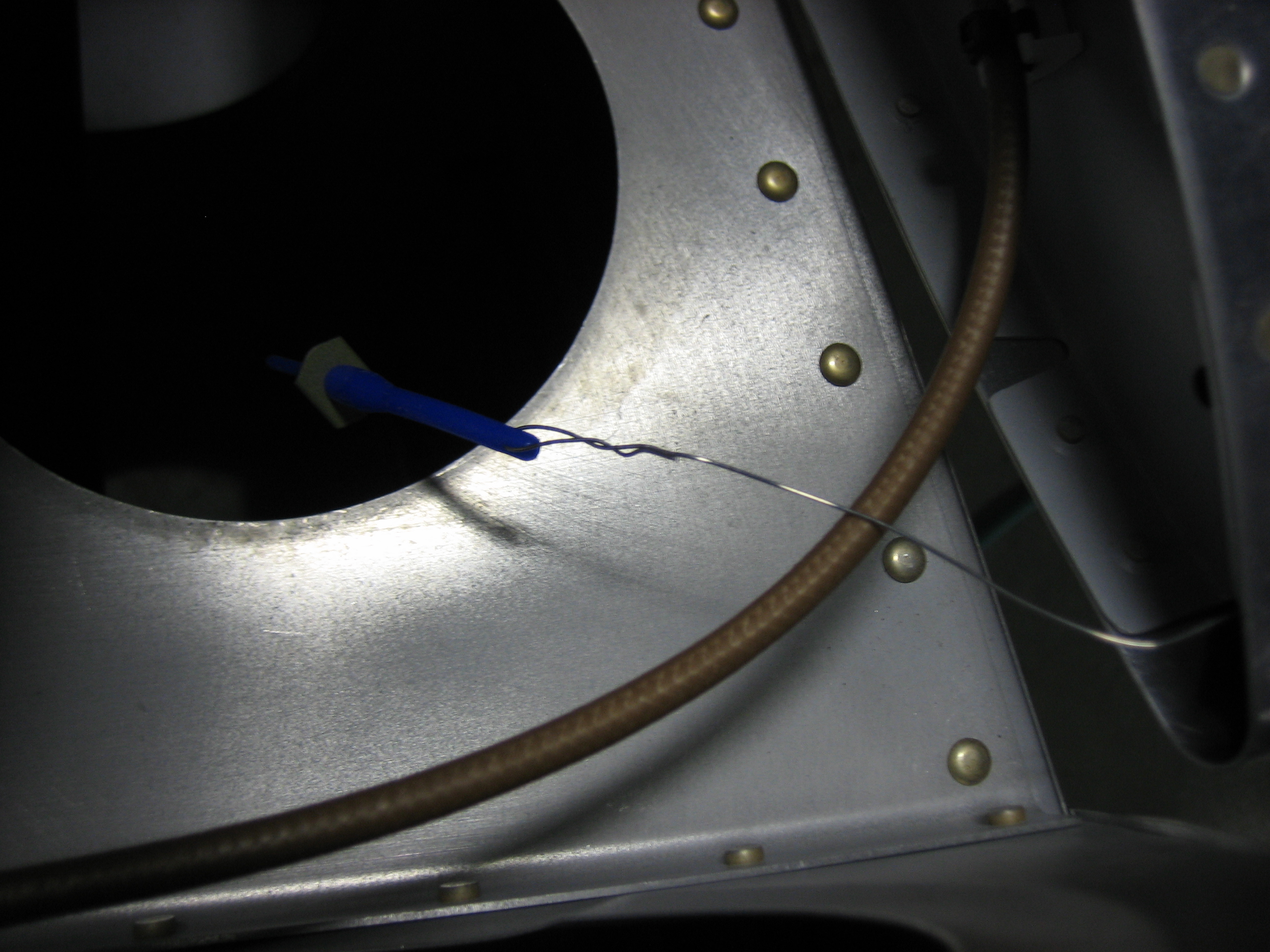
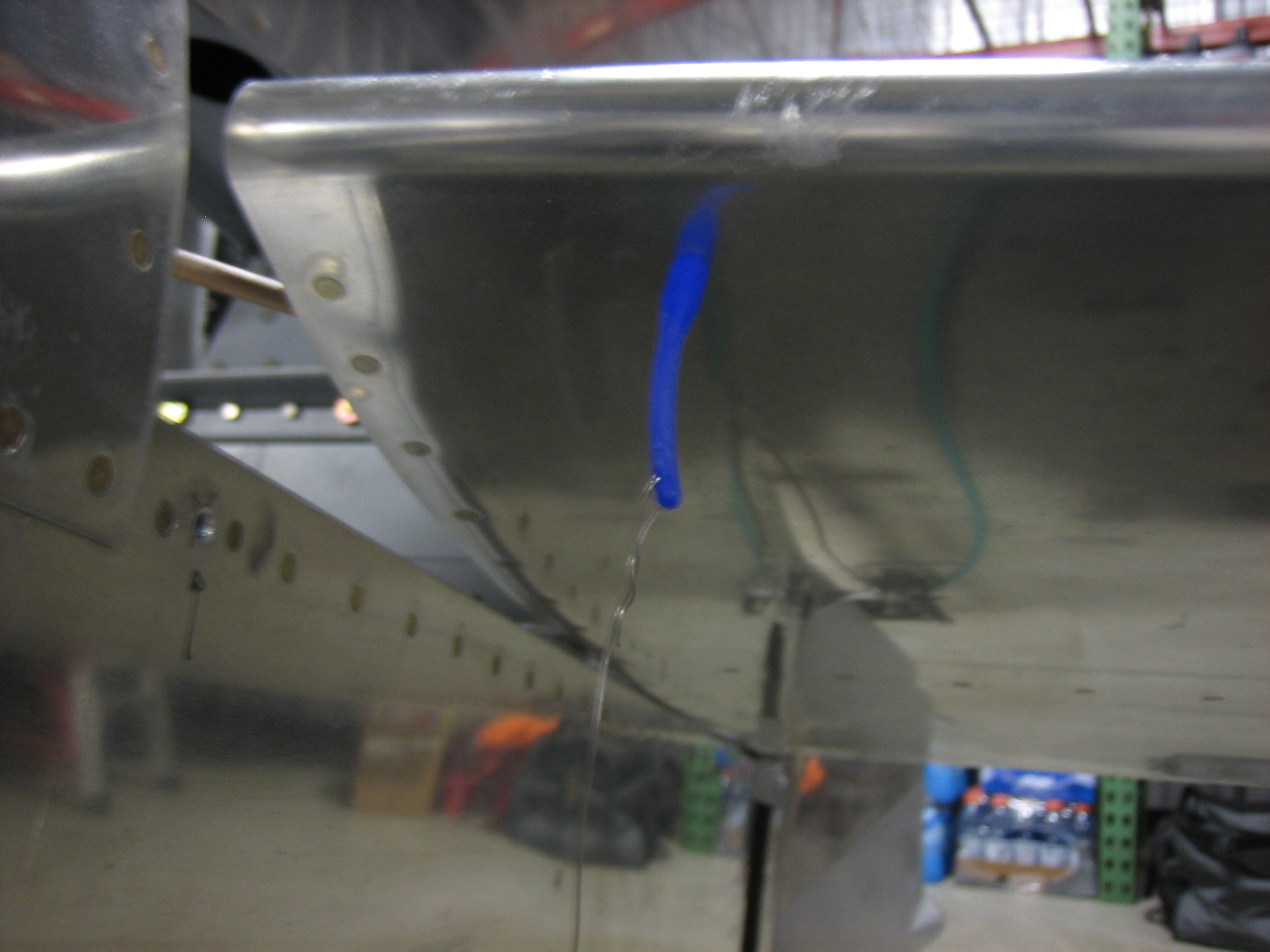
Next, I tackled installing the two Click Bond nutplates in the horizontal stabilizer.  I used some hemostats to scotchbrite and solvent wipe the inside of the horizontal stabilizer around the hole and then fished some 0.025″ safety wire up through the hole and out through the nose of the inboard end of the horizontal stabilizer.  I pushed the safety wire through the end of the silicone installation plug so that I will be able to pull it back through the hole.

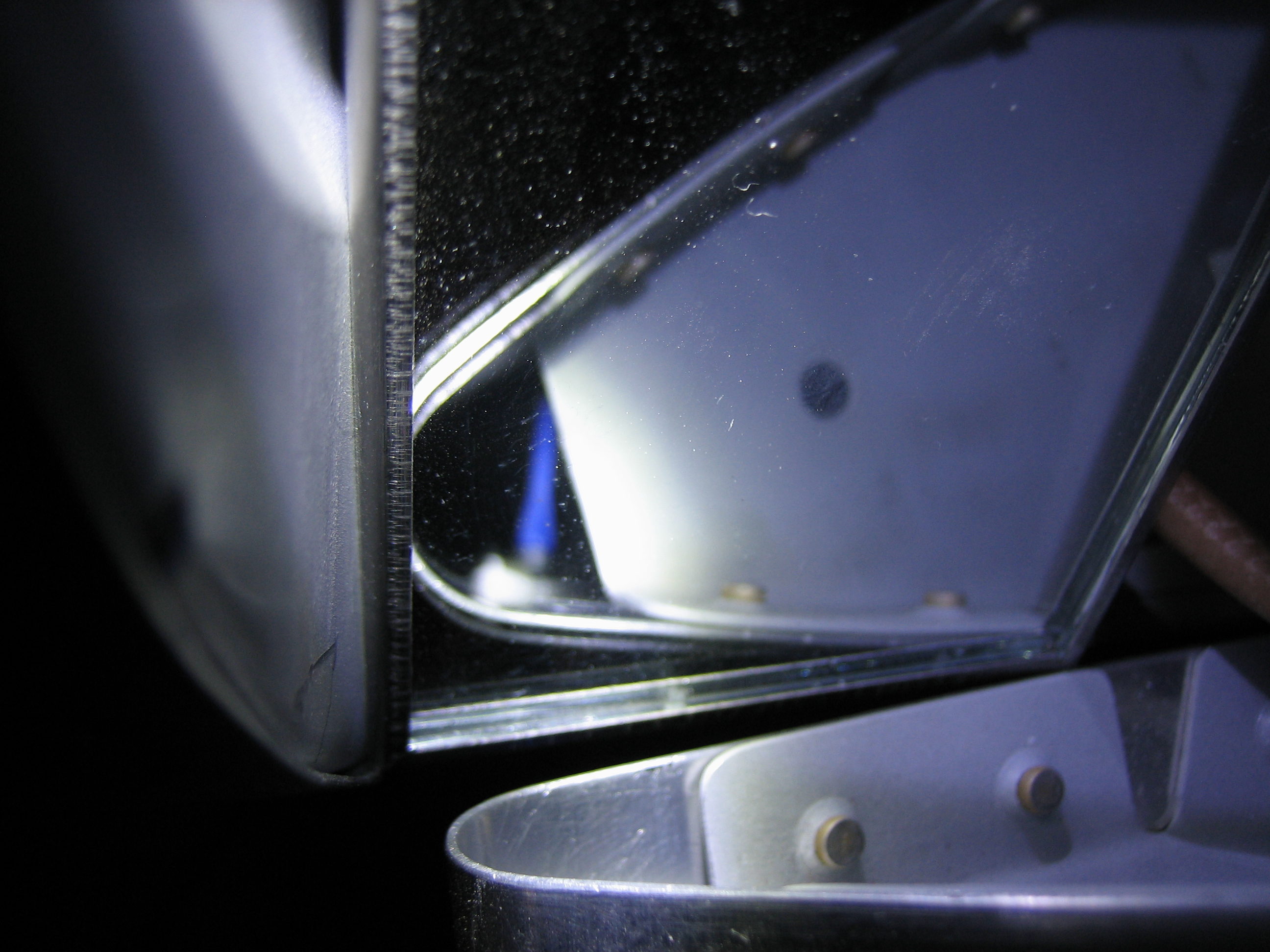
The Click Bond adhesive I had had dried up, so I mixed up some epoxy with West System 404 structural adhesive filler.  I applied a little bit on the flange of the nutplate and then pulled it through the hole.

Here’s a picture taken through a mirror at the installed nutplate.  Once the adhesive cures, I can just pull out the silicone plug.

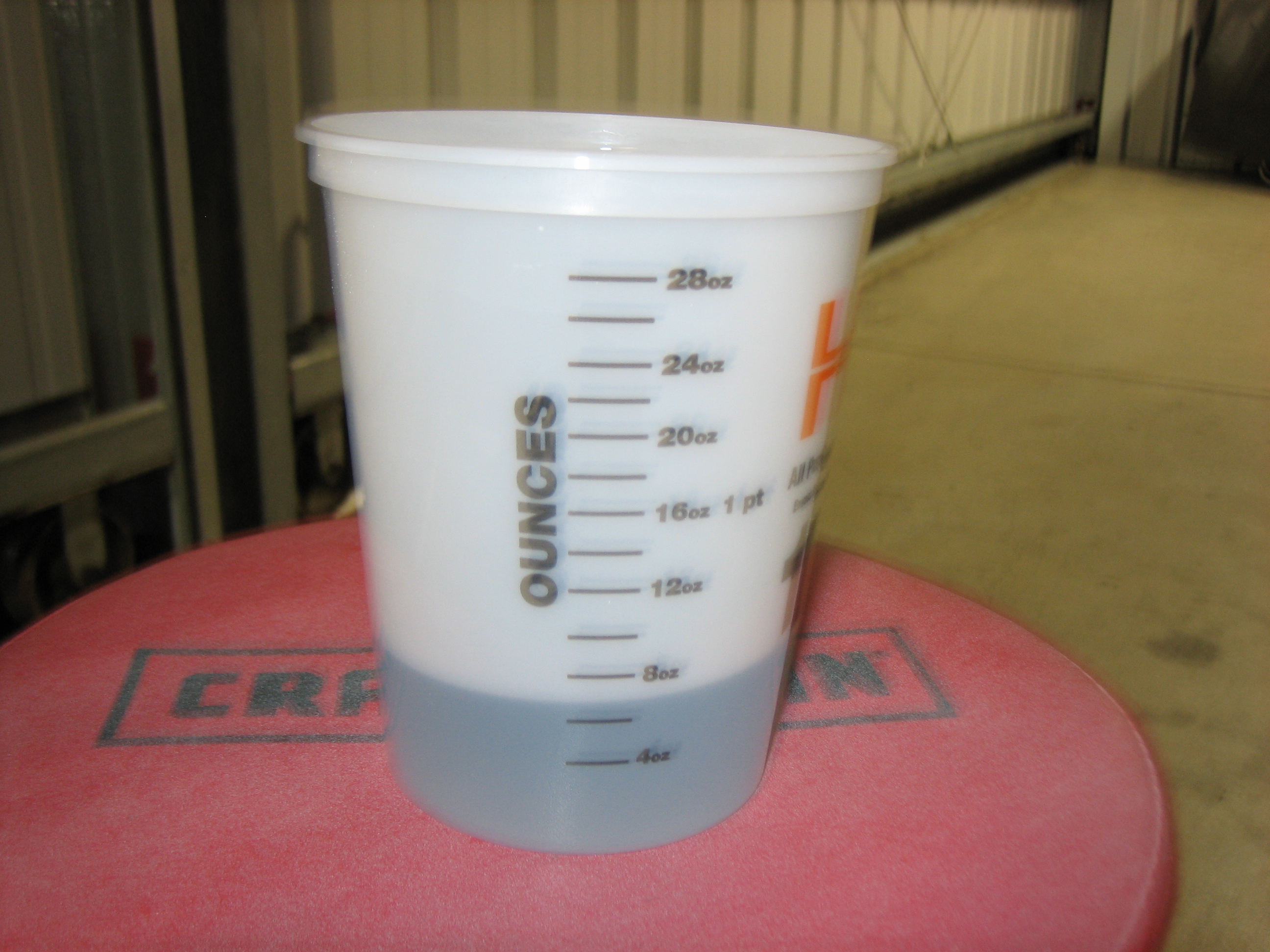
With the new fuel pump installed, I decided to determine the unusable fuel.  I rigged up the hose from the spider so I could capture any fuel pumped to the engine.  I dumped 16 oz into each wing and then ran the fuel pump until nothing came out.  Finally, I drained the fuel in each tank to see how much unusable fuel there was.  I drained almost 7 oz from the left tank and 6 oz from the right tank.  I then dumped the fuel back in the tanks so that it could be included in the weight and balance.

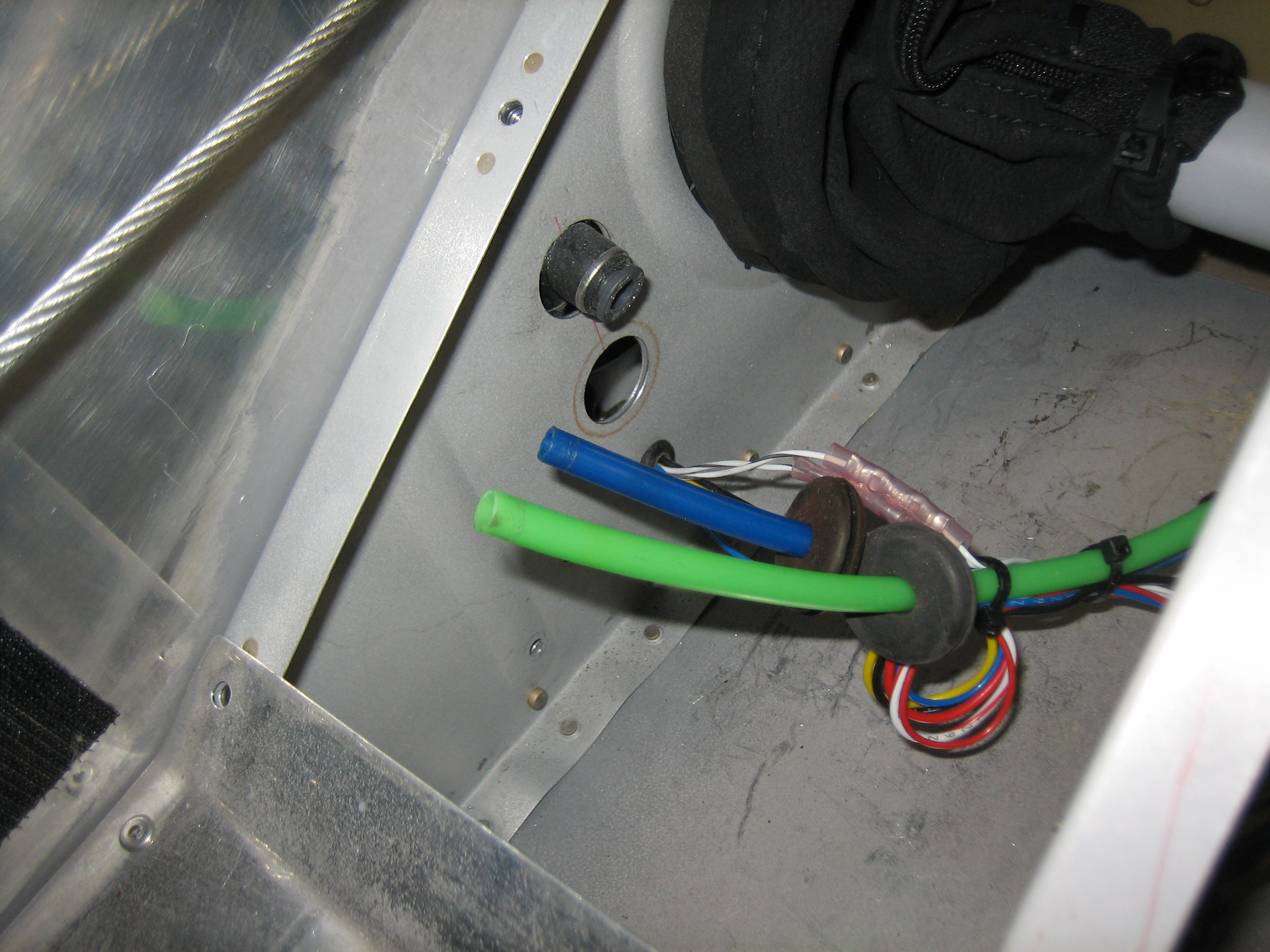
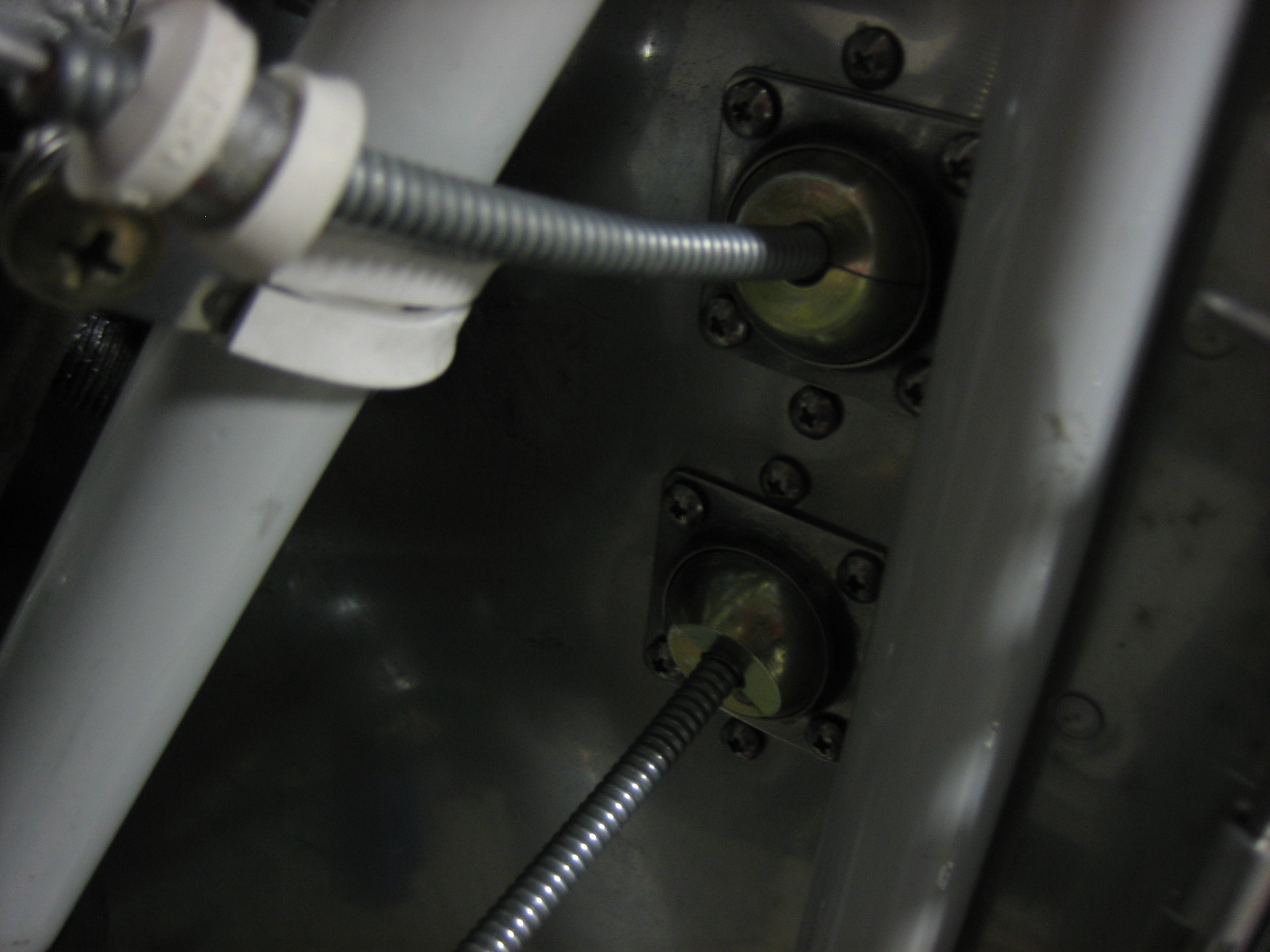
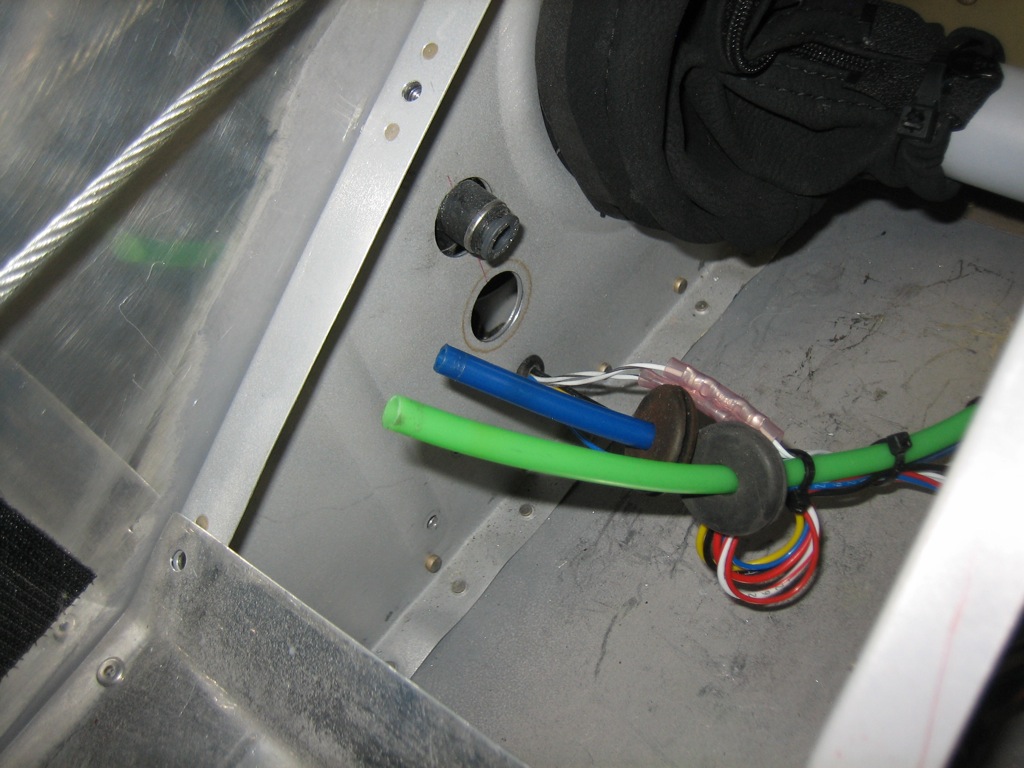
My buddy Greg noticed that the firewall pass-throughs didn’t grip these cables very securely.  I removed the eyeballs and wrapped a couple of layers of aluminum tape around each cable and then reinstalled them.  The cables are rock solid now.

Weight and Balance

My big goal for the day was to compute the weight and balance.  To do that, I needed to have the plane ready for flight.

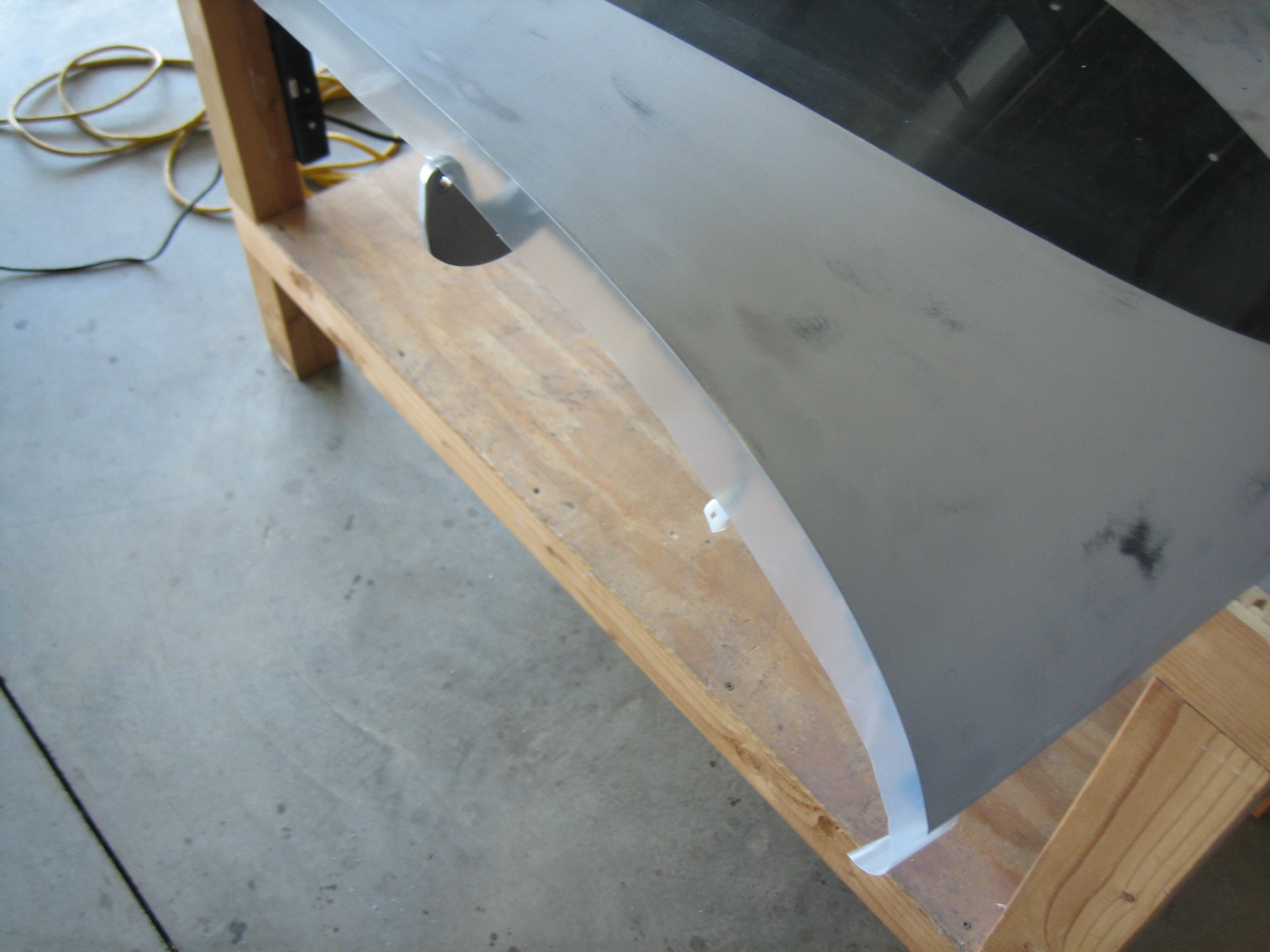
In preparation for reinstalling the canopy (hopefully for the last time), I applied a strip of UHMW tape under the leading edge.  This will help the flange slide over the weatherstripping without catching and dragging on it.

I then used a razor blade to trim the tape flush width the edges of the skin.

I then installed the wing root fairing.  I didn’t bother tightening all of the screws all of the way since that wouldn’t change the weight or CG.

The plans say to trim the rubber seal to just touch the fuselage, but I think it looks better to leave the whole seal and have it flare out at the fuselage.  It probably seals against the fuselage better too.

I also installed the wingtips with the landing lights and mounting plates.

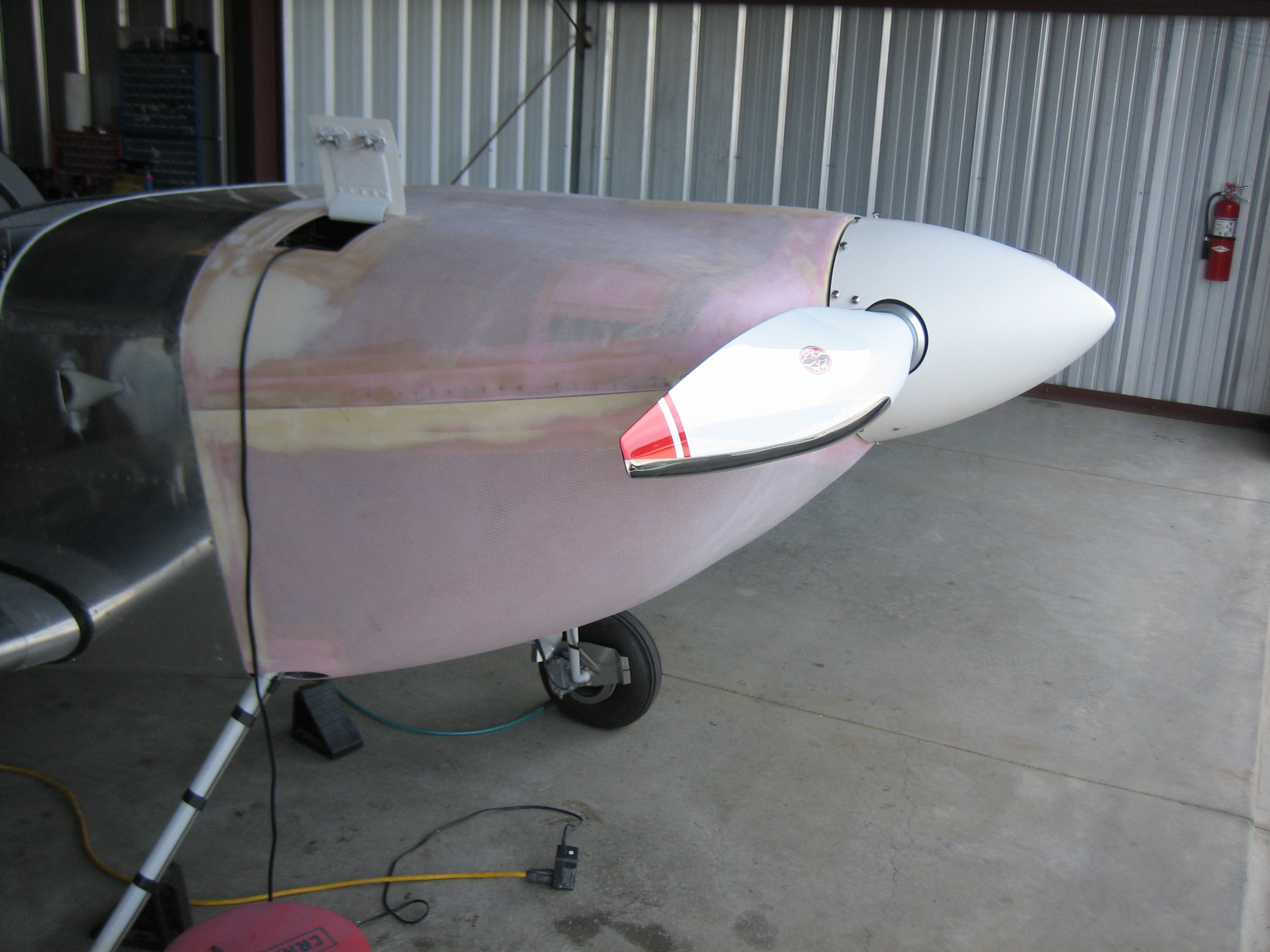
I reinstalled the spinner and the cowl.

Jenn stopped by the hangar and helped me install the canopy.

I then installed all of the interior.

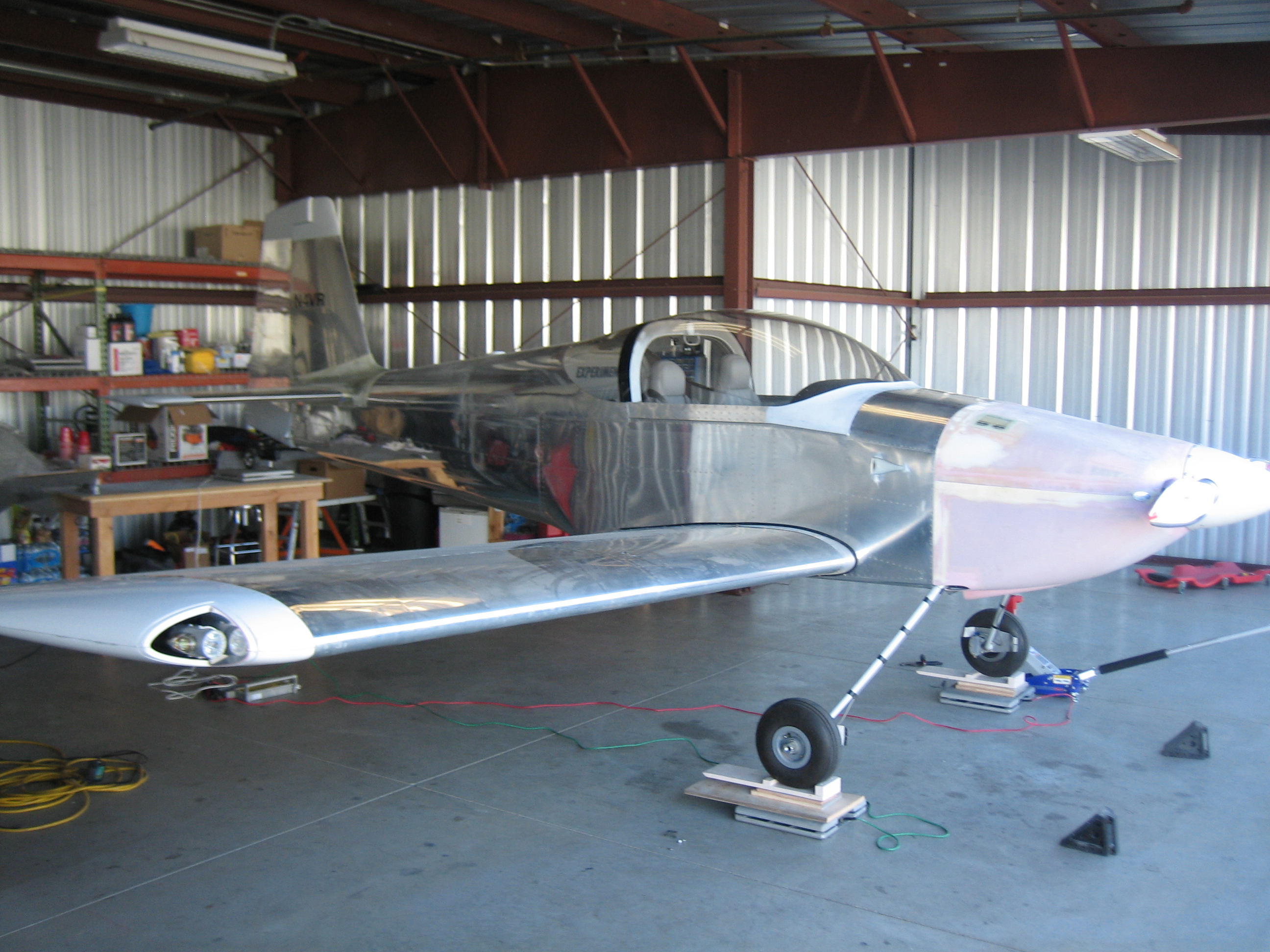
After installing the empennage fairings and all of the wing inspection panels, I leveled the plane and put it on scales.  I came in right at 1100 lbs which is great.  It probably means I’ll be around 1130 or so with gear fairings and paint.  My center of gravity is farther aft than I would have liked at 81.35″, or 2.65″ aft of the forward limit.  This makes it fairly easy to load aft of the aft CG limit, so I’m likely going to have to shift some weight forward or add more weight under the cowl.