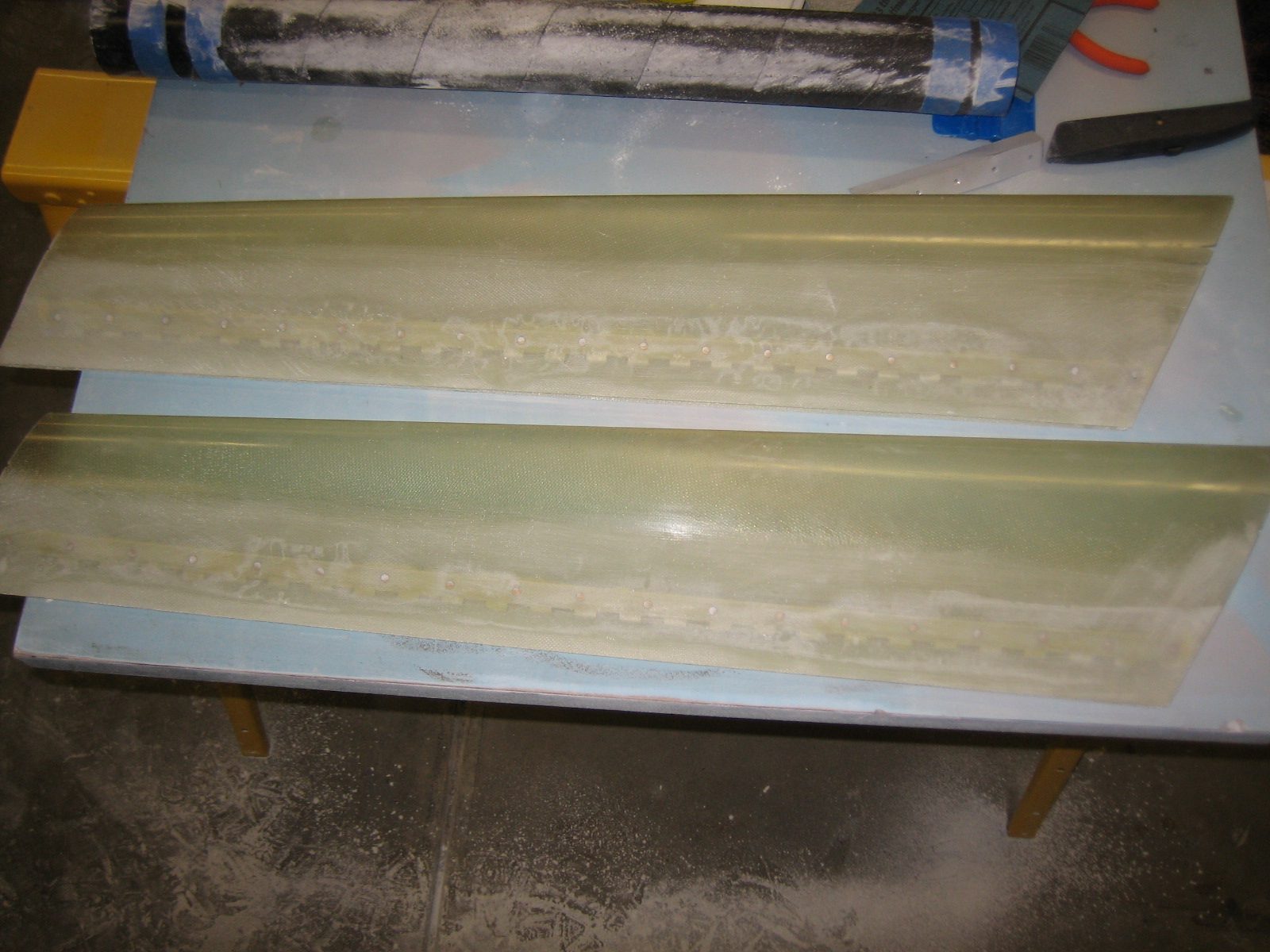
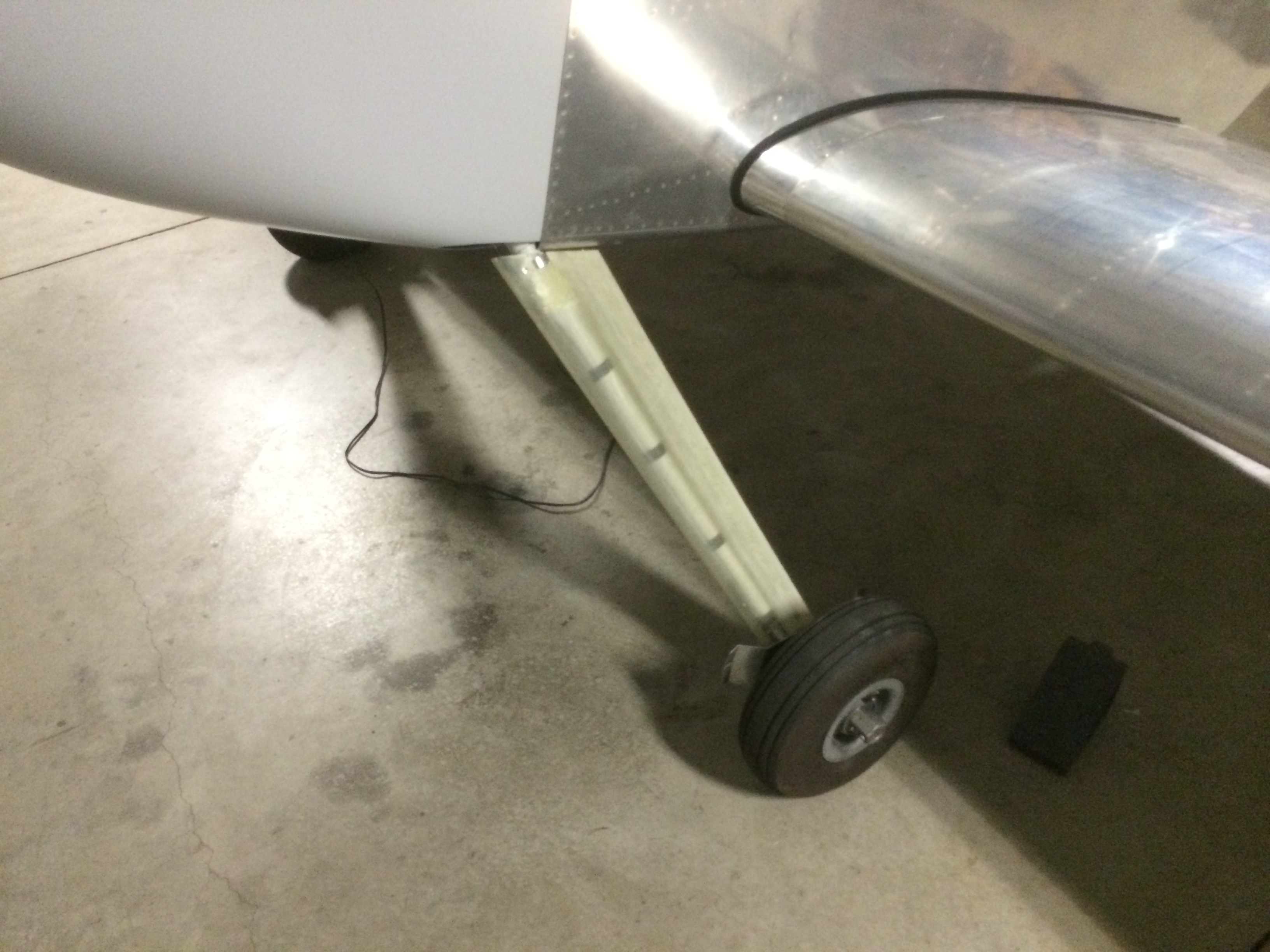
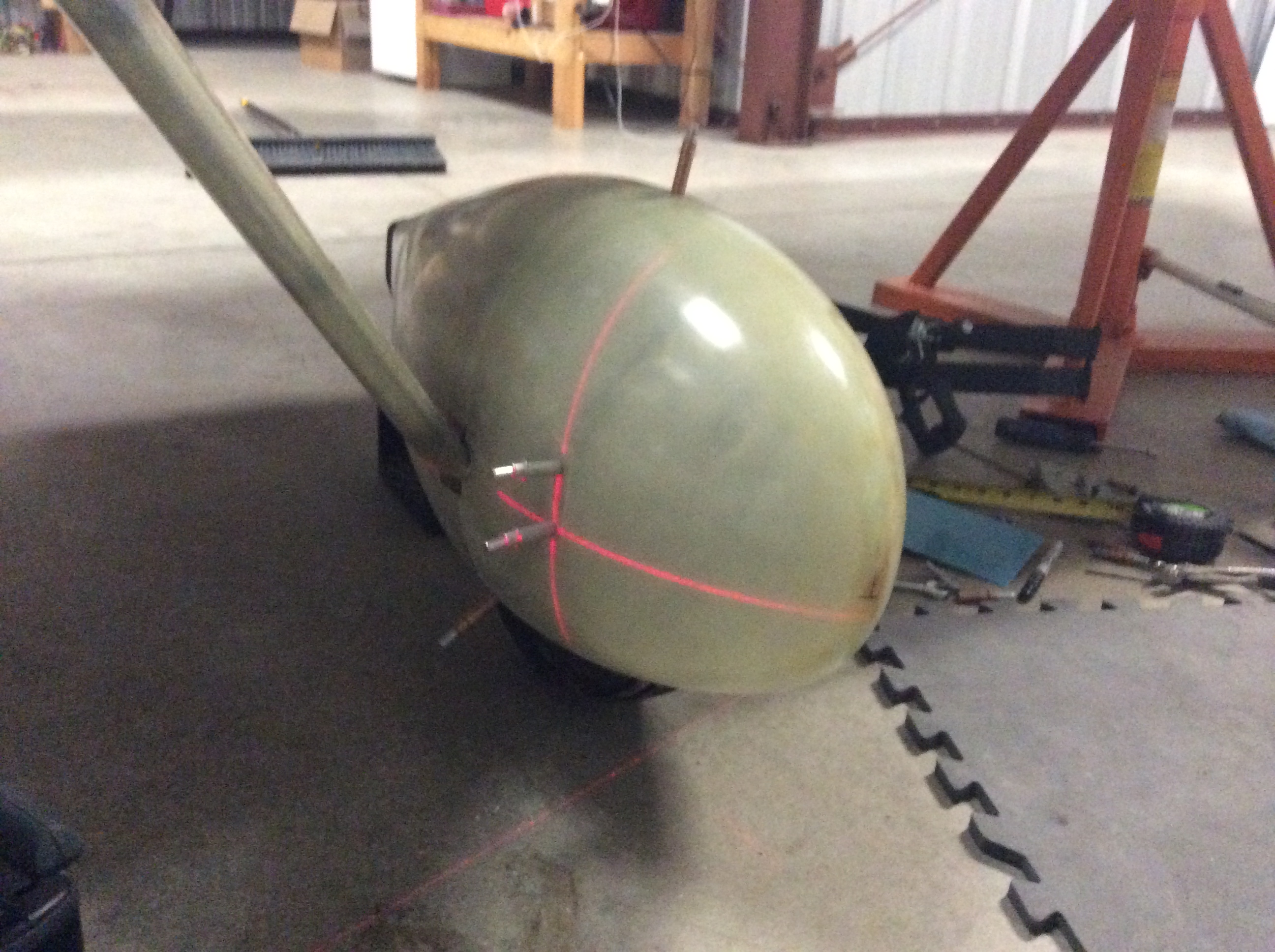
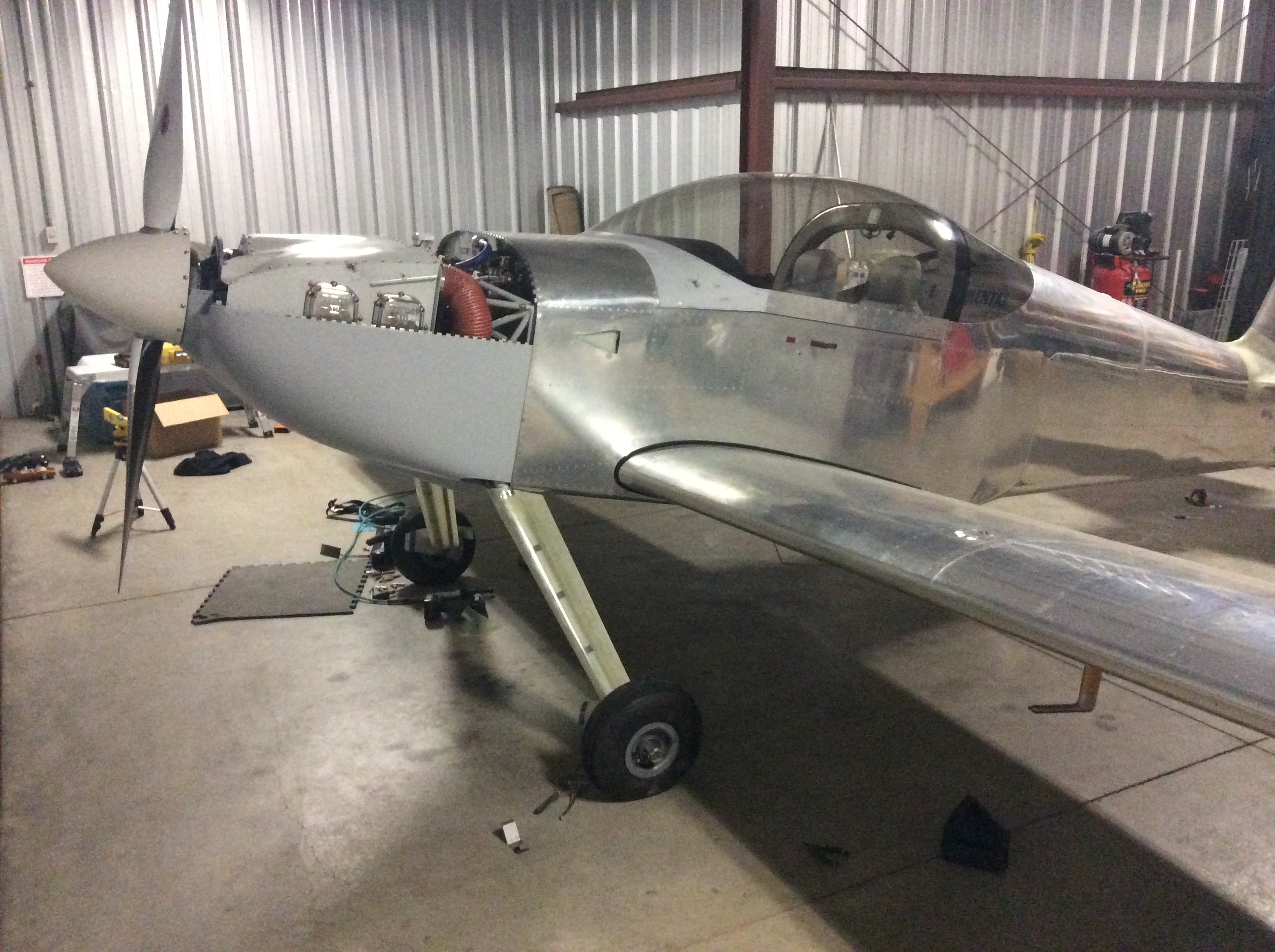
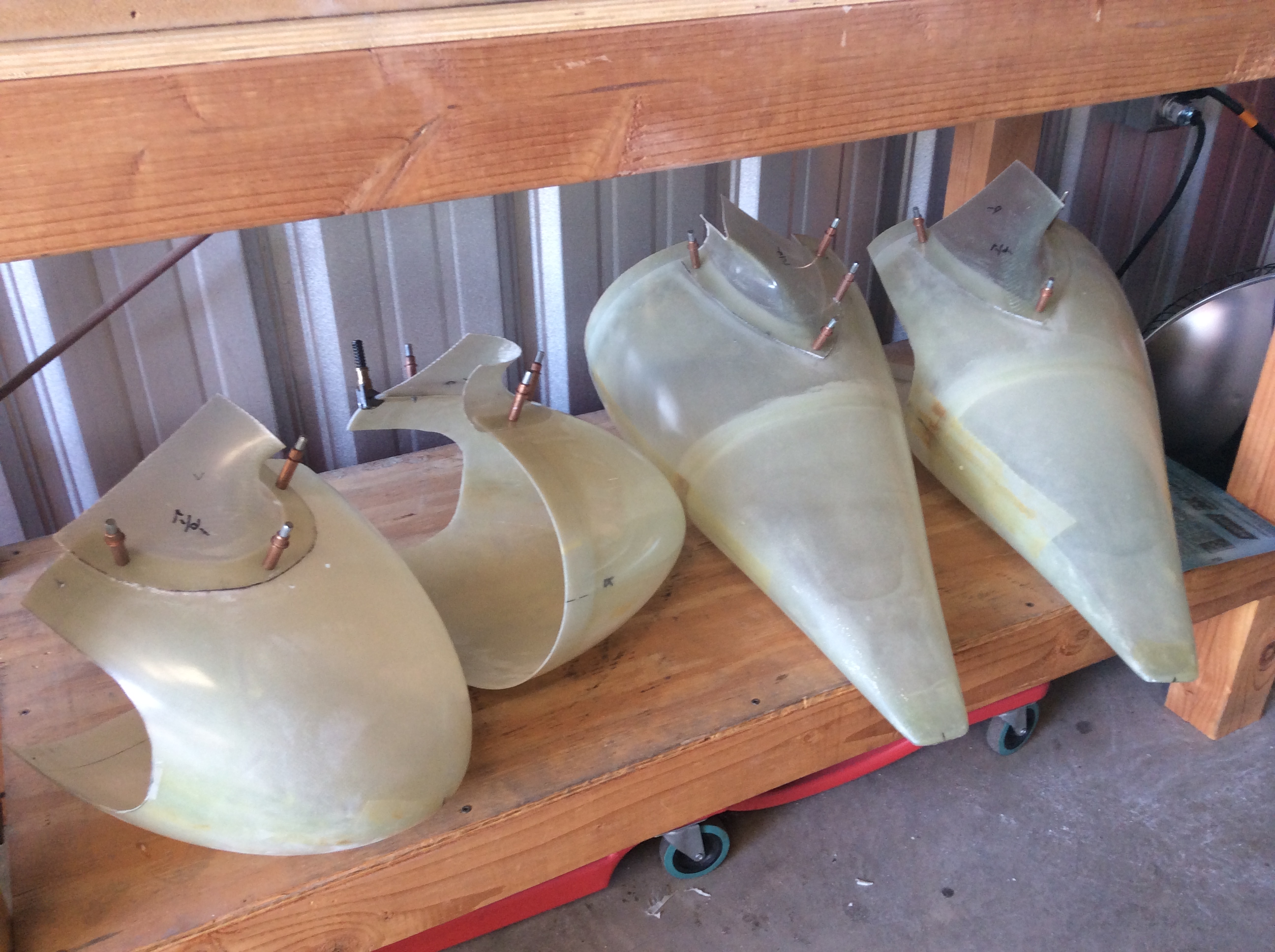
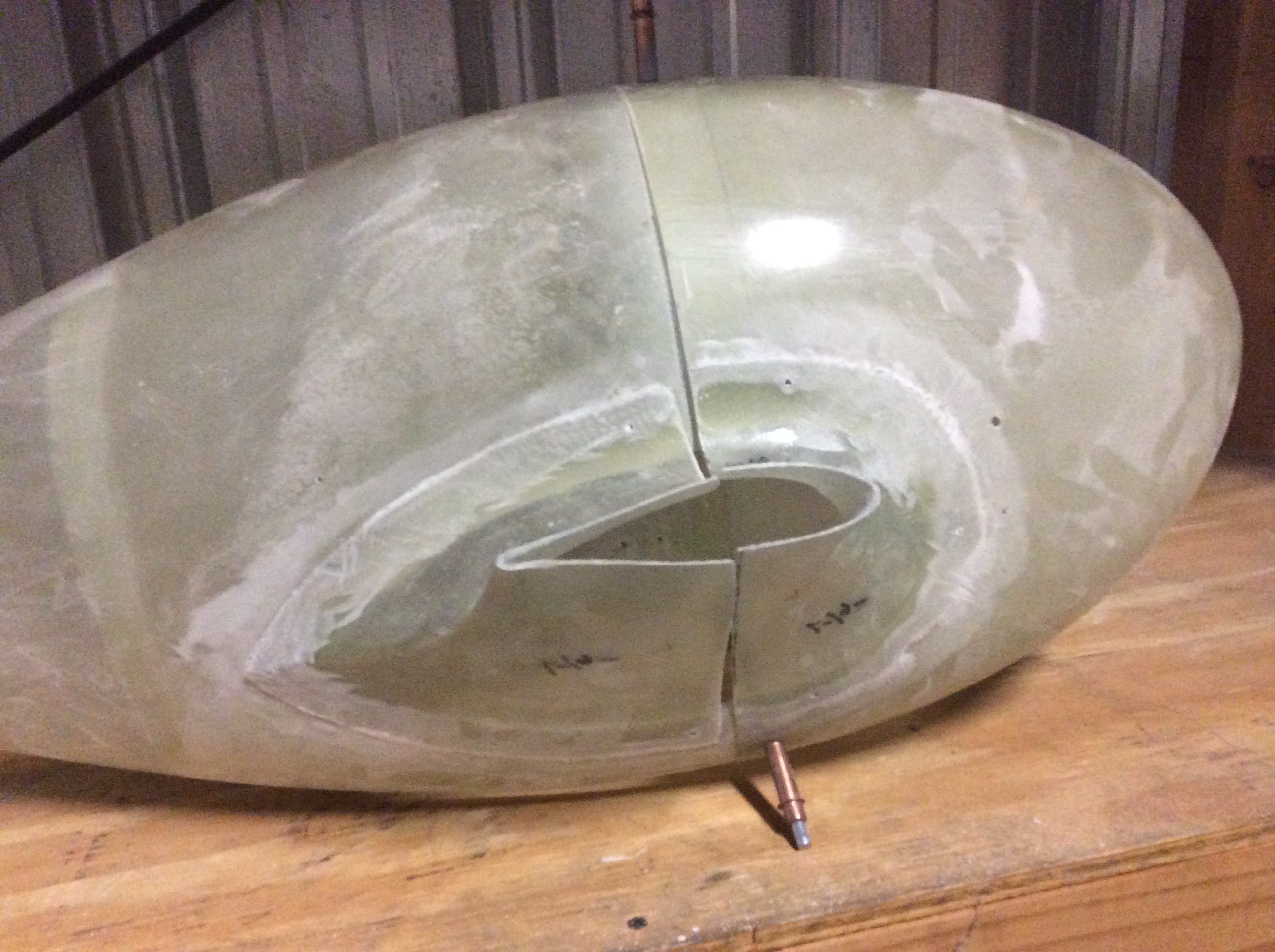
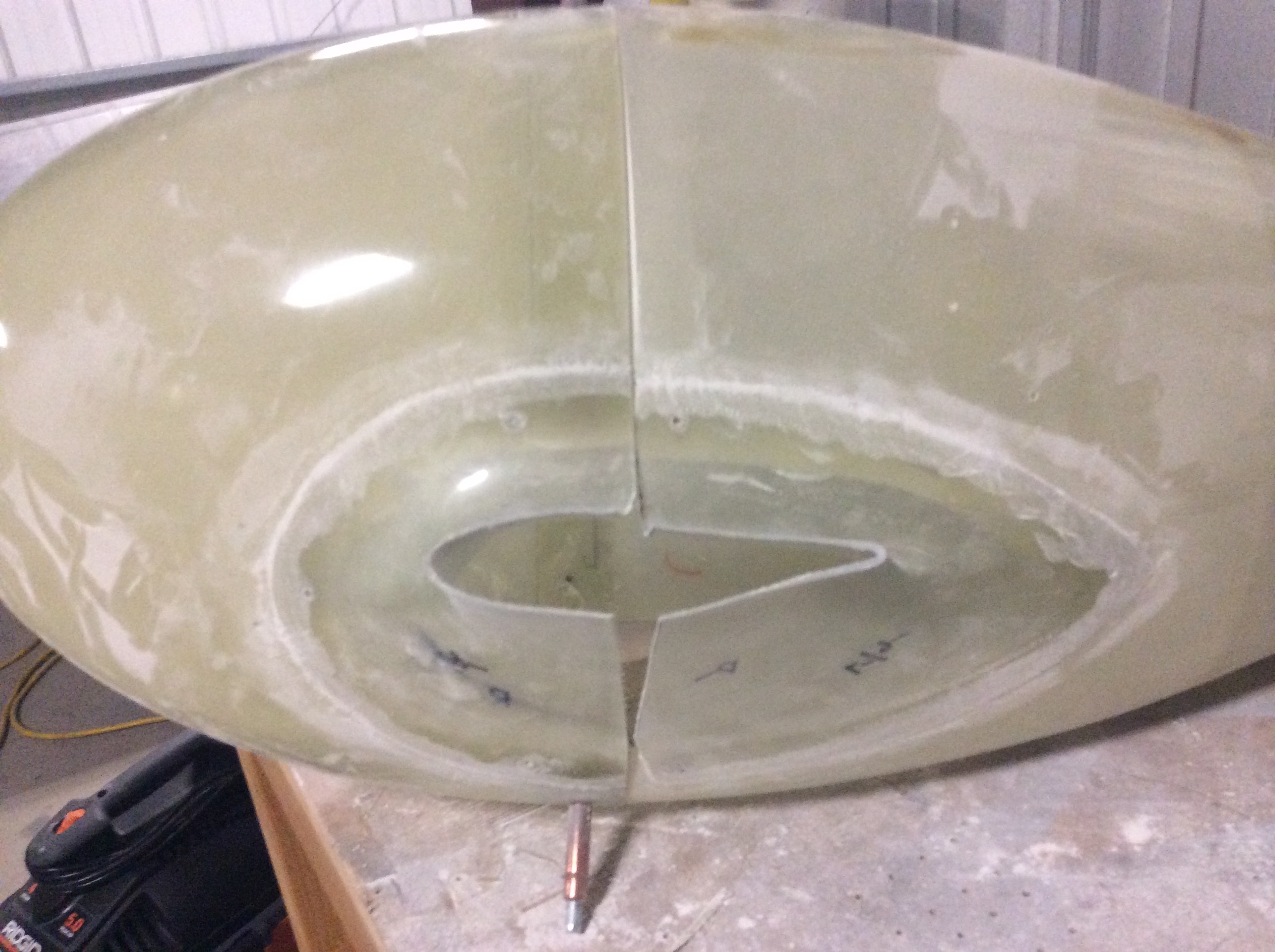
Sanded Gear Leg Fairings

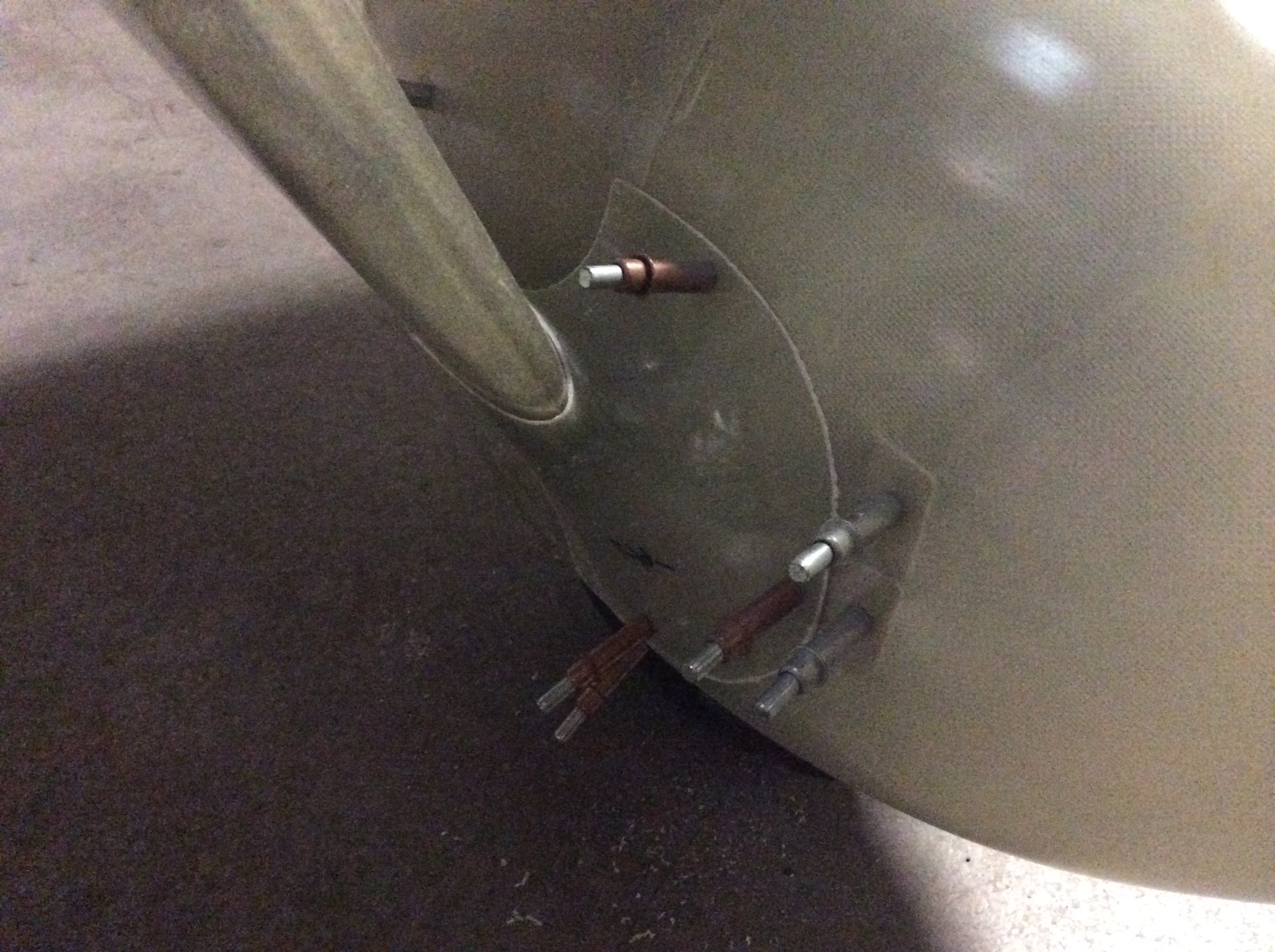
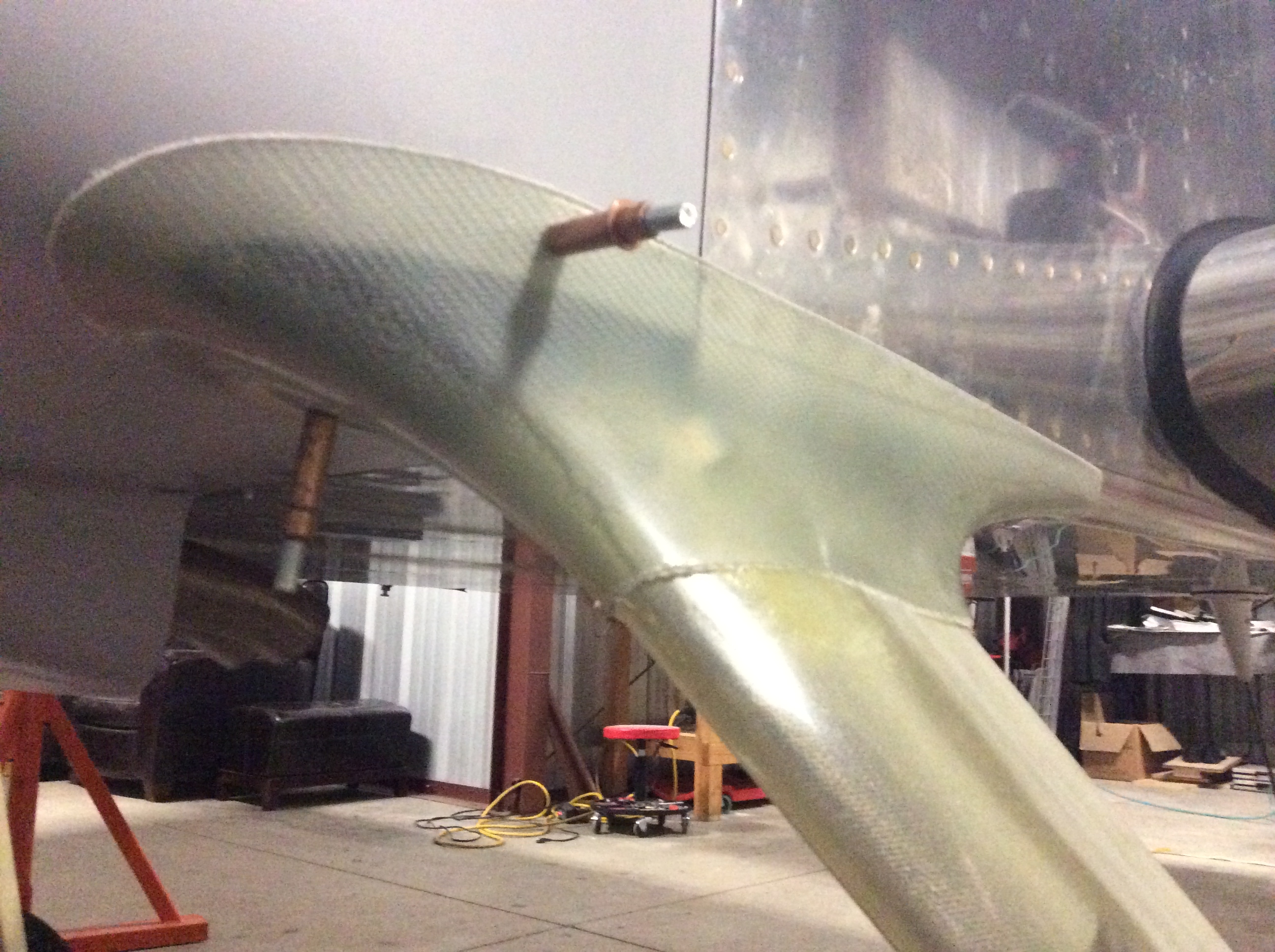
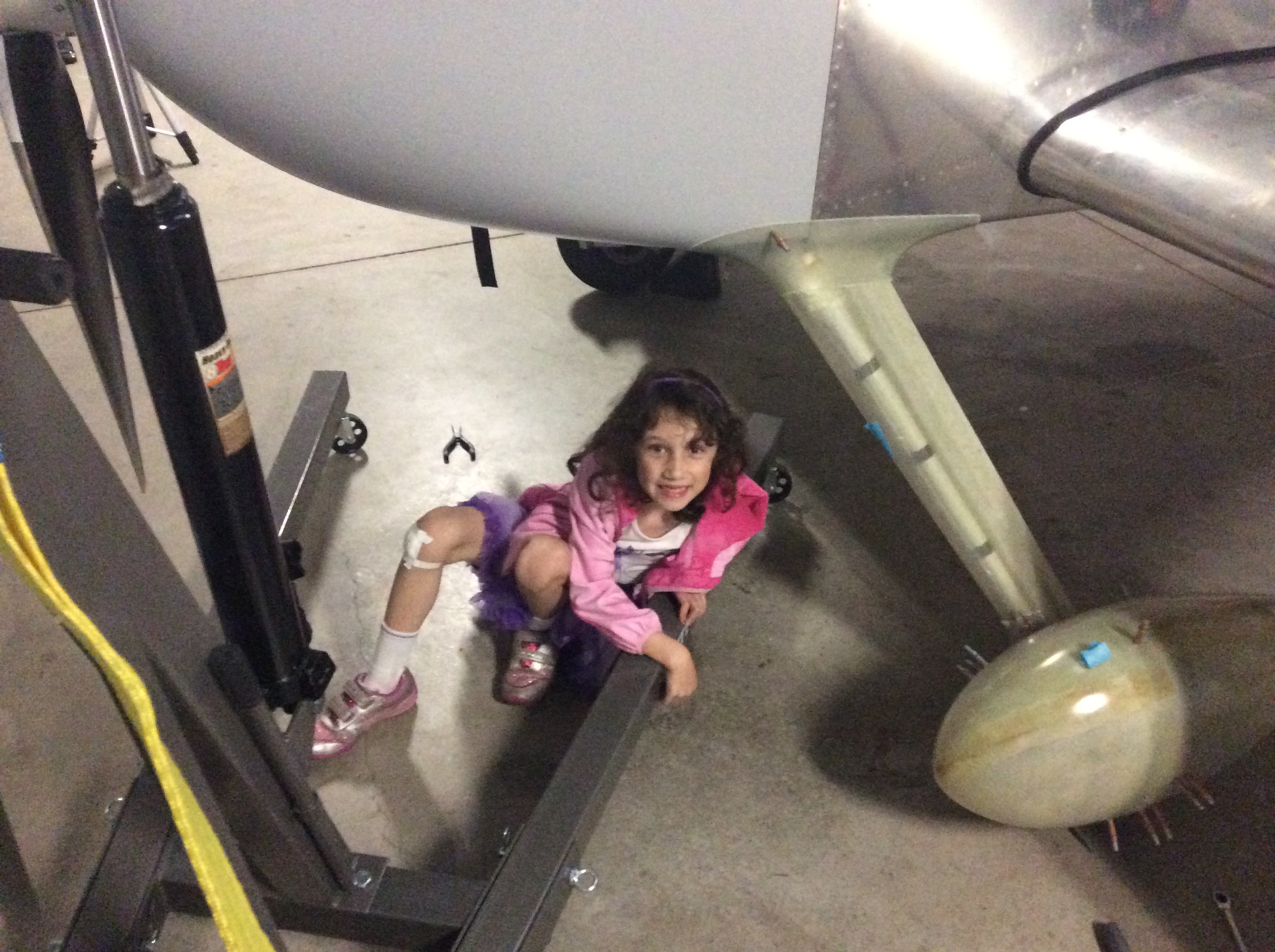
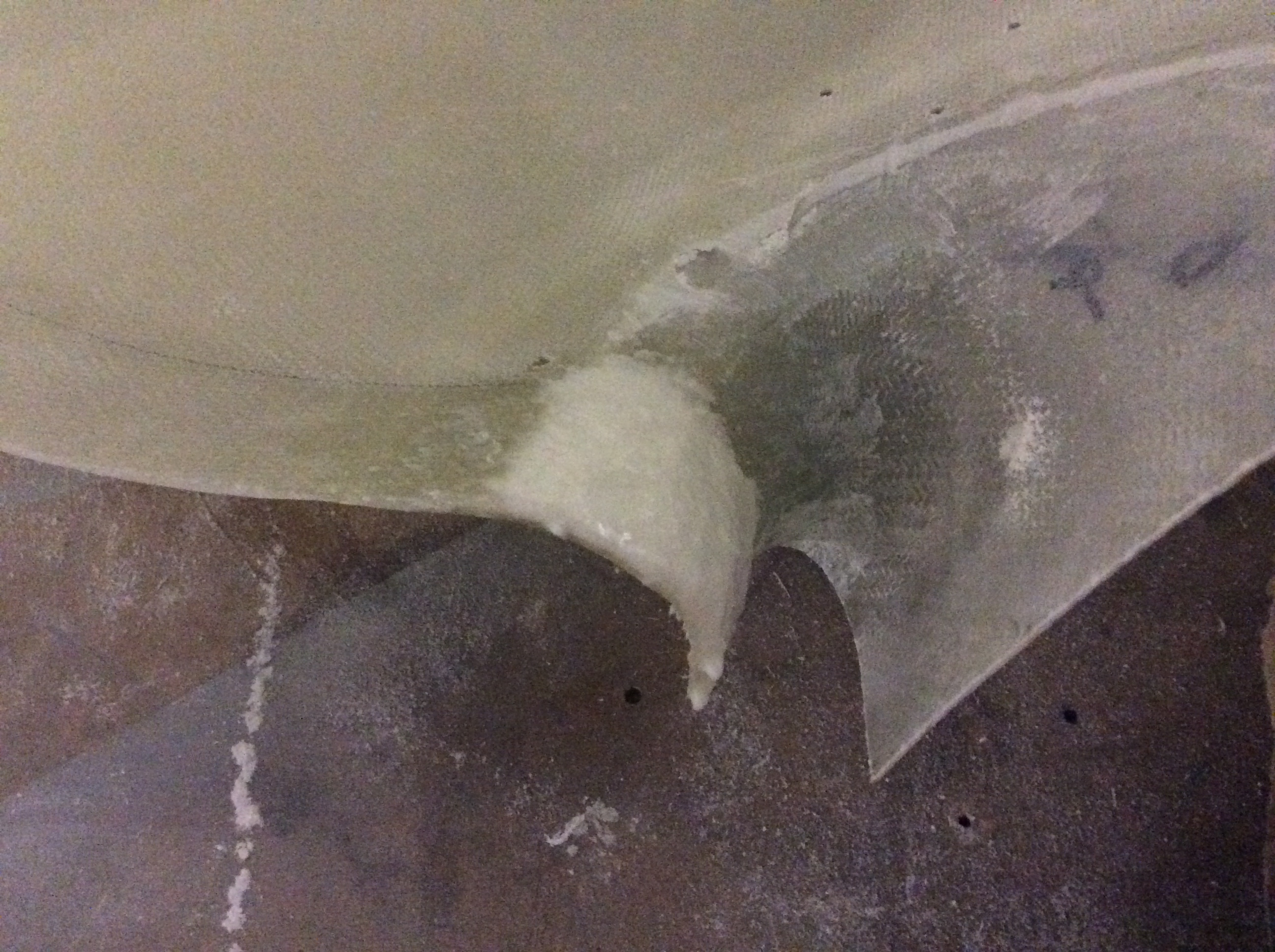
I sanded down the glass I applied to the gear leg fairings so that the transition is smooth.  I’ll apply a couple of skim coats of epoxy, then the outside of these is ready for priming.  I still need to do a little work on the inside for mounting before that though.

Airplane Inspection Party Writeup in Kitplanes Magazine

One of the builders who stopped by my Airplane Inspection Party back in January is the Editor-in-Chief of Kitplanes magazine, Paul Dye.  We spent some time chatting about my reason for choosing to hold an inspection party and my effort to build my plane in a very public way.  With so many eyes on my plane over the years (both in person and from around the world through this website), countless issues have been caught before they could have caused a problem.

In this month’s issue of Kitplanes Magazine, Paul wrote up his visit in the editorial.  He was encouraging others to be as open and willing to take criticism as I was.  Far too many builders are afraid to let others examine their work for fear of exposing their mistakes.  Sadly, those are often the builders who most need another set of eyes on their projects.

Paul was very complimentary of my idea for a party: “Having a large number of experienced builders and opinionated pilots (are there any other kind?) drop in to dissect your many years of careful work takes intestinal fortitude of the highest order–and it shows a commitment to honest, open risk management that should be our standard in the Experimental world.”

He was also very complimentary of my work: “Truth be told, it was one of the nicest building jobs I have seen in all my years of working on airplanes and being a tech counselor. When a builder takes the time to lay the flat EGT wires against each other in a perfectly rectangular bundle, you know he has paid attention to details.”

I really hope others take Paul’s message to heart.  We need to keep an eye out for each other; our lives are on the line.

Three Ship Formation Work

I spent most of the weekend working (not on the plane), but I did get out a bit to meet up with a prospective RV builder down at Hollister.  He checked out Greg’s RV-8 and my RV-7, and we talked quite a bit about what’s involved in building.  Greg’s son Nicholas then arrived with his transition instructor in another RV-7, so we decided to do some three ship formation work.

We started out with me flying lead since I have the least formation experience.  Greg was off my right wing and Nicholas was off my left.

We then switched positions and I flew off of Nicholas’ right wing.  This was the first time I’ve ever flown this close to another plane, and it was a huge amount of work.  You literally can’t take your eyes off the lead plane for a second or you could move substantially out of position.

We then moved into a left echelon formation with Greg taking the lead and me in the middle.  I still have a ton to learn, but this was a blast.

Worked on Gear Leg Fairings

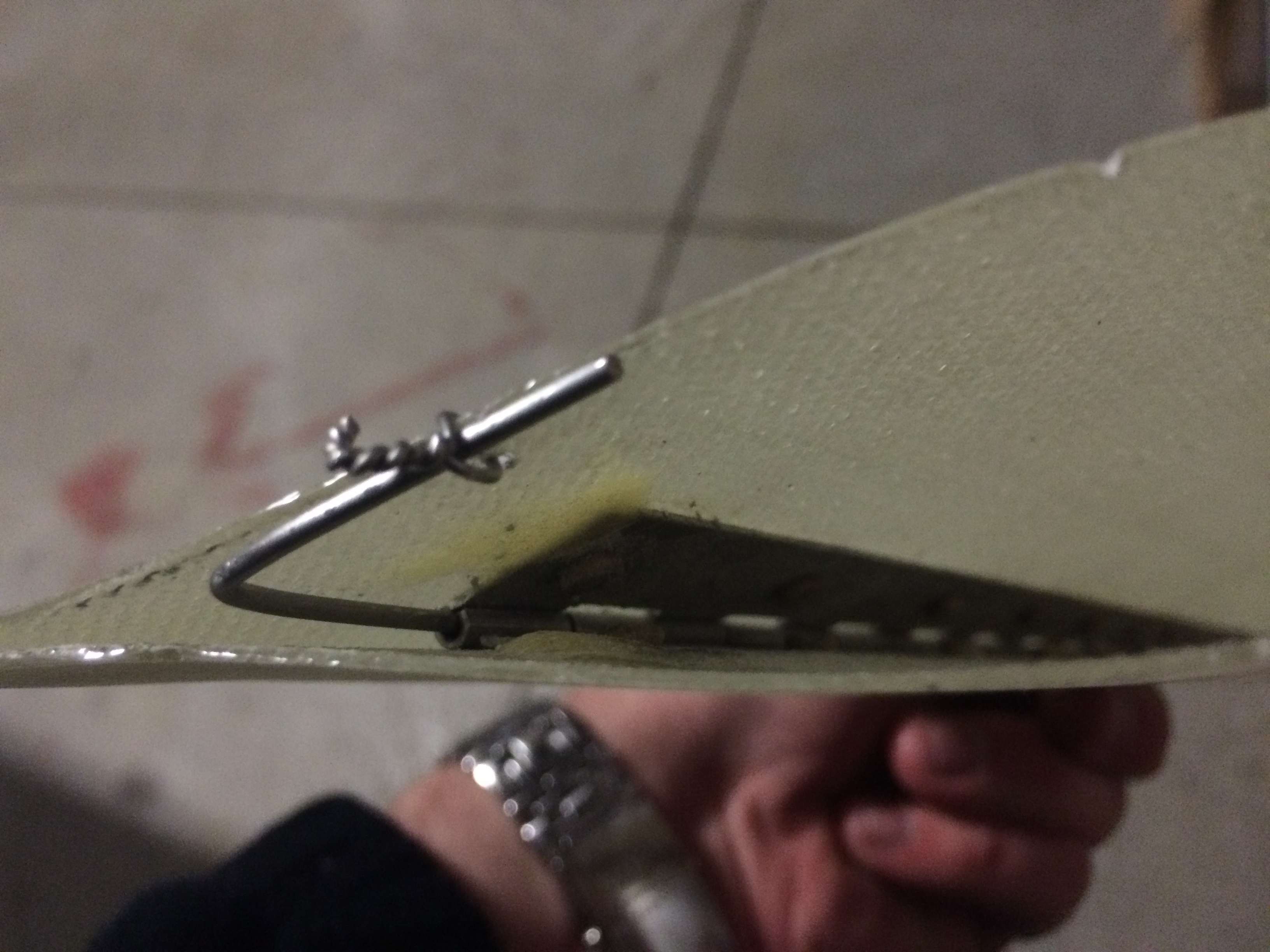
I spent a couple of hours down at the hangar tonight, working on the gear leg fairings.  I bent the hinge pins and then spent some time installing them and removing them from the gear legs to make sure I could get the pins in and out fine.  I then drilled a hole in the top of the fairing so that the pin can be safety wire in place.

Dynamic Propeller Balancing and Fairings

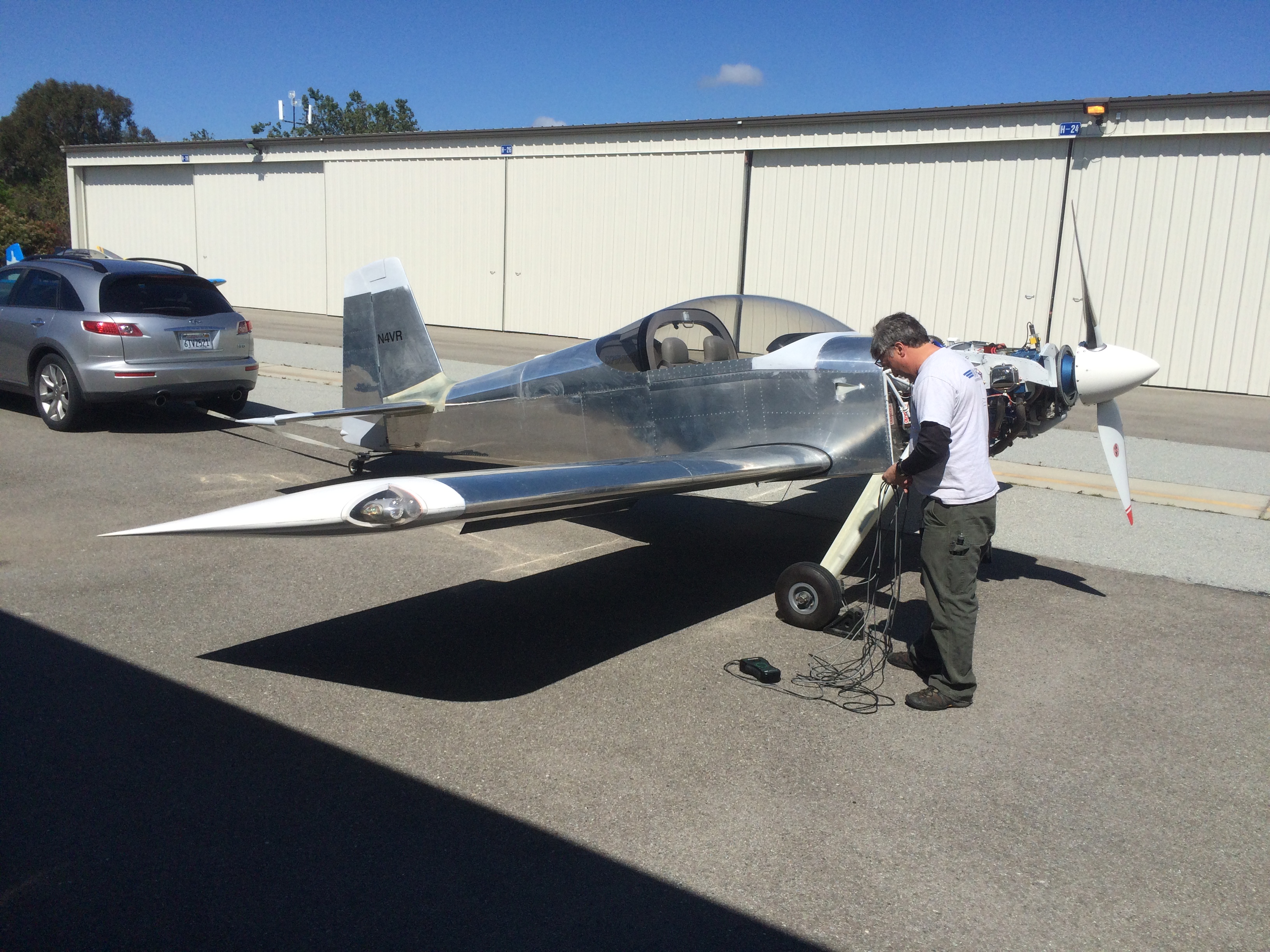
Lee Apaka flew down this morning to balance the propellers for Greg and I.  Since I’m running at 2500 RPM with wide open throttle, we tied the plane back to the car and chocked the wheels.  Greg and I both have really smooth engines (a testament to how well Aerosport Power builds then), but they can always be better.  Greg started out at 0.35 IPS (inches per second), so Lee added 17g of weight (a bolt and some area washers) to the spinner backplate.  Amazingly, he nailed it on the first time and hit 0.02 IPS.  Anything under 0.1 IPS is pretty good, and 0.02 is somewhere between excellent and perfect.

After Greg wrapped up his run, I pulled my plane into position and Lee hooked up his gear.  I was only at 0.12 IPS when we started, so I was already a bit better.  We added 5.9g to my spinner backplate and ran it again. That dropped me to 0.11 IPS.  The formula wanted another 6+g mounted just a few inches away from the first weight.  Lee decided instead to add one more washer and a slightly longer bolt.  I did a third run and hit 0.02 IPS.  I’m super happy with the results.

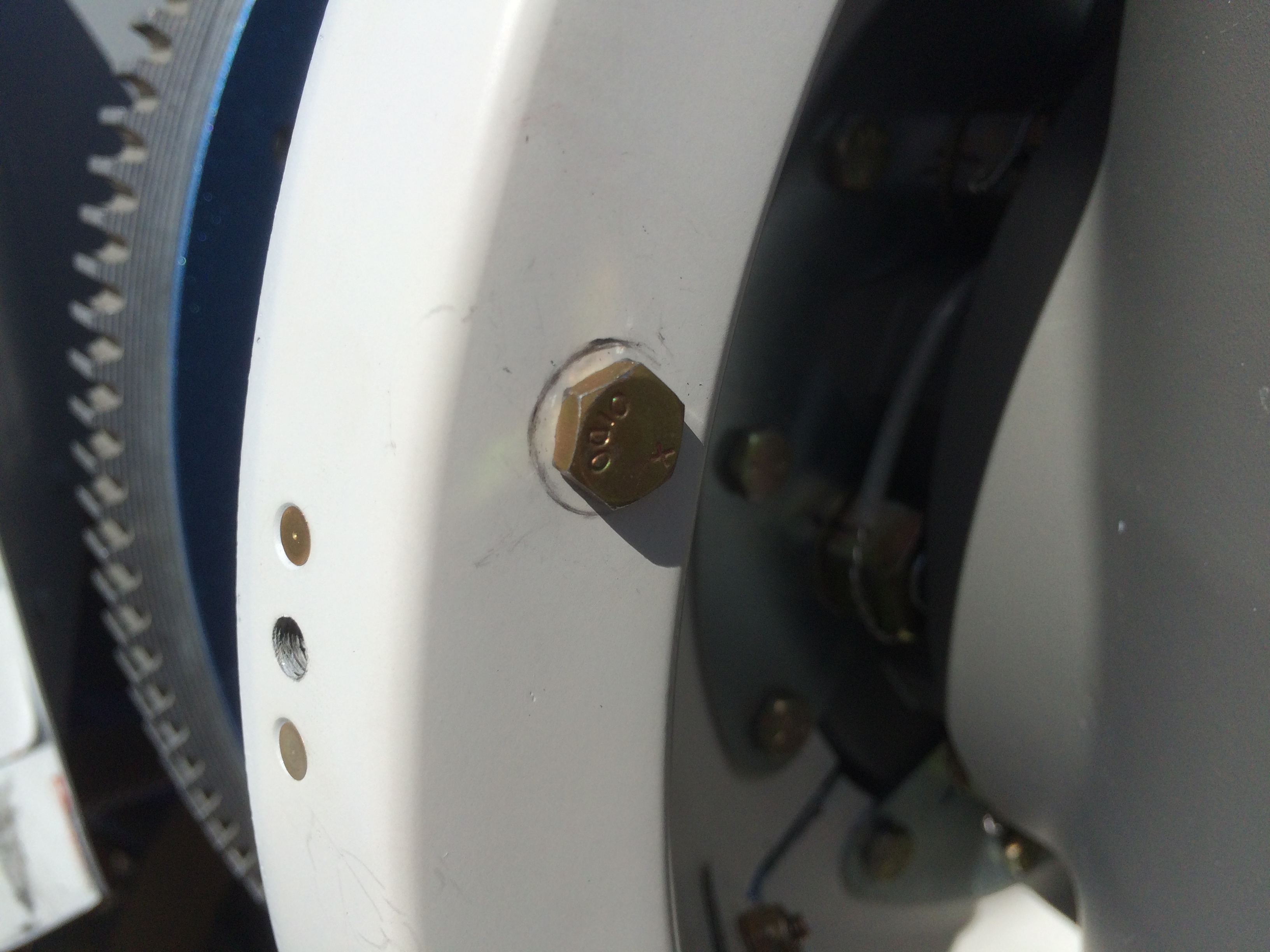
Here’s where the weight was added to the spinner backplate.  There is a washer and an AN364 nut on the other side.  Our fix was to add one additional washer under the head shown here.

I jacked up the plane and started working on the gear leg fairings.I laid up some additional fiberglass inside and then mixed up some epoxy/flox mixture and gooped it around the line where the fairing will sit against the gear.  I then started working on the wheel pants.  With the fuselage level, I supported the rear of the fairing to get the center 8 5/8″ from the ground while simultaneously adjusting the fore/aft position so that the outer support bracket edge lines up with the step in the fairing.  I then drilled it to the outer fairing.

Almost Halfway Through Phase One

I had nearly the whole day free and the weather was perfect, so I decided to see if I could get up to 20 hours on the Hobbs.  I didn’t quite make it, but I came close.

I first flew over to Watsonville to meet up with my buddy Dan and his neighbor for lunch and then joined up with Greg in the air for some more formation practice.  I’m definitely getting the hang of formation flying; my throttle and control inputs are getting smaller and smoother.  We even did a formation takeoff which was quite a bit different than a regular takeoff. I was not looking down the runway or at my flight instruments and we were nowhere near full power so that I still had some smash if I started to fall behind.

We landed back at Hollister for some fuel.  I’ve been keeping track of my fuel consumption for the last few flights, so I adjusted the K factor in the EMS to account for the discrepancy between estimated and actual fuel flow.  Greg also helped me do a compass alignment on their compass rose since I hadn’t done that yet and I noticed our headings were sometimes nearly 10º off in flight.  Finally, we played around with some very low power settings to see how efficient we could make the plane.  Down around 80-85 kts, I was getting nearly 30 nmpg.

As the sun was setting, Greg and I headed back to Hollister for some pattern work.  With only two RVs in the pattern, we were able to fly some incredibly tight and fast patterns.  I would turn crosswind well before the departure end of the runway and be at pattern altitude by the time I finished turning onto a tight downwind.  Pulling the power back, I was ready to drop flaps by the approach end of the runway so I could fly a close base.  I didn’t time it, but I doubt that each trip around the pattern took more than a couple of minutes or so.

Test Install of Gear Leg Fairings

After grinding down some of the excess flox inside the gear leg fairings, I cut some slots for the hose clamp and installed the gear leg fairings on the airplane.  I’ll do a proper alignment with the longitudinal axis of the airplane later, but for now I used the upper intersection fairings to align these.

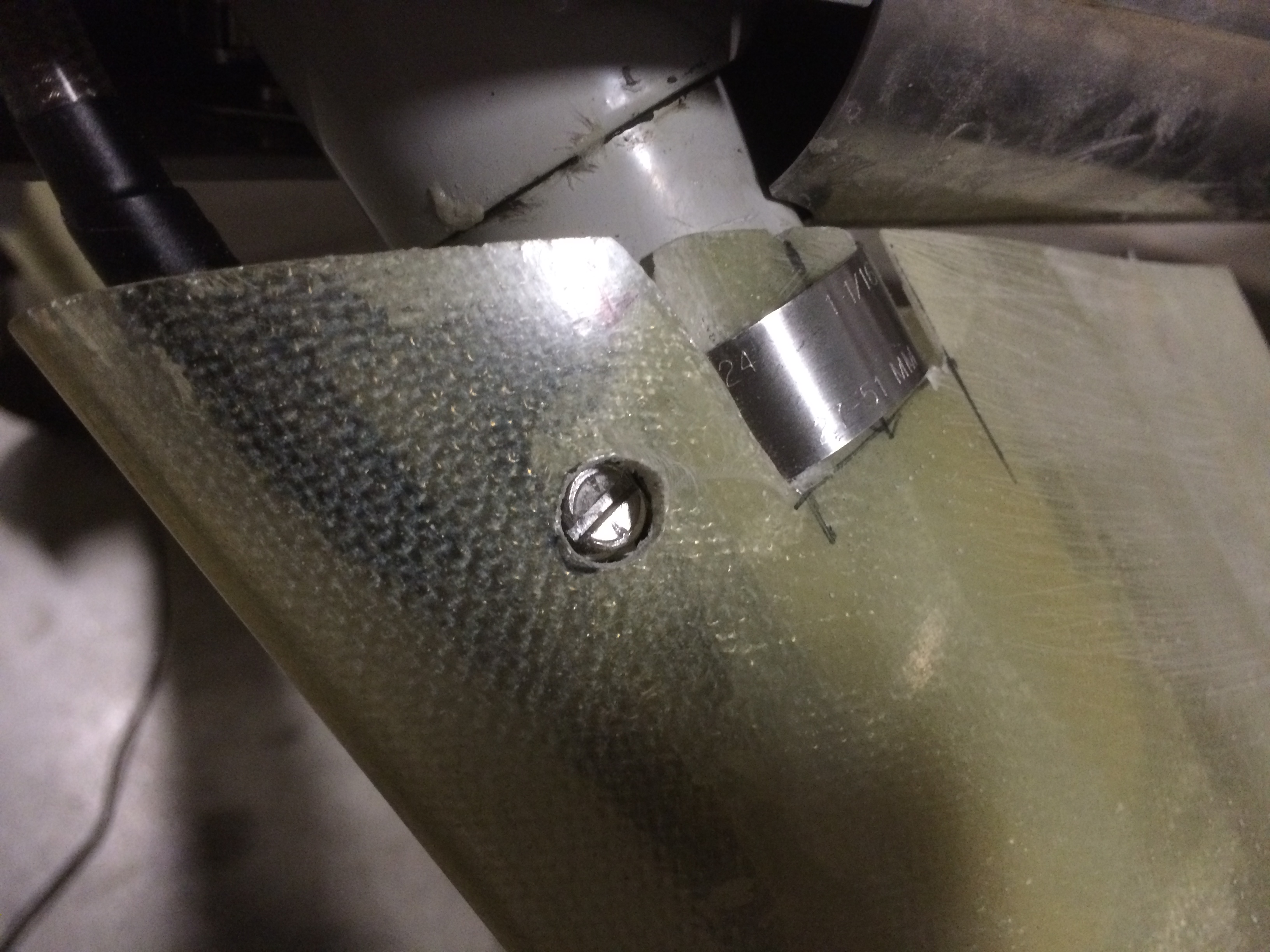
Here’s what the upper end of the fairing looks like.  You can see that I also drilled a hole forward of the slots to access the worm clamp’s adjustment screw.  All of this is hidden inside the upper intersection fairing once that is installed.

Aligned Gear Leg Fairings and Wheel Pants

I put the plane up on jacks and dropped a couple of plumb bobs along the center line.  I then snapped a chalk line on the floor so I can use it as a reference for aligning the gear leg fairings and wheel pants.
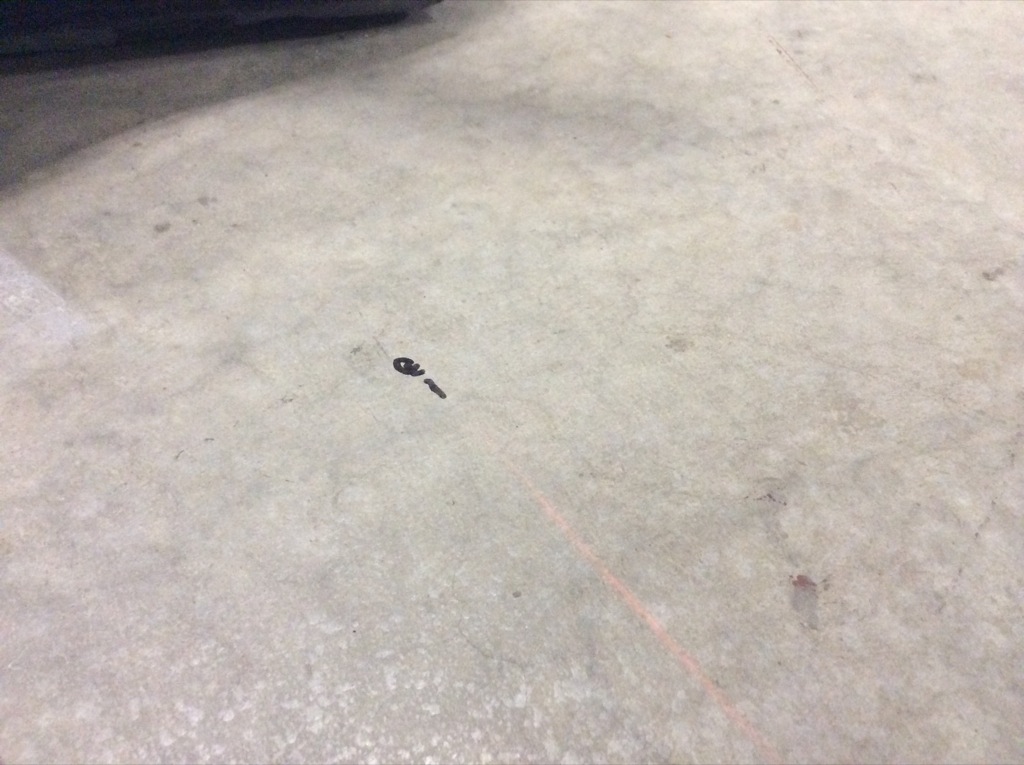
I created a second chalk line parallel to the aircraft centerline, but 38 5/8″ away which was roughly under the centerline of the wheel pant.  I then used a piece of scrap aluminum with a  square corner to measure up from the ground 8 5/8″ front and back to get the wheel pant parallel to the centerline of the airplane.  I blocked up the aft end with my chock to hold it there.  After aligning the wheel pant left to right (as shown in the next picture), I used one of my laser levels to mark where to drill (I aligned it with the hole with the front half of the wheel pant off and then reinstalled it).
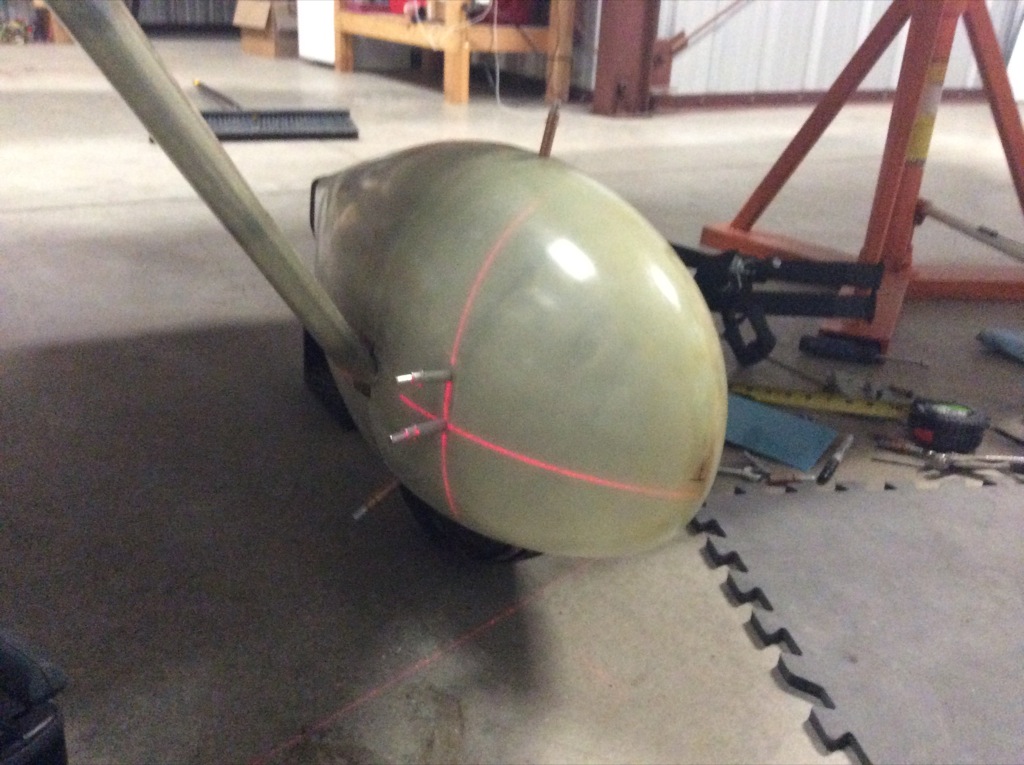
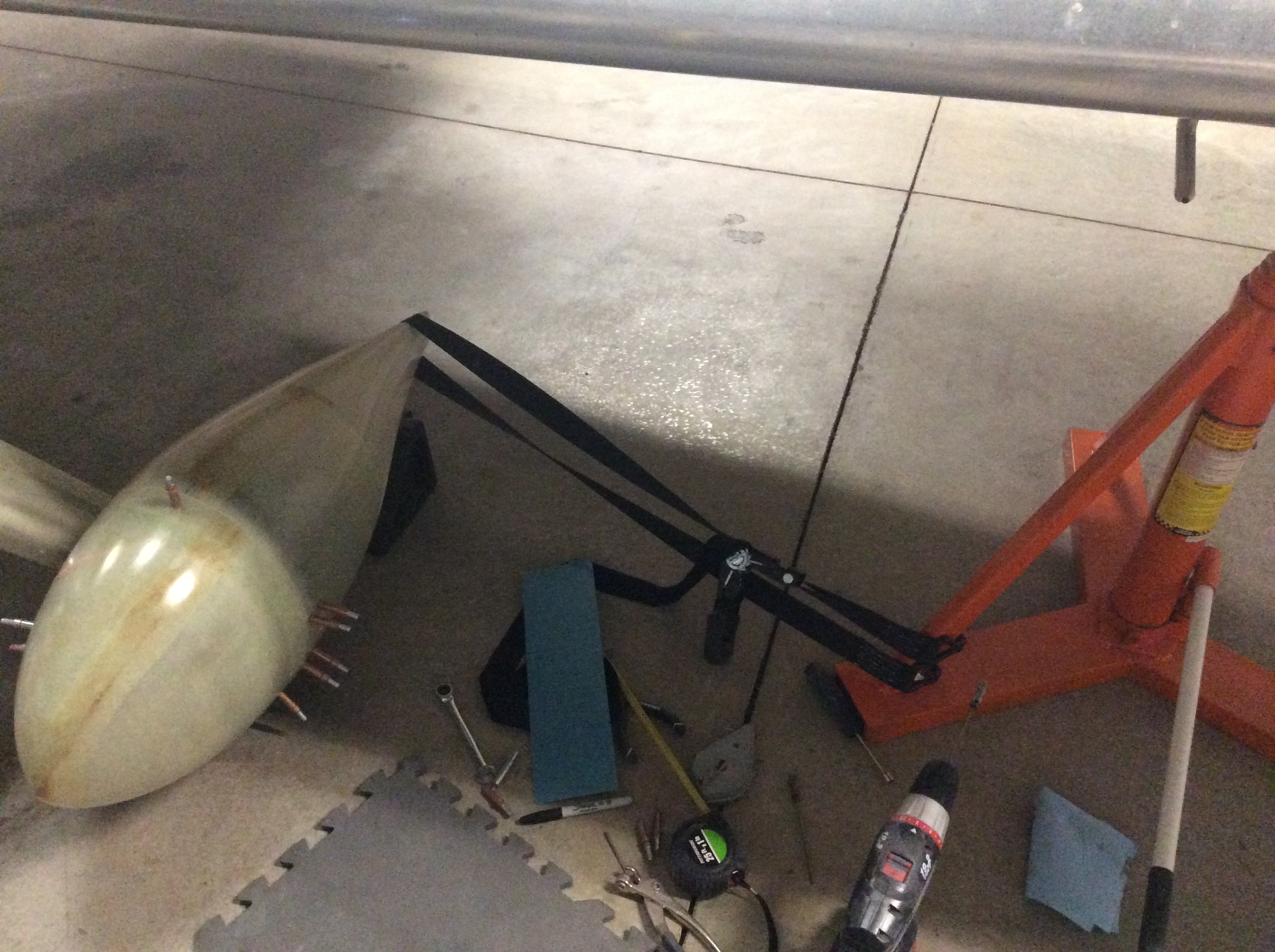
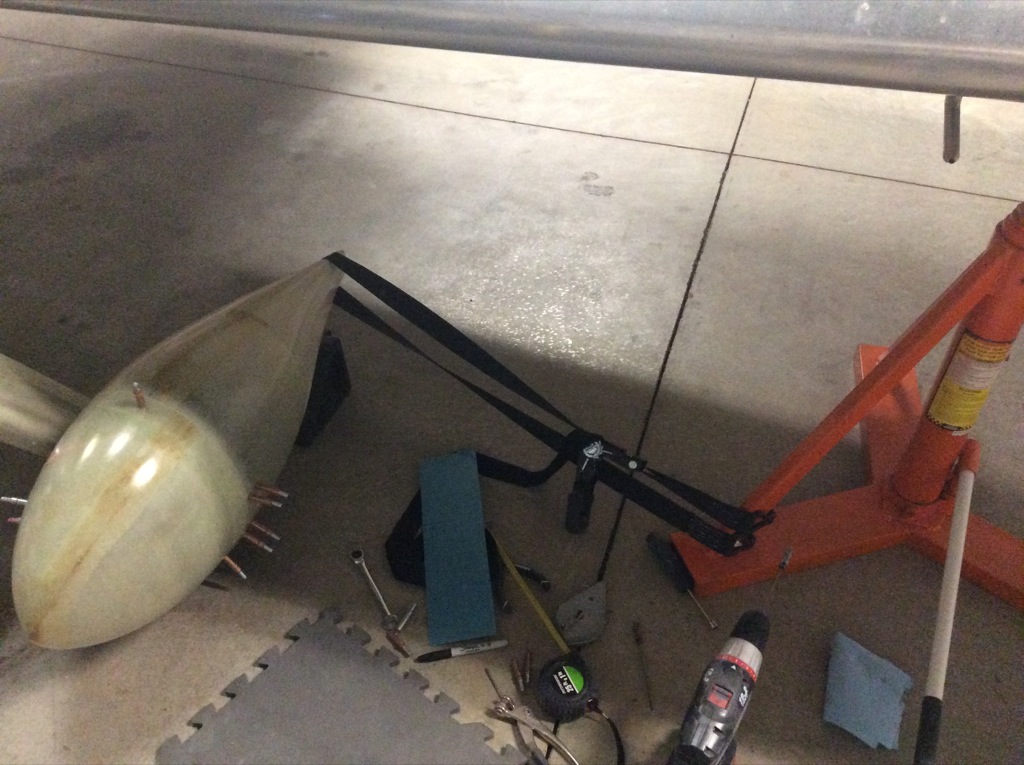
The aft edge of the wheel pant needed to be pulled out a little bit to align with the centerline, so I used a ratcheting strap to the aircraft jack to pull it out until it aligned with the chalk line I snapped.  After everything was aligned, I drilled the holes through the inner fairing mount to lock in the position.
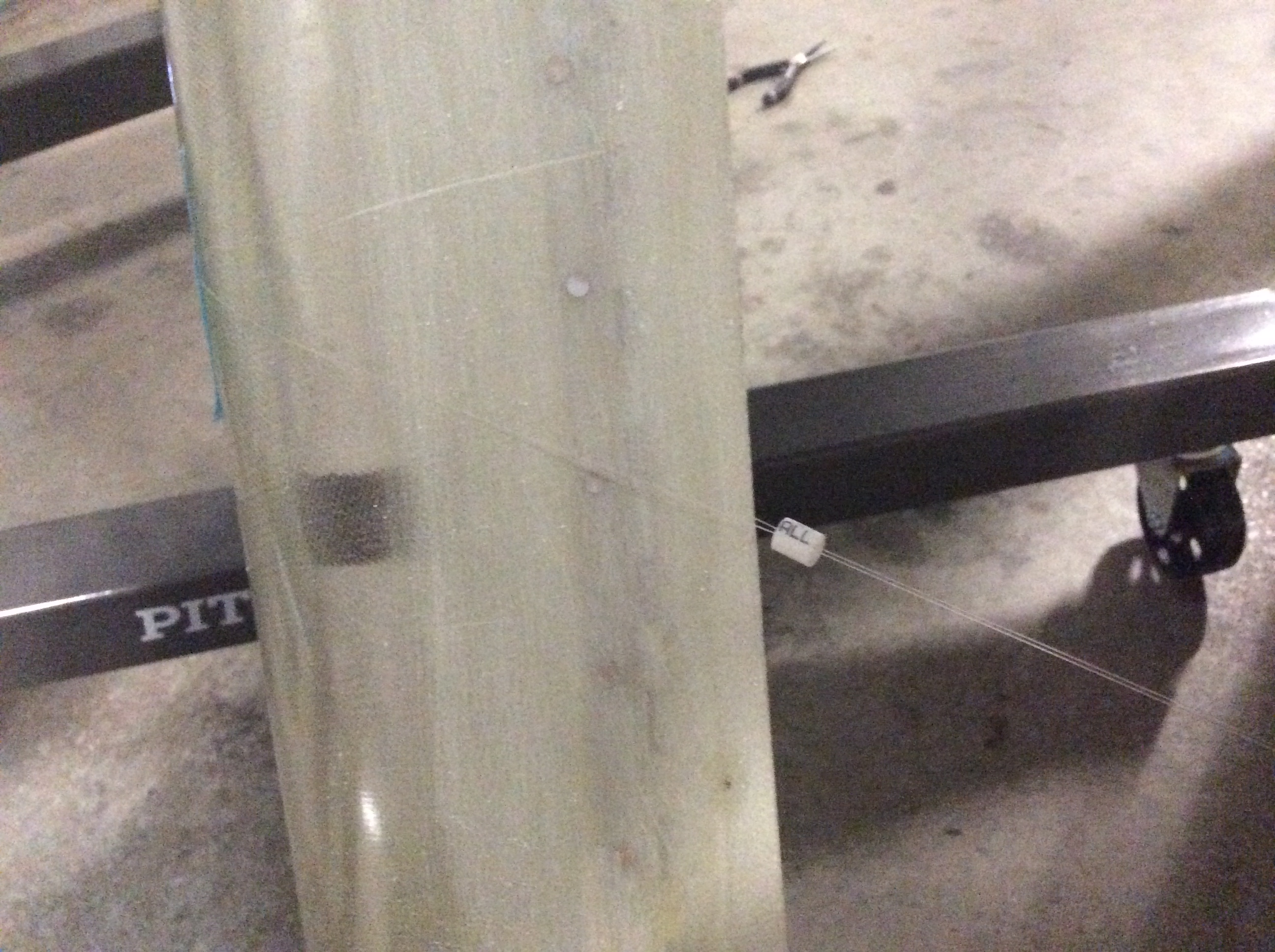
Before drilling the lower intersection fairings to the wheel pants, I needed to ensure the gear leg fairing is aligned.  I wrapped a piece of fishing line around the fairing and held it with a piece of blue tape.  I dropped a plumb bob down from the intersection of the fishing line and leading edge of the fairing and made a mark on the floor.  I measured out from the centerline and up to the fishing line so that I could make the fishing line exactly parallel to the aircraft centerline.
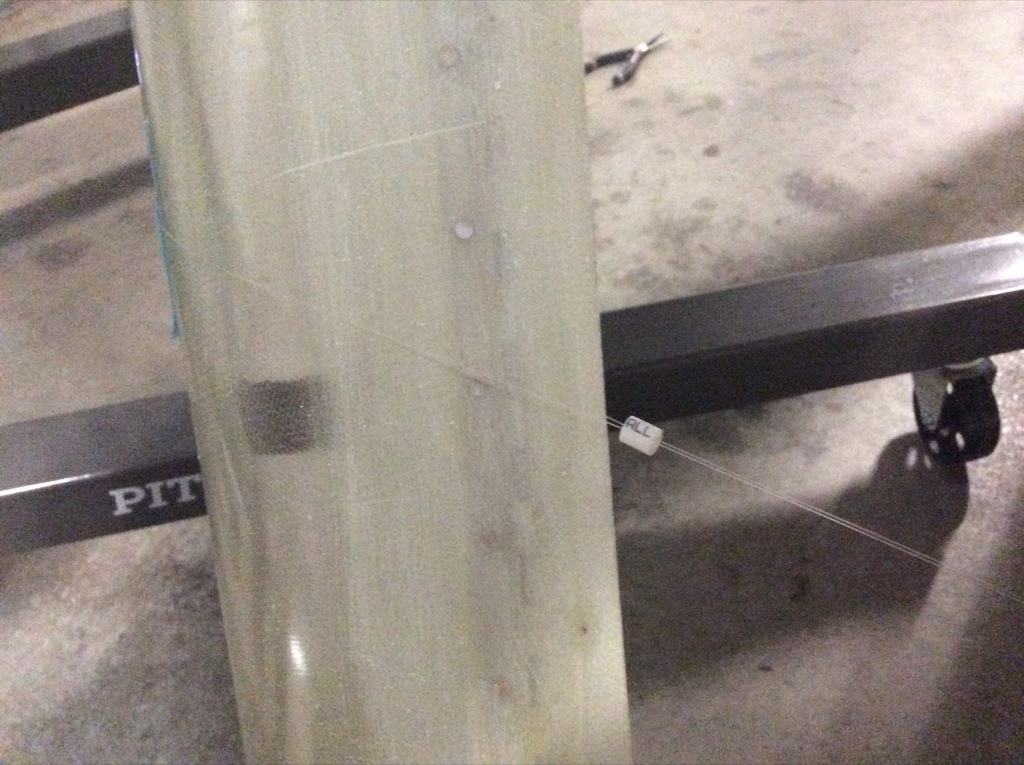
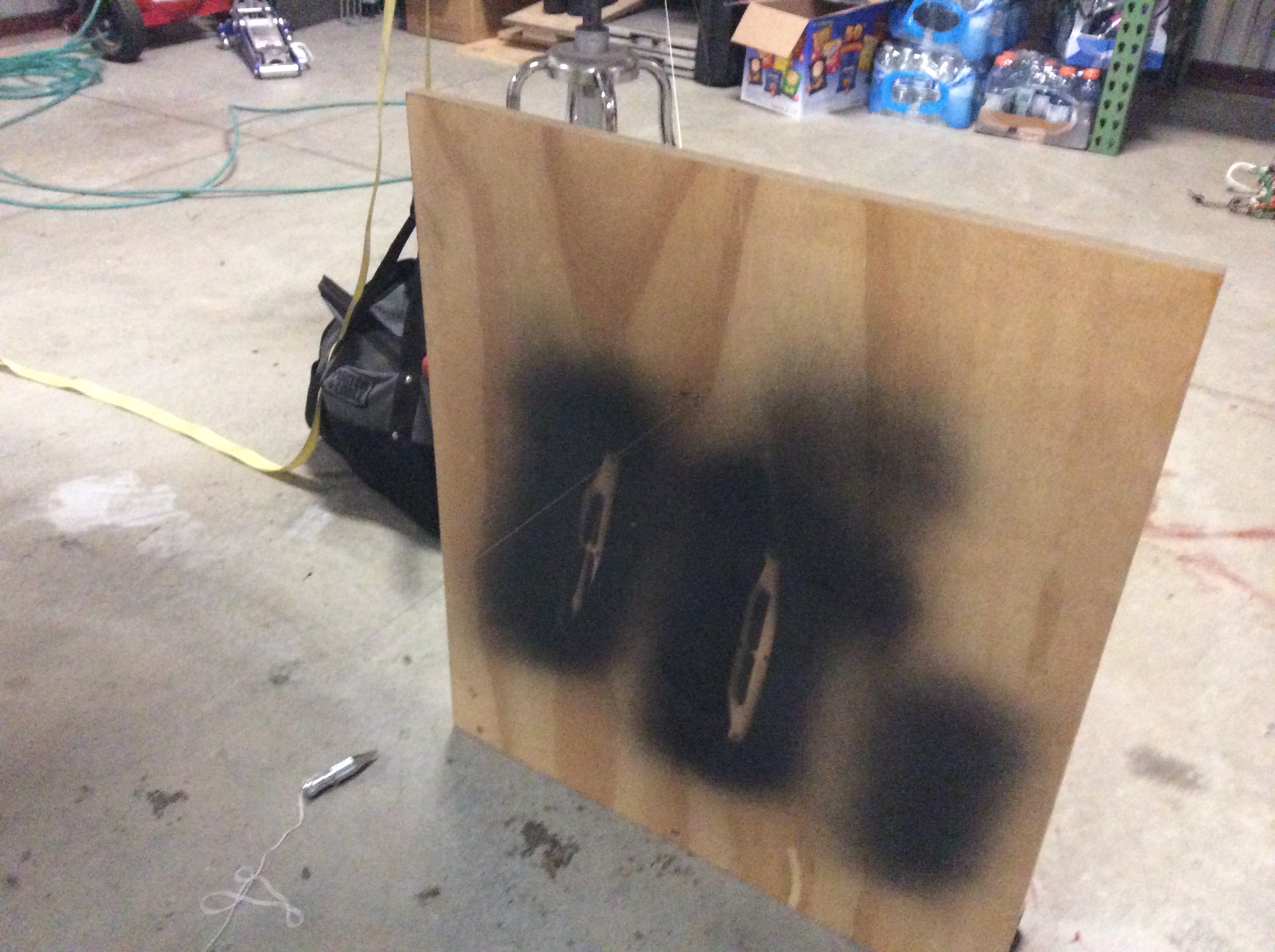
I transferred those measurements to a board that I positioned under the tail of the plane and then drilled a small hole at that position.  I ran the fishing line through the hole and tied it off to the tailwheel.
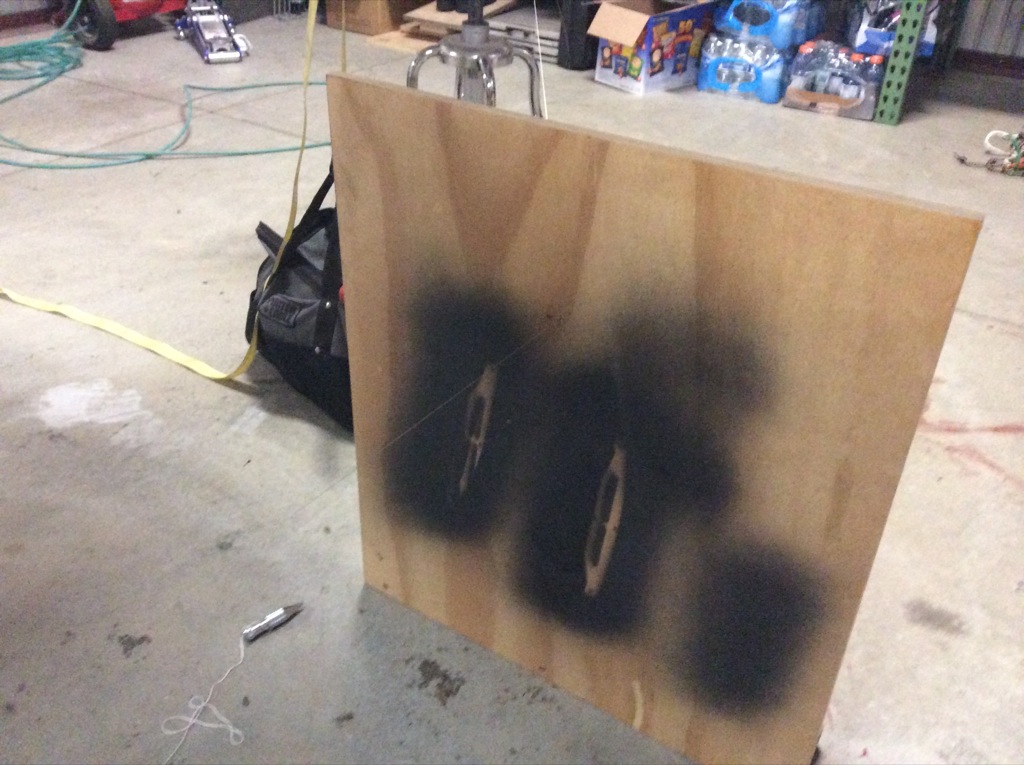
I slipped a small piece of static line over both lines and slid it close to the trailing edge of the fairing.  Amazingly, the left fairing was already perfect.  I had previously aligned it with the upper intersection fairing, but I didn’t expect it to come out this perfect.
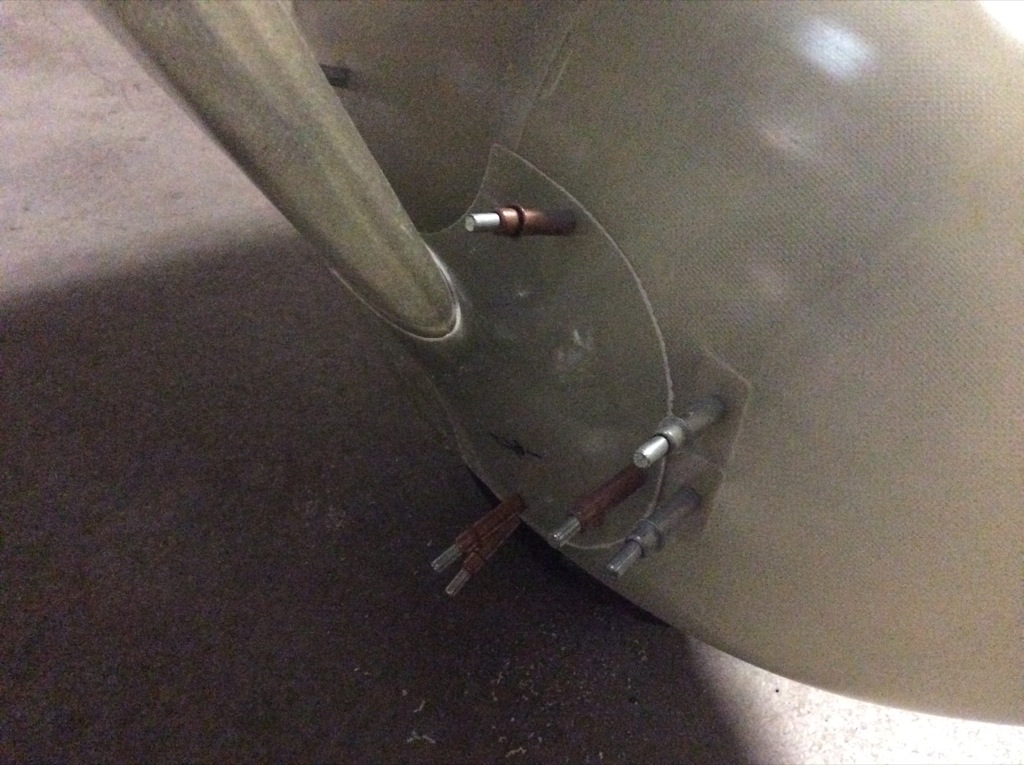
With the gear leg fairing aligned, I could install the lower intersection fairings to lock in the angle.  I drilled the front and back halves with several 1/8″ holes each.
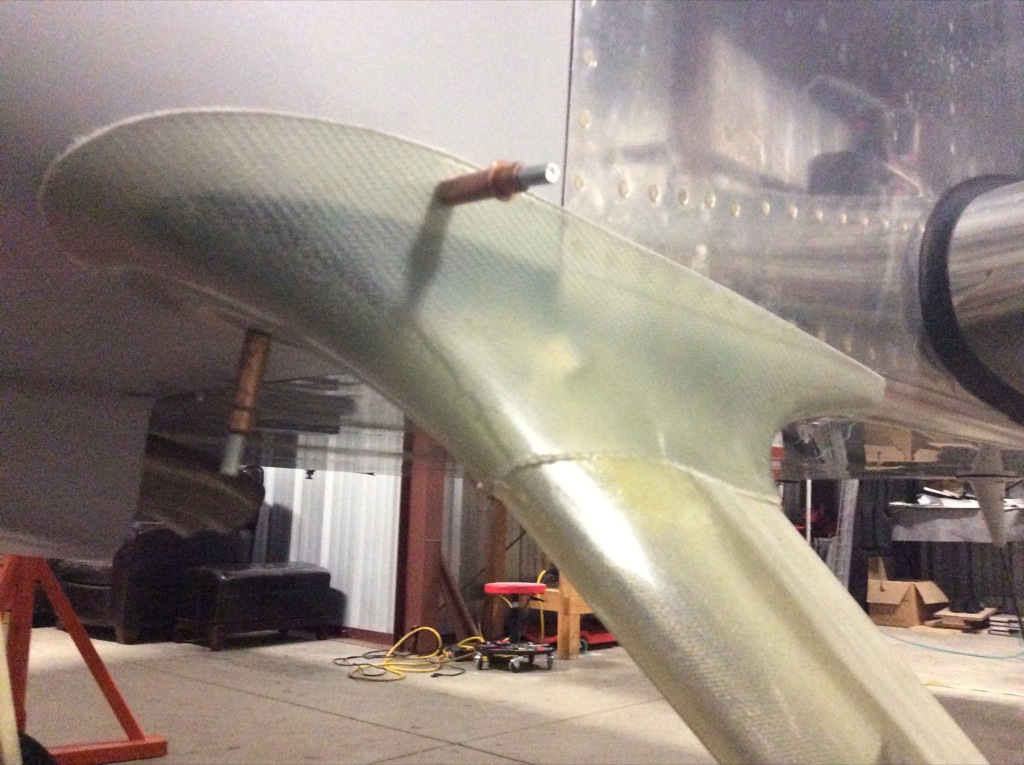
I then slid the upper intersection up tight and drilled a few holes to lock it into position.
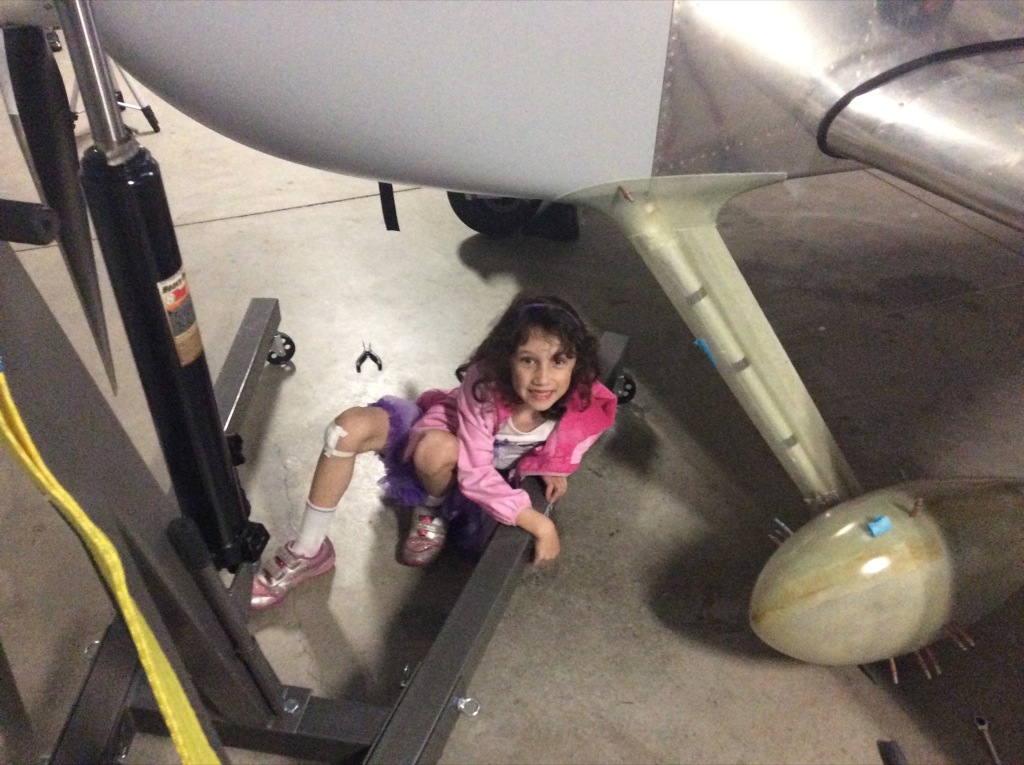
Madeline was a big helper today, bringing me tools whenever I needed them.
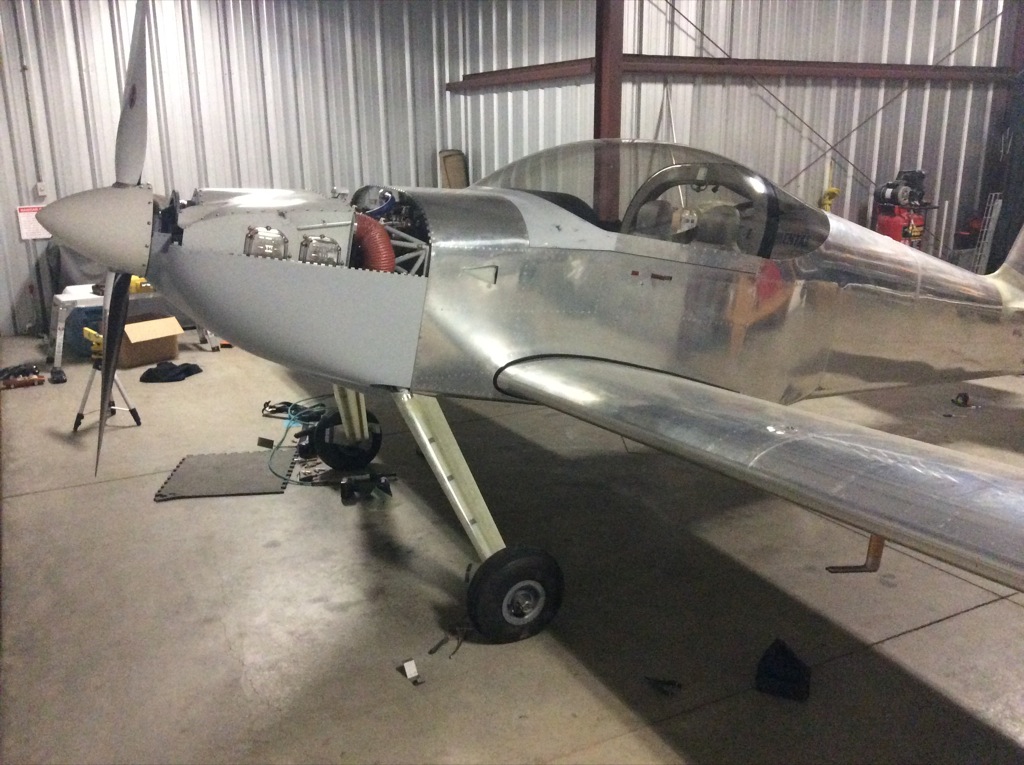
I wrapped up the other side and then took the plane back off the jacks.  Although the jacks are very stable, we live in earthquake country and I didn’t feel comfortable leaving it up on the jacks overnight.
Worked on Wheel Pants

I mixed up some epoxy/flox and glued the lower intersection fairings to the wheel pants.

After the epoxy cured, I trimmed the intersection fairings along the split line so I could fit the two halves together.  You can see that there are some gaps to fill.

The right side is much worse.  I’m going to have to build up the flanges since there’s such a large gap.

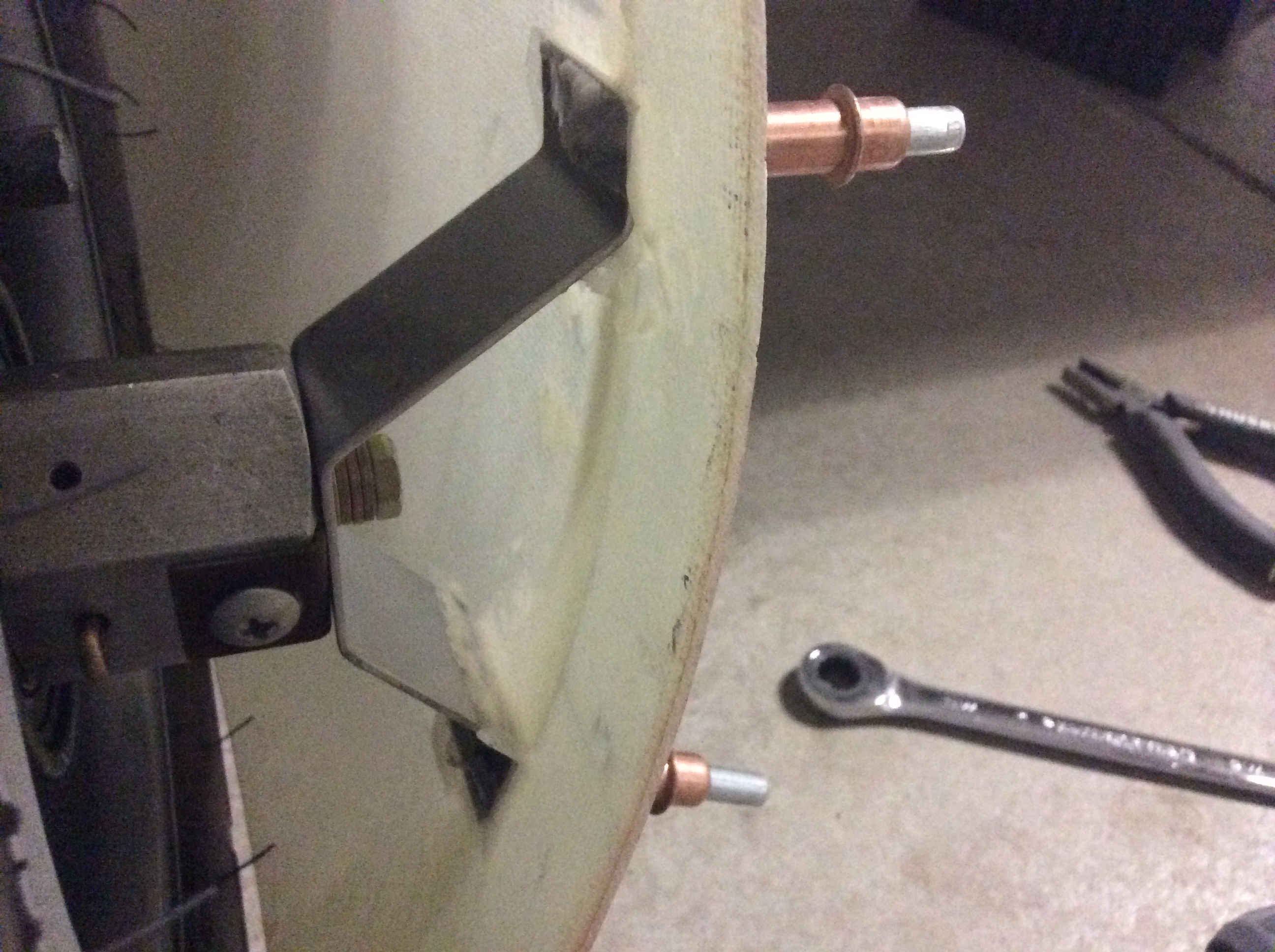
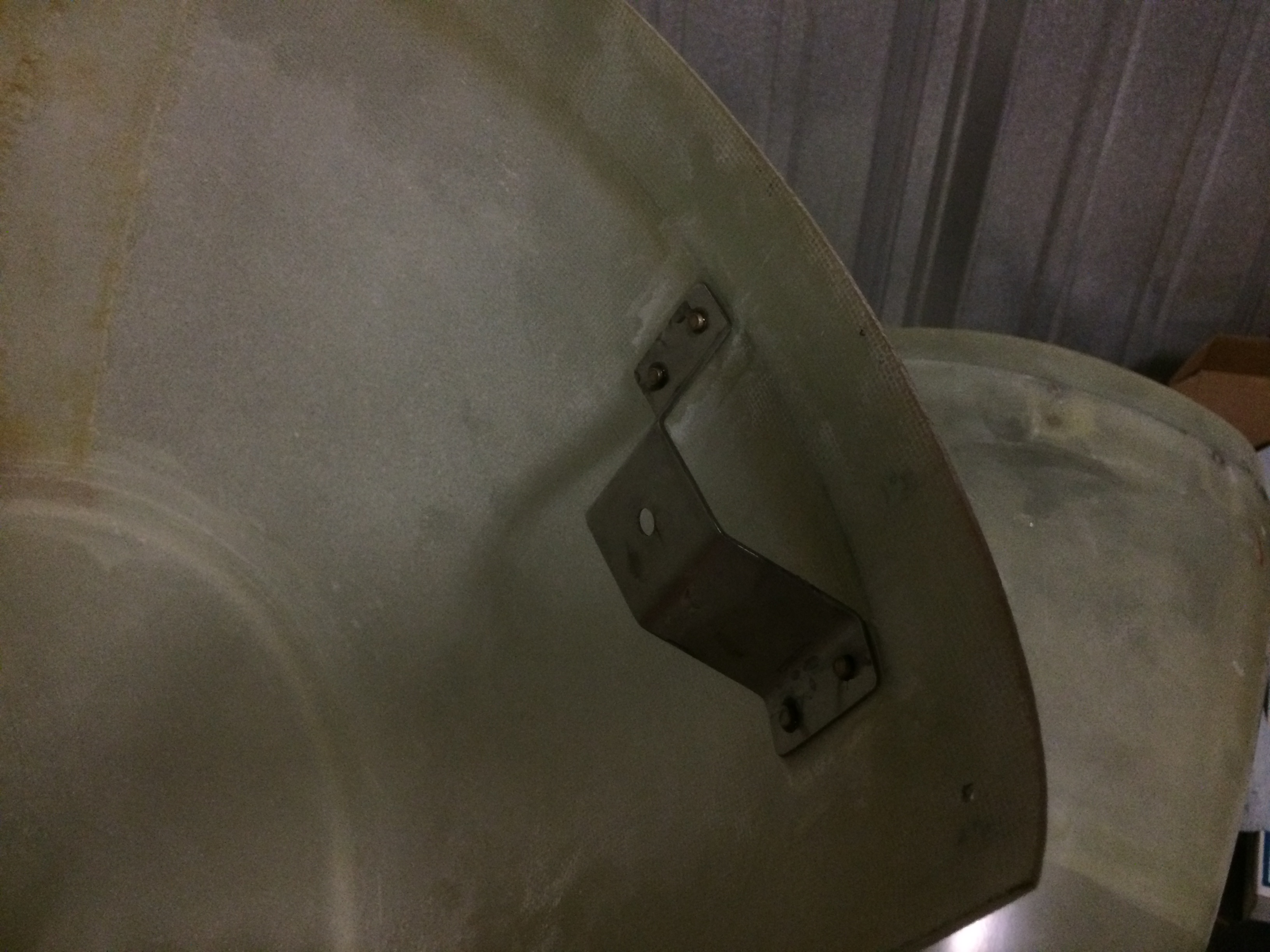
The wheel pants attach to the gear in three spots; the outer bracket shown here and an inner bracket that has forward and aft attach points.  Because the wheel pants are curved, the bracket flanges don’t conform nicely to the inside of the pant.  To fix this, I mixed up some epoxy/flox and applied some before clecoing the pant in place.  This will create a nice flat mounting pad for the bracket.  This bracket will be riveted to the pant and the others will get nut plates so the pant can be attached with screws.

I used some of the extra epoxy/flox to build up the upper side of the forward half of the lower intersection fairing.   I will need to sand away the other side of the fairing to align the front and back halves.

Riveted Outer Wheel Pant Brackets

I scuffed up the flanges and epoxy/flox shims, then used some epoxy on the mounting surfaces when riveting these outer wheel pant brackets on.

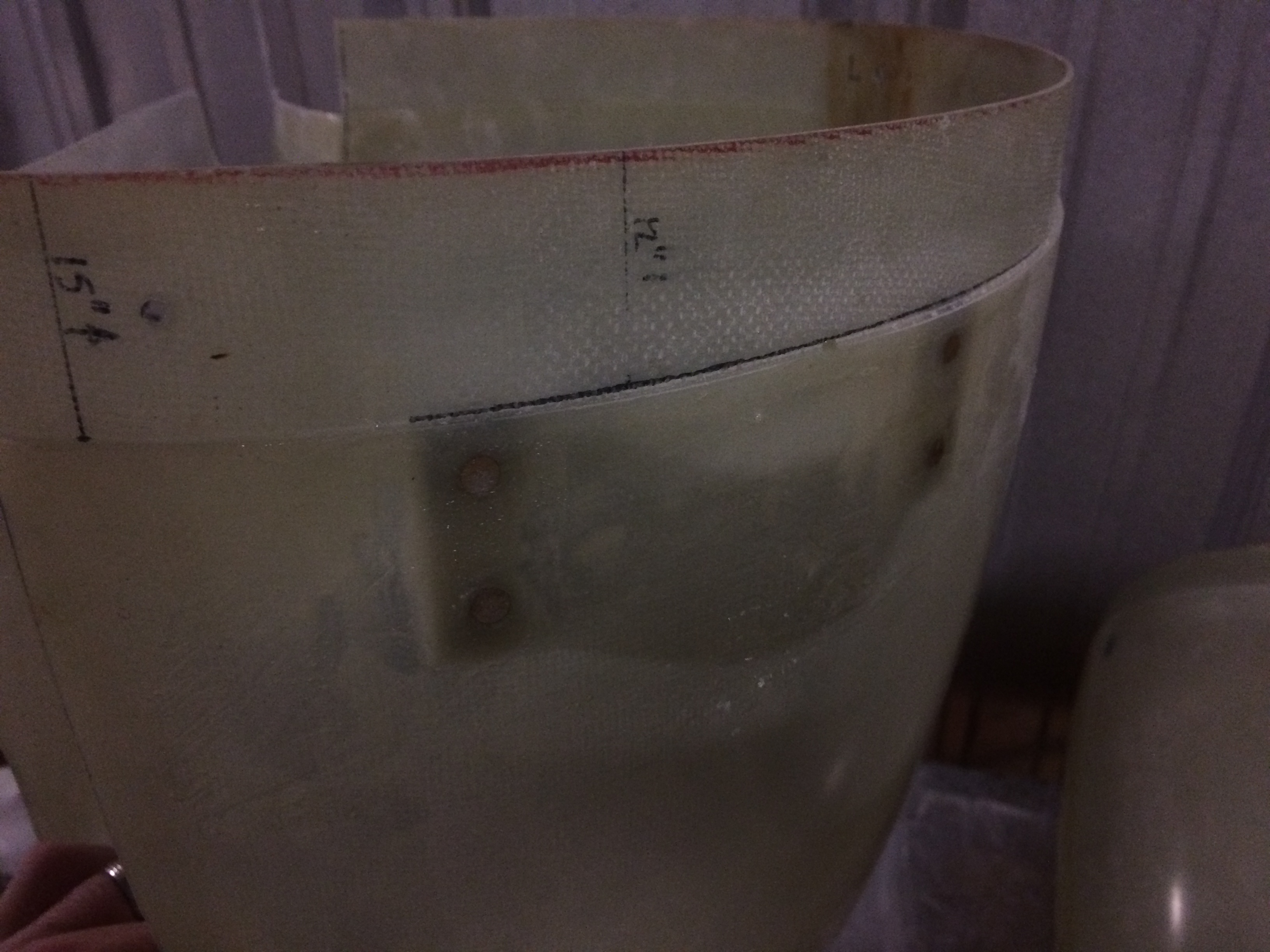
Here’s the outside.  I threw a layer of glass over the outside to prevent the paint from cracking around the rivets.